


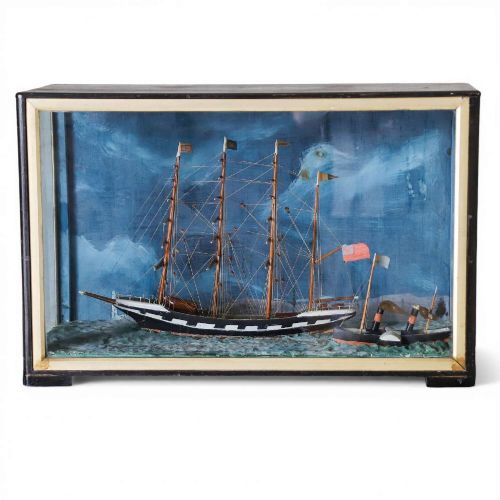


Sail Ship Diorama
These sail ship diorama pieces bring maritime folk art directly into the room, offering a detailed slice of sea life built to capture sailing vessels in miniature.
Sail Ship Diorama
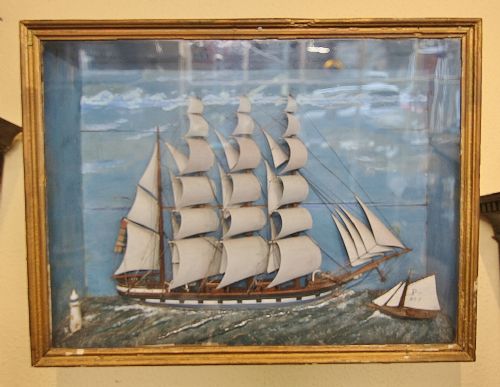
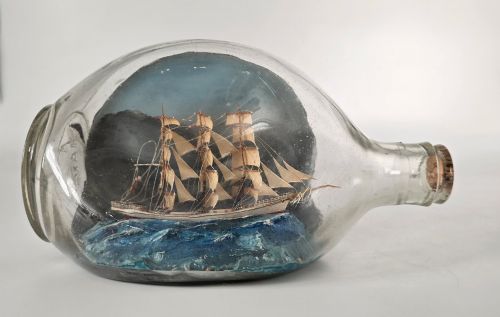
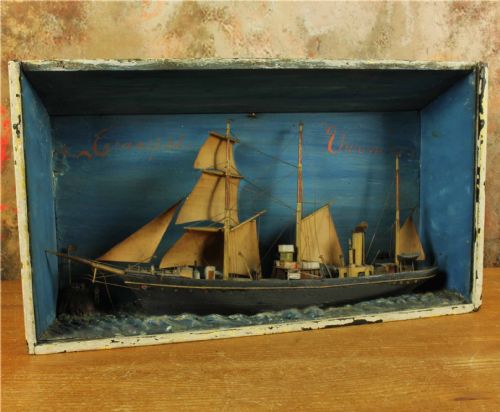
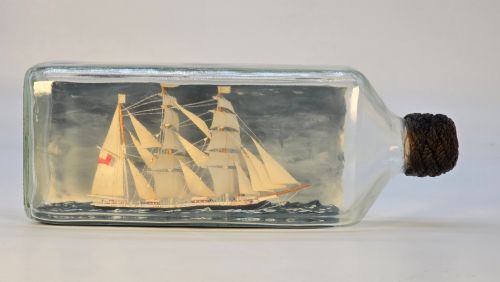
A sail ship diorama presents three-dimensional model vessels enclosed within wooden shadow boxes, glazed display cases, or glass bottles. These pieces capture specific vessels such as the Glynllifon or Queen Anne, alongside racing scenes and named subjects like the Sunray.
The versions most commonly met here span the nineteenth century and the early decades of the twentieth century. They originate primarily from English and French makers who worked within maritime folk art traditions to record the sailing fleets.
Makers constructed these scenes to hang upon walls or rest upon wooden plinths, combining model shipbuilding with painted backgrounds. They serve as historical records of barques and four-masted sailing ships caught mid-voyage.
How they were made
Craftsmen built these models using wood, cork, thread, and fabric to construct the hulls, masts, and rigging of the ships. Canvas and paper supplied the sails, while plaster and painted wooden backgrounds formed the turbulent seas behind the vessels.
Makers enclosed the delicate assemblies within glass-fronted wooden shadow boxes or sealed glass bottles to protect the intricate threadwork from dust. Specialised straw work and painted details enhanced the coastal scenes within the nineteenth-century examples.
Sail Ship Diorama Retail Price Guide 2026
Typical asking prices for sail ship diorama among the pieces listed under this phrase on Sellingantiques today, from the lower quarter to the upper quarter. They describe what is for sale here now, not the wider market.
Current listings feature materials including wood, glass, paint, plaster, canvas, cork, thread, and fabric across nineteenth-century and early twentieth-century examples.
What varies in quality
The fineness of the rigging and the accuracy of the hull construction separate basic folk art pieces from more ambitious cabinet models. Master makers achieved convincing perspective in the painted seas and rendered the miniature cordage with precise fidelity.
The complexity of the subject matter also defines the scale of quality, ranging from single vessels to multi-ship racing scenes set against Turneresque seascapes. Preserved cases with original glass and undisturbed internal elements retain greater integrity than those with replaced components.
The Sail Ship Diorama Glossary
- Shadow box diorama
- A deep picture frame containing a three-dimensional scene built up in layers. The glazed enclosure protects the delicate model work within.
- Maritime folk art
- Artistic objects created by self-taught makers or sailors depicting marine subjects. These pieces reflect vernacular traditions rather than formal academic training.
- Barque
- A sailing vessel with three or more masts having square-fitted sails on the fore and main masts and fore-and-aft sails on the mizzenmast. This rig was common on the nineteenth-century merchant routes.
- Scratch-built
- A model constructed entirely from raw materials rather than from a commercial kit. Makers shaped every component by hand using wood, thread, and fabric.
Sail Ship Diorama: Frequently Asked Questions
How do I hang a shadow box diorama?
These boxes require secure wall fixings because the combination of wood, glass, and internal models creates a substantial weight. Check the hanging hardware on the back of the wooden frame before mounting.
Position the piece away from direct sunlight and damp environments to protect the paper, canvas, and painted surfaces inside the sealed case.
What is a ship in a bottle?
A ship in a bottle is a specialised diorama where a model with hinged masts is assembled inside a glass vessel. The builder passes the components through the narrow neck and pulls strings to raise the rigging.
These bottles rest upon fitted wooden plinths or cradles to prevent rolling and to display the maritime scene at the correct viewing angle.
How are nineteenth-century pieces dated?
Dating relies on the materials used, the style of the wooden framing, and the specific vessel depicted if historical records exist. Construction techniques such as early glass types and hand-woven thread provide reliable clues to the period.
Inscribed names or contemporary labels on the backboards also help place the diorama within the Victorian era or the early twentieth century.
How do I clean the glass?
Clean the exterior glass gently with a standard window cleaner applied to a cloth rather than sprayed directly onto the frame. This prevents moisture from seeping past old seals into the delicate interior.
Avoid opening the sealed shadow boxes or breaking the neck seals on bottles, as the internal components are extremely fragile and sensitive to disturbance.