

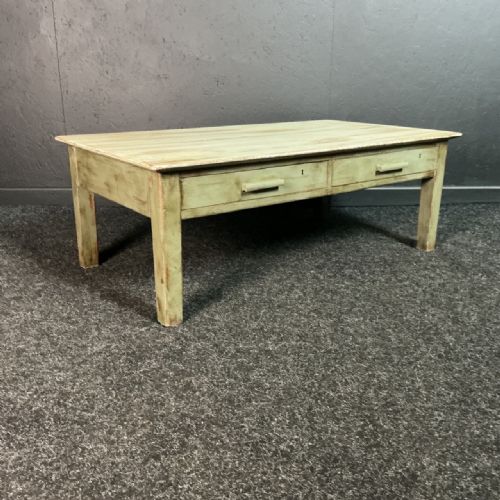


Sage Green Table
A sage green table brings quiet colour and painted character into a room, spanning rustic farmhouse styles and refined French console tables.
Sage Green Table
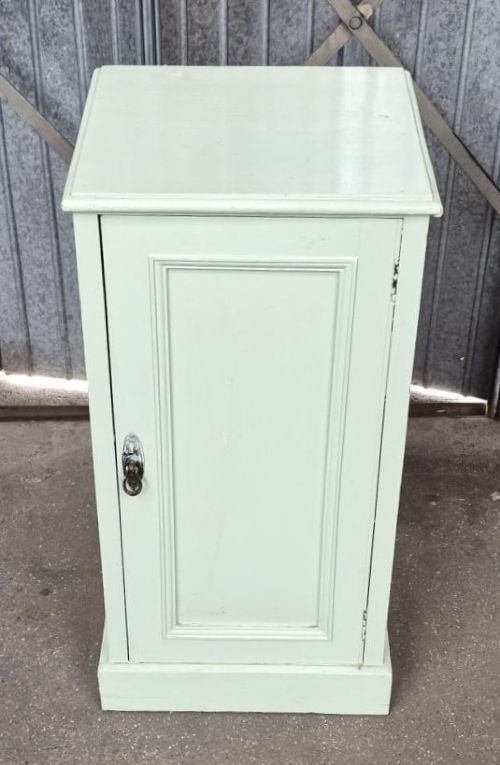
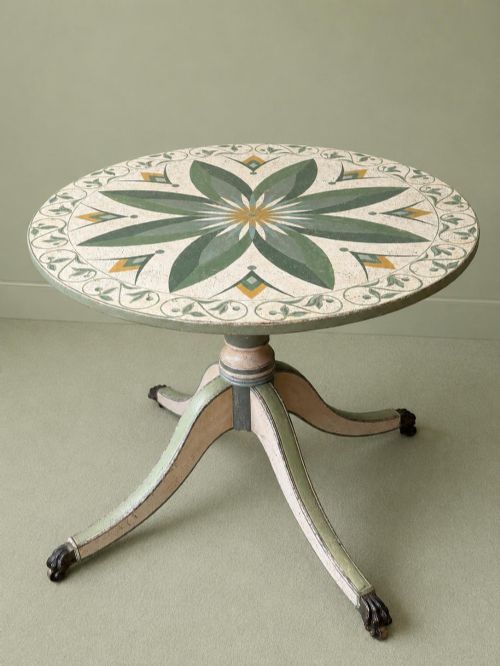
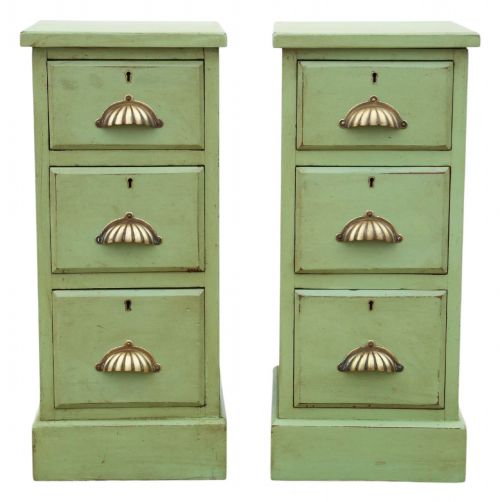
When you search for a sage green table, you are looking at functional wooden furniture finished in muted green paint, ranging from modest side tables to large serving surfaces. The examples recorded here include console tables, dressing tables, bedside cabinets, and occasional tables.
The pieces on this page lean heavily towards painted wood and pine, taking on forms from the Victorian and Edwardian periods as well as the 1920s and 1930s. You will frequently encounter English country aesthetics alongside French nineteenth-century and Italian rococo styling.
Origin and period vary widely, bridging utilitarian farmhouse furniture and more decorative bedroom or hallway pieces. A buyer is most likely to meet painted wooden tables featuring turned legs, demi-lune shapes, or serpentine fronts.
How they were made
Construction relies primarily on solid wood such as pine and hardwood, shaped into utilitarian frames or decorative forms with cabriole legs and potboards. Joinery reflects the period of manufacture, utilising traditional carpentry methods suited to everyday domestic use.
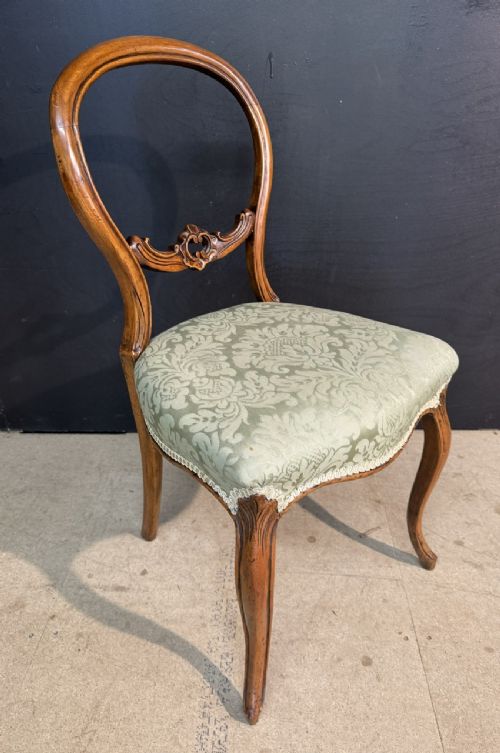
The defining characteristic is the paint layer itself, applied over wood to give a muted green tone that has aged naturally over the decades. Additional materials like brass fittings and fabric appear occasionally on related pieces such as desks or dressing chairs.
Sage Green Table Retail Price Guide 2026
Typical asking prices for sage green table among the pieces listed under this phrase on Sellingantiques today, from the lower quarter to the upper quarter. They describe what is for sale here now, not the wider market.
Tilt-top tables let you tuck the surface flat against the wall when not in use, proving that Victorian furniture designers understood small spaces.
What varies in quality
Quality rests in the harmony of the proportions and the character of the painted surface, where old layers of pigment show a soft patina rather than a flat modern finish. Finer examples display thoughtful carving on serpentine fronts or graceful curves on cabriole legs.
Structural integrity separates simple utilitarian items from more refined pieces, ensuring that drawers slide smoothly and tabletops remain stable. The distinction lies in how cleanly the woodwork supports the painted decoration without masking the age of the piece.
The Sage Green Table Glossary
- Demi-lune
- A half-moon shape used for console tables that sit flush against a wall. This profile saves floor space while providing a decorative surface.
- Serpentine
- A curved furniture front that undulates in a gentle S-shape, moving outward at the centre and inward at the sides. It signals a more ambitious design.
- Potboard
- A lower slatted shelf fitted between the legs of a serving table or dresser, originally intended for storing heavy earthenware pots. It grounds the piece visually.
- Cabriole leg
- A furniture leg that curves outward at the knee and tapers inward at the ankle, ending in a simple foot. This form is typical of refined eighteenth and nineteenth-century seating and tables.
Sage Green Table: Frequently Asked Questions
Where should I place a sage green table?
These tables suit hallways as console surfaces, bedrooms as bedside cabinets or dressing tables, and living spaces as occasional or coffee tables.
The muted green tone works well against neutral walls, natural stone, or alongside exposed wood furniture.
How do I care for a painted wooden table?
Dust regularly with a dry cloth and avoid harsh chemical cleaners that might strip or discolour the historic paint finish.
Use coasters under glasses and protect the surface from excessive moisture to preserve the character of the wood.
How can I tell the period of these tables?
Look closely at the construction methods, handle types, and timber choice, comparing them against known Victorian, Edwardian, or later twentieth-century styles.
Stylistic cues like serpentine fronts or Italian rococo carving also point directly to specific manufacturing decades.
Are these tables solid wood?
The listings here consist of painted wood, pine, and hardwood constructions rather than modern composite materials.
Traditional joinery underpins the painted exterior, ensuring the pieces retain their structural form.