

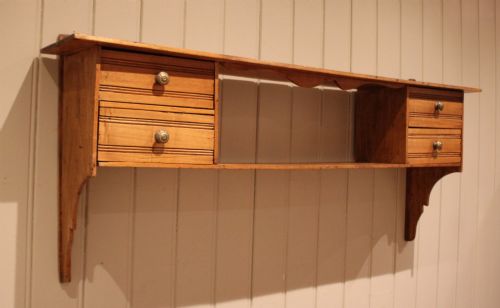
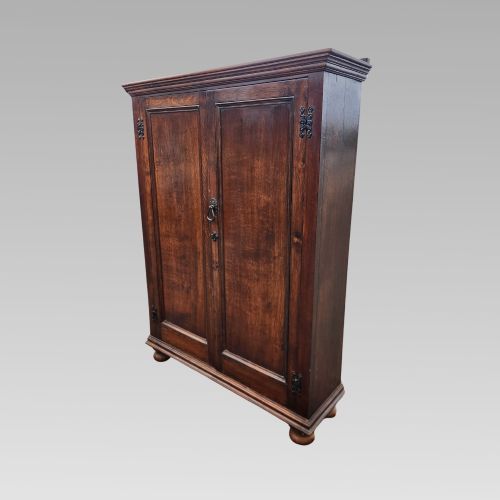

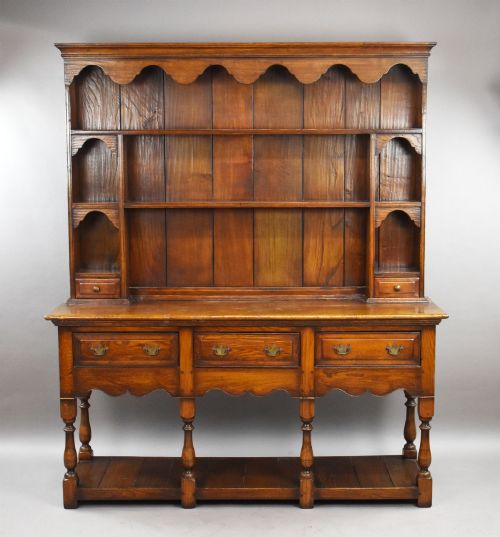

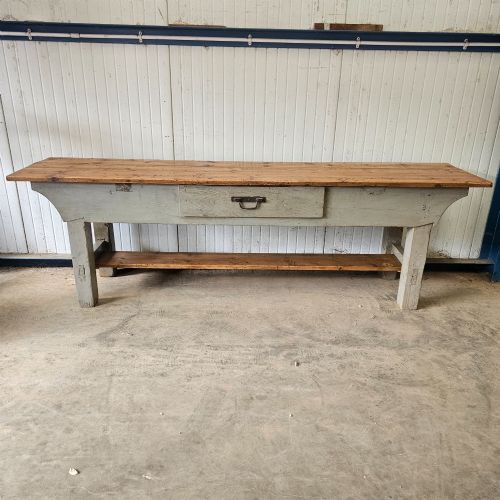
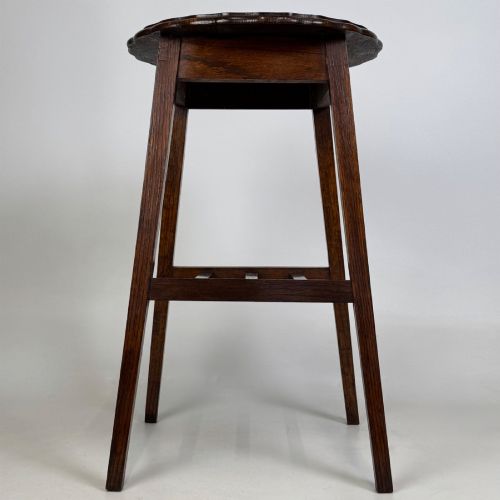
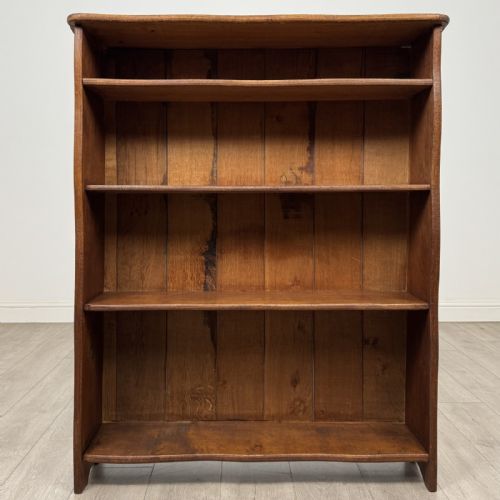
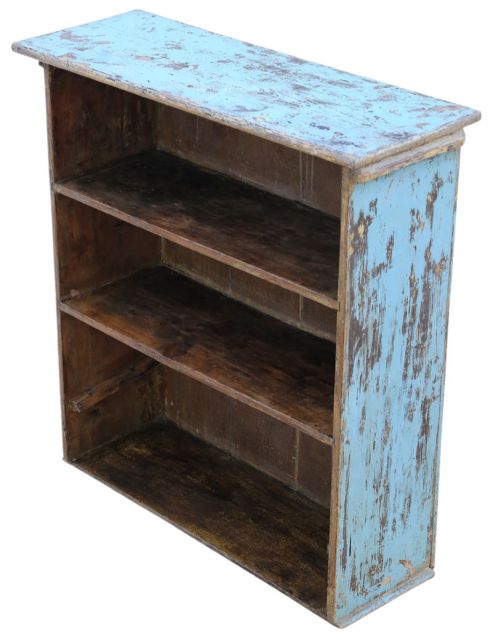
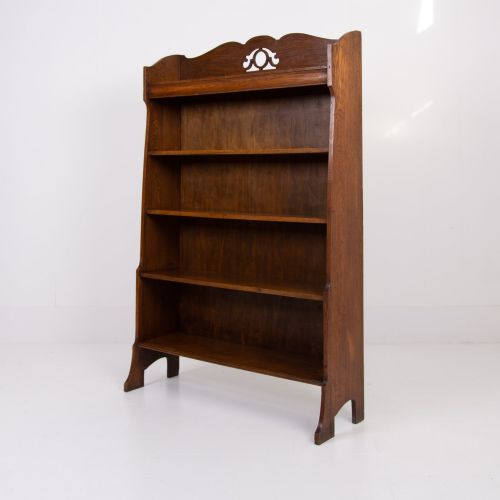
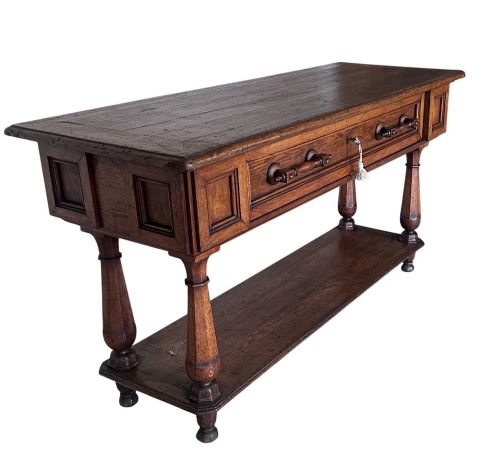
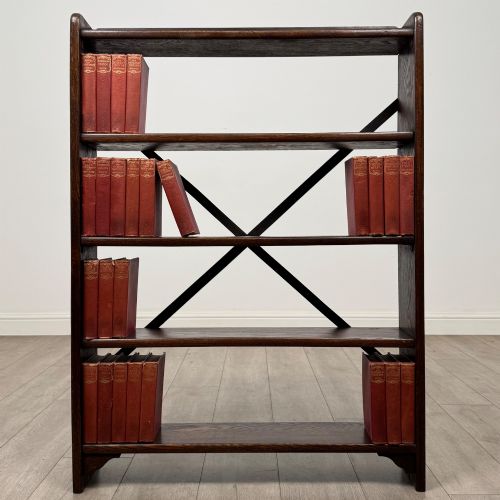
Rustic Wooden Shelf
A rustic wooden shelf brings enduring utility and natural grain into a room, offering practical display space built from timber with honest character.
Rustic Wooden Shelf
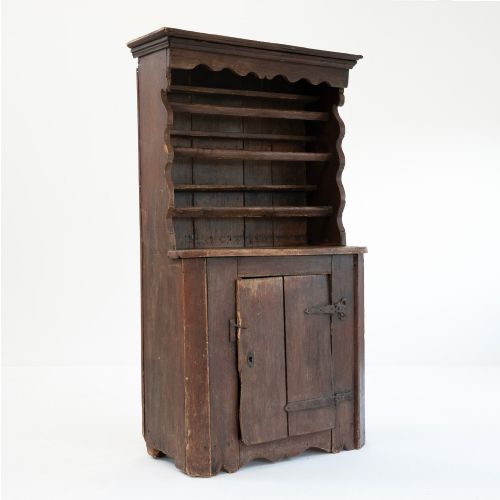
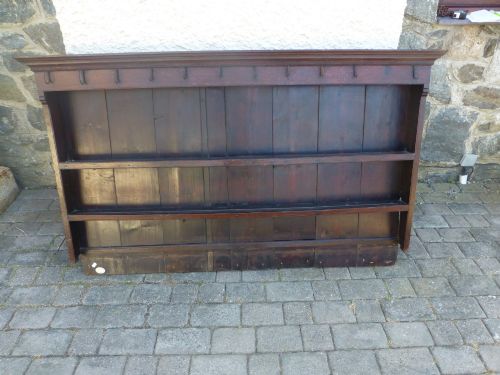
A rustic wooden shelf encompasses practical storage forms such as wall shelves, open bookcases, plate racks, and modular pigeon holes designed for everyday utility. These pieces originate across domestic and workshop settings, reflecting straightforward storage needs from previous centuries.
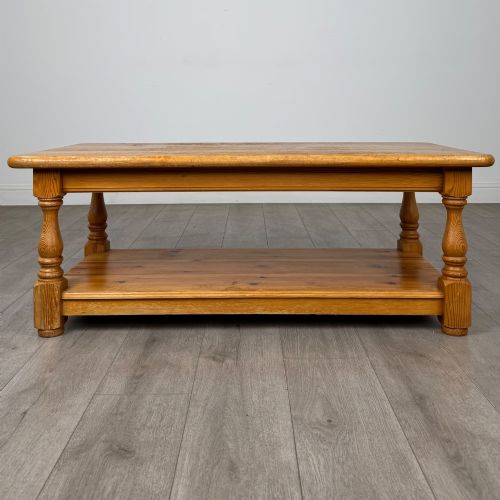
The versions most commonly met on this page are constructed from pine and oak, often showing the marks of long service in domestic kitchens, libraries, and farmhouses. They appear in formats ranging from simple wall-mounted boards to substantial floor-standing bookcases and dressers.
Examples span periods from the eighteenth century through the Edwardian era and the early twentieth century, carrying styles rooted in English, French, and general rural vernacular traditions. Each piece serves as a direct record of utilitarian woodworking rather than formal salon furniture.
How they were made
Construction relies primarily on native timbers such as oak, pine, and elm, selected for plank stability and strength in supporting books, plates, and household objects. Joinery is typically straightforward, using exposed pegs, dovetails, or simple housing joints designed to withstand heavy daily loads.
Surfaces frequently show layers of historical paint, distressed wax finishes, or plain scrubbed wood that reveal the natural grain and the impact of use over decades. Secondary metals such as iron and brass appear in hinges, brackets, and structural fixings.
Rustic Wooden Shelf Retail Price Guide 2026
Typical asking prices for rustic wooden shelf among the pieces listed under this phrase on Sellingantiques today, from the lower quarter to the upper quarter. They describe what is for sale here now, not the wider market.
Some nineteenth-century post offices and French sorting rooms clearly kept their mail remarkably organised before these pigeon holes retired.
What varies in quality
Quality in these utilitarian items rests on the integrity of the timber selection and the retention of original structural surfaces rather than decorative refinement. Thick planks, solid backboards, and minimal later alterations distinguish pieces that have maintained their original form under heavy loads.
The presence of untouched historical surface treatments, such as early blue paint or original waxed patination, elevates the character of a piece above items that have been stripped or aggressively refinished. Proportional balance and robust framing determine whether a simple storage board remains stable and pleasing to the eye.
The Rustic Wooden Shelf Glossary
- Delft rack
- A wall-mounted wooden framework specifically designed to display ceramic plates upright on narrow ledges.
- Potboard
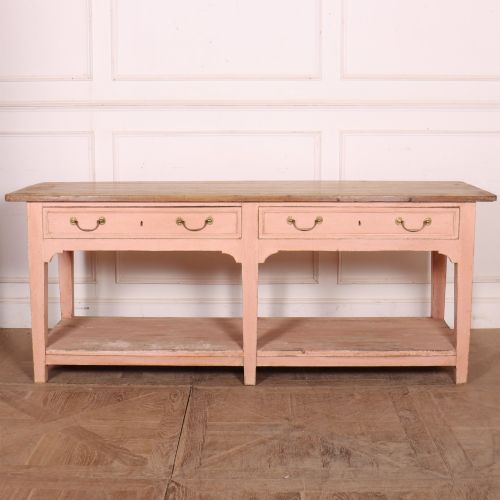
- A lower open shelf built into the base of a traditional dresser to store earthenware pots and heavy kitchen utensils.
- Pigeon holes
- A grid of small rectangular compartments used historically for sorting post, documents, or small items.
- Vernacular furniture
- Domestic objects made by local tradesmen using regional materials and traditional methods without academic architectural influence.
Rustic Wooden Shelf: Frequently Asked Questions
How do I hang a heavy wooden shelf safely?
Heavy wall shelves require direct fixing into structural studs or solid masonry using appropriate brackets to bear the weight of books or kitchenware safely.
Ensuring the fixings match the wall type prevents sagging and protects both the plaster and the antique timber.
How should I clean an old pine shelf?
Dust the surface regularly with a dry cloth and apply a traditional beeswax to nourish dry pine without stripping historical patination.
Avoid modern chemical sprays and excessive water, which can raise the grain and damage old painted or waxed finishes.
Can these shelves hold heavy books?
Thicker oak and pine shelves from the eighteenth and nineteenth centuries easily support heavy volumes due to their robust plank construction.
Shorter shelf spans prevent bowing over time under the weight of extensive libraries.
How do I date an antique wooden shelf?
Dating relies on observing tool marks, timber species, fixings like iron nails, and overall construction methods consistent with periods such as the Georgian or Victorian eras.
Wear patterns and the presence of original paint layers also offer reliable clues to a piece's age.