


Rustic Wooden Island
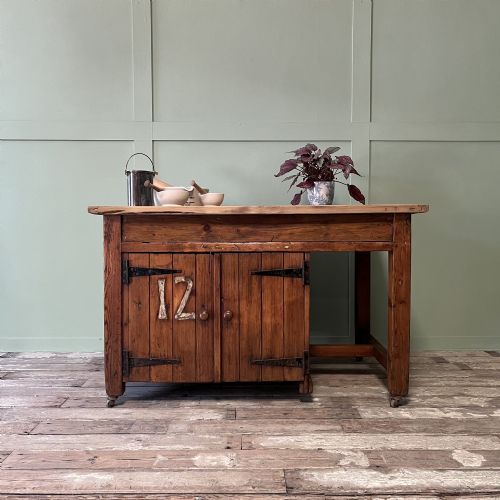
A rustic wooden island grounds a kitchen with honest utility, offering sturdy preparation space shaped by decades of domestic or workshop use.
Rustic Wooden Island
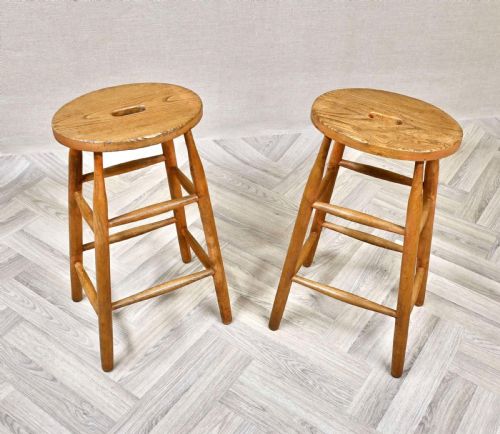
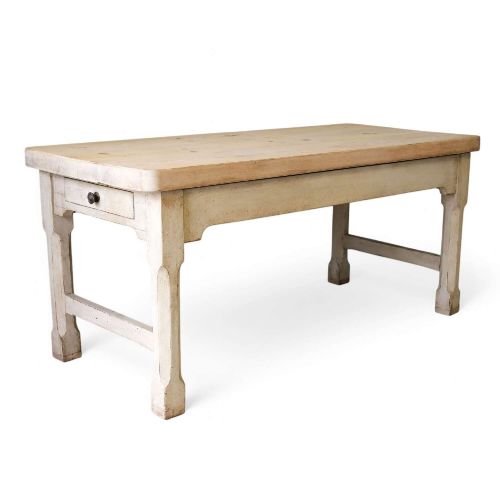
A rustic wooden island encompasses practical working furniture built for food preparation, serving, and daily labour. The selections on this page span the eighteenth, nineteenth, and early twentieth centuries, drawing heavily from French provincial, Scandinavian country, and English farmhouse traditions.
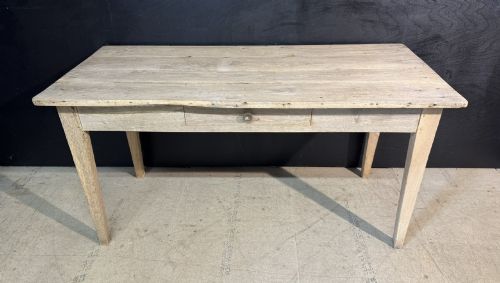
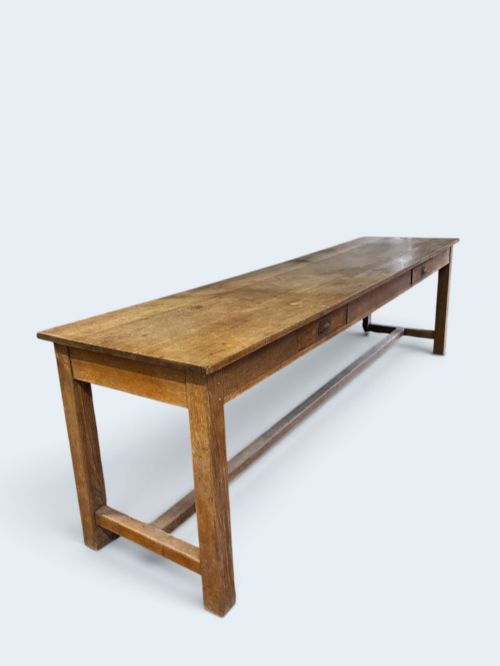
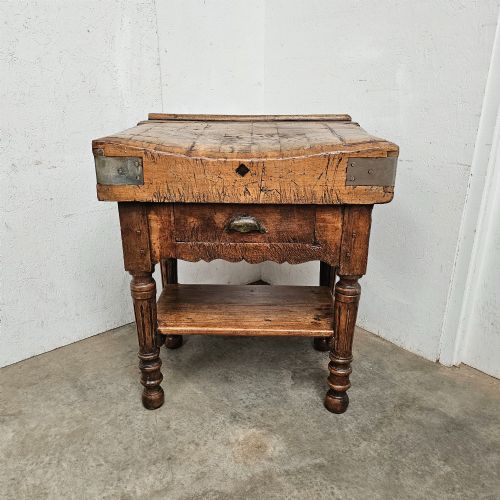
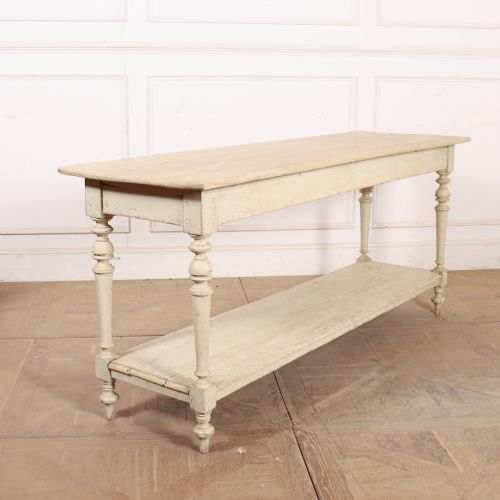
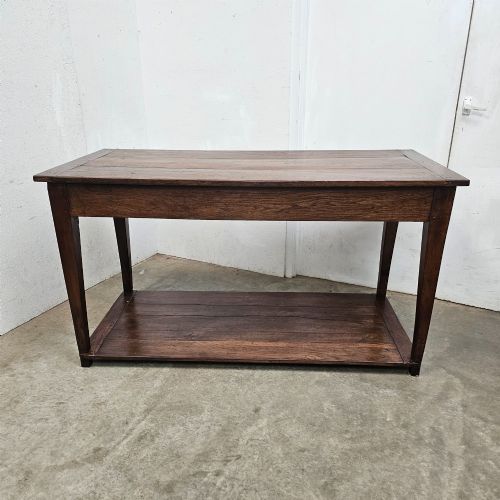
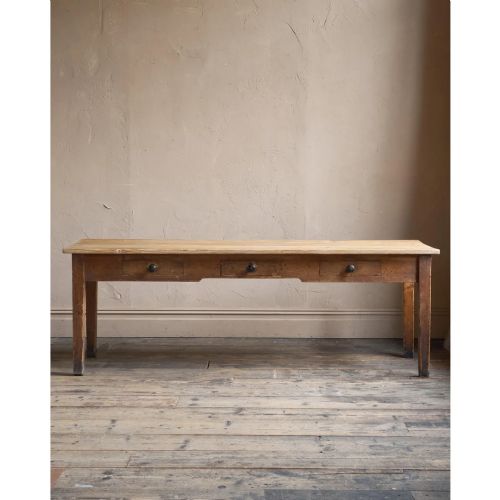
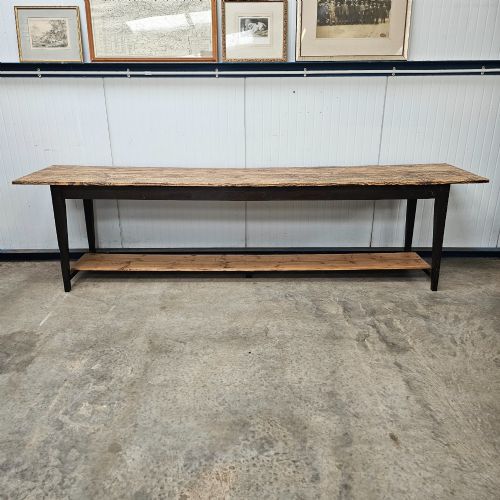
Buyers will most frequently encounter forms originating as workbenches, butchers blocks, drapers tables, scullery tables, and preparation counters. These pieces bring substantial timber surfaces and functional drawers, pot shelves, or vices into modern domestic kitchens.
Origins stretch across France, Sweden, and England, reflecting regional preferences in proportions and framing. Pieces range from modest pine tables to long harvest tables and robust elm chopping blocks.
Materials and construction methods
Construction relies upon dense domestic timbers suited to heavy daily wear, predominantly pine, oak, beech, elm, and sycamore. Joinery is straightforward and robust, designed to withstand continuous chopping, kneading, and assembly work without failing.
Iron, brass, and metal components appear in structural braces, drawer pulls, and working vices attached to benches. Surfaces often display remnants of historic paint, scrubbed bare wood, or natural patinas developed through active service.
Several workbenches retain their original heavy wooden vices, ready to clamp down on an errant loaf of sourdough.
Assessing quality in working furniture
Quality rests in the integrity of the original timber and the depth of working patina earned through genuine use. Superior examples retain honest proportions, solid joints, and uncompromised structural frames without excessive modern intervention.
The character of the top surface dictates much of the appeal, where deep scoring, natural grain variation, and undisturbed historic finishes distinguish honest utility from decorative reproduction.
The Rustic Wooden Island Glossary
- Butchers block
- A thick chopping surface constructed from heavy end-grain or edge-grain timber, typically supported by a sturdy wooden stand or base.
- Drapers table
- A long, narrow preparation or display table featuring multiple drawers and occasionally a lower pot shelf, originating from textile shops.
- Scullery table
- A utilitarian wooden table designed for heavy kitchen tasks such as washing, food preparation, and general scullery work.
- Work bench
- A heavy workshop table fitted with a functional wooden vice and thick timber top, repurposed as a kitchen island.
- Patina
- The surface sheen and coloration developed over decades of handling, cleaning, and exposure to oils and sunlight.
Rustic Wooden Island: Frequently Asked Questions
How do I choose the right size island?
Consider the floor space in your kitchen and allow ample room for movement around all sides of the table. Measure doorways and stairwells to ensure safe delivery of substantial timber furniture.
Account for whether you intend to use the piece primarily for food preparation, seating, or serving, as this dictates the ideal height and surface area.
How do I care for antique wooden work surfaces?
Maintain timber surfaces by cleaning with mild soap and water, avoiding harsh chemicals that strip natural oils. Regular application of food-safe mineral oil helps preserve the grain.
Protect the wood from excessive moisture and extreme temperature fluctuations to prevent warping or splitting over time.
What distinguishes French provincial tables from English ones?
French provincial and country pieces often utilise fruitwoods, elm, or oak alongside lighter painted finishes and distinctive curved aprons. English farmhouse examples frequently feature sturdy pine or oak with straightforward, utilitarian framing.
Both traditions emphasise practical durability, yet regional timber availability shapes their distinct aesthetic qualities.