





Rustic Round Stools
Rustic round stools bring honest utility and timeworn timber into a room, offering simple seating built to last.
Rustic Round Stools
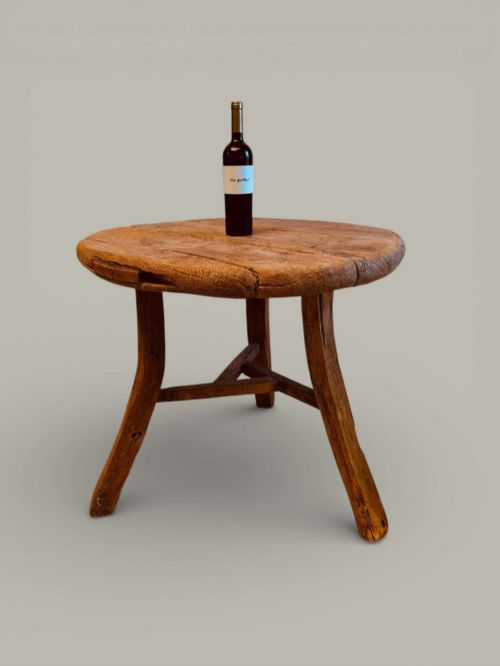
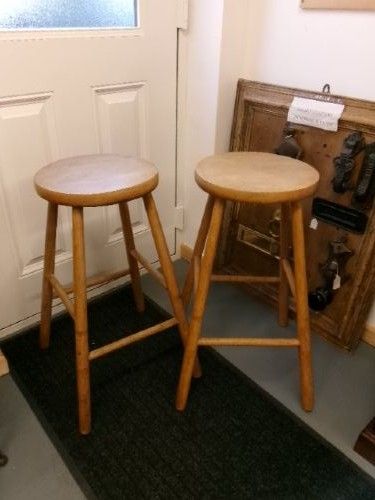
Rustic round stools encompass compact timber seating shaped by utility and traditional regional design. These pieces draw from English Country, Victorian Country, and French Provincial traditions, prioritising straightforward construction over ornamental excess.
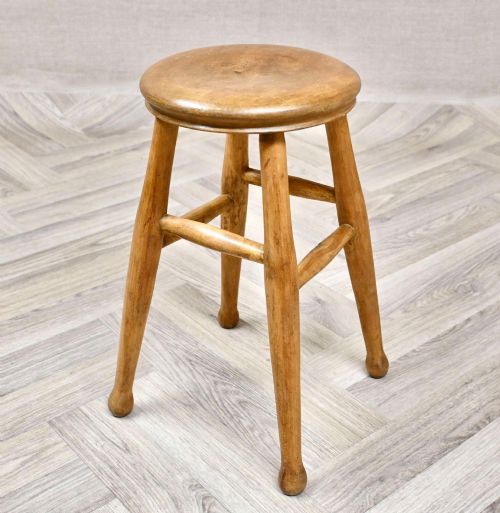
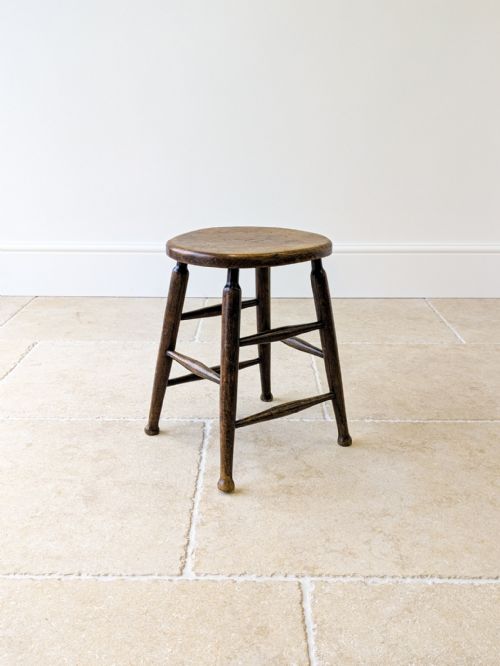
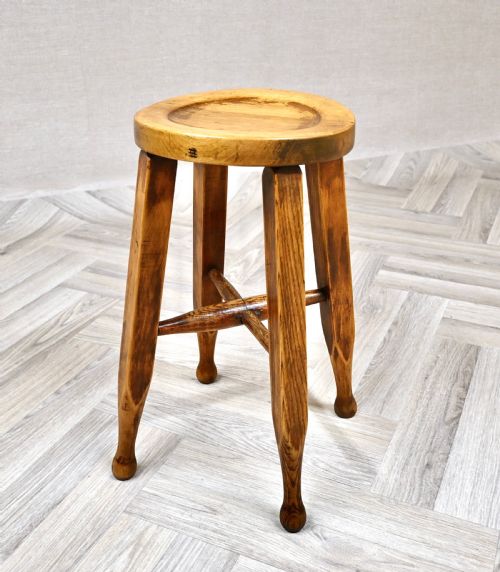
The versions most commonly met on this page date from the nineteenth century up to the mid-twentieth century. They appear primarily as elm and beech country stools, alongside carved oak circular top examples and tall workshop variations.
How they were made
These stools rely upon robust native timbers such as elm for tops and beech or oak for legs. Makers selected these woods for their toughness and resistance to splitting under daily domestic use.
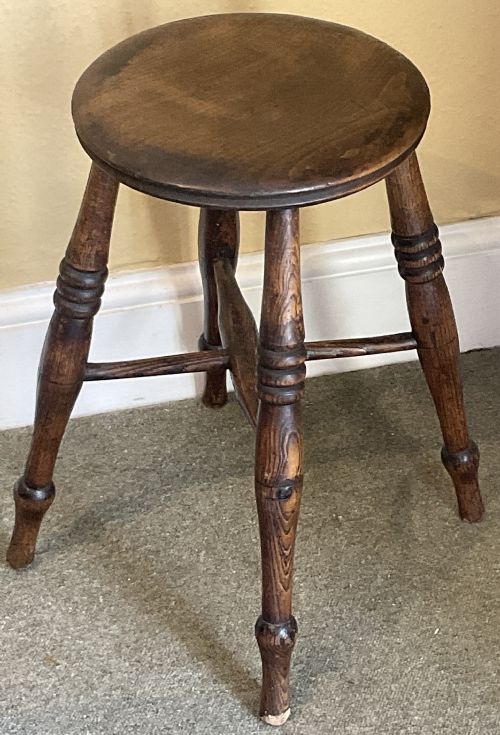
Construction techniques typically involve pegged joints and turned legs fitted directly into solid timber seats. Details like brass studding occasionally appear on leather or timber seats for added reinforcement and simple decoration.
Rustic Round Stools Retail Price Guide 2026
Typical asking prices for rustic round stools among the pieces listed under this phrase on Sellingantiques today, from the lower quarter to the upper quarter. They describe what is for sale here now, not the wider market.
Listings feature timbers including elm, oak, beech, and pollard oak, spanning the nineteenth and twentieth centuries.
What varies in quality
Quality rests primarily in the choice of timber and the character of the grain on the seating surface. Elm tops displaying rich figuring and deep patination sit above simpler, flatter boards lacking natural wear.
Construction integrity also separates standard utility items from finer examples. Tighter joints, well-turned legs, and balanced proportions show superior hands at work during the making process.
The Rustic Round Stools Glossary
- Elm
- A tough, interlocking timber frequently chosen by country makers for stool seats because it resists splitting. This wood develops a rich, undulating grain over decades of use.
- Beech
- A dense hardwood commonly utilised for the turned legs and stretchers of traditional stools. It offers strong structural support while allowing for clean turning on a lathe.
- Turned
- A method of shaping wood on a lathe to create cylindrical legs and spindles. This technique ensures uniform thickness and structural symmetry across supporting components.
- Patina
- The surface sheen and darkening acquired by wood over generations of handling and polishing. This quality marks genuine age and use rather than applied finishes.
Rustic Round Stools: Frequently Asked Questions
What rooms suit rustic round stools?
These pieces fit easily beside chairs as small side tables or tuck beneath counters for extra seating. Their compact circular shape takes up minimal floor space in busy living areas.
Kitchens, hallways, and bedrooms benefit most from the warmth of aged timber and simple silhouettes. They add organic texture without dominating a room's existing layout.
How do I date these stools?
Dating relies upon observing tool marks, timber shrinkage, and the style of the turned legs. Nineteenth-century examples often display hand-adzed seats and pegged joinery.
Later twentieth-century versions tend to show more uniform machine shaping and standardised hardware. Comparing the wear patterns around the footrests also helps establish age.
Can I use them as tables?
Many circular top stools serve double duty as low occasional tables for books or lamps. Their sturdy construction handles small lamps and decorative objects comfortably.
Checking the flat stability of the seat surface ensures items placed on top remain secure. Height matters too, as taller bar versions suit different placement than standard low seats.
How do I care for old wood?
Maintain timber surfaces by applying occasional beeswax to nourish the dry grain and protect the finish. Avoid placing antique stools near direct heat sources that cause wood to crack.
Regular dusting with a soft cloth keeps the surface clean without stripping the accumulated patina. Gentle care preserves the historical character built up over generations.