

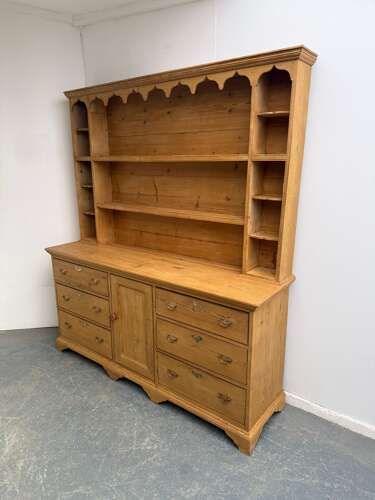


Rustic Pine Kitchen Rack
A rustic pine kitchen rack brings honest utility and warmth to a room, offering open storage built for daily domestic life.
Rustic Pine Kitchen Rack
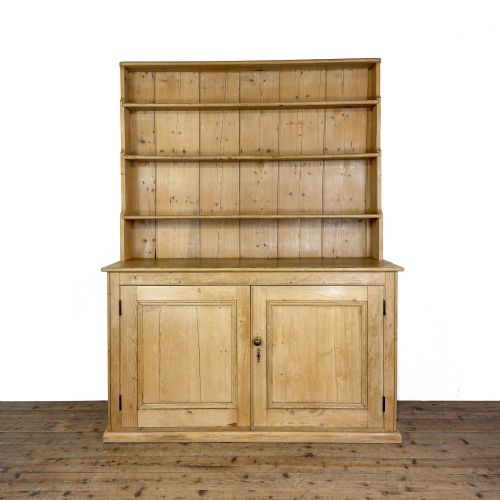
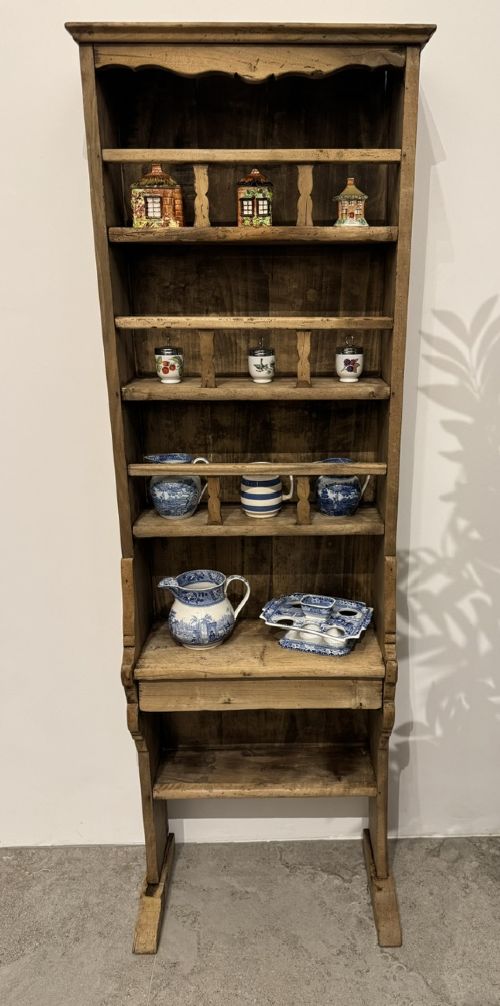
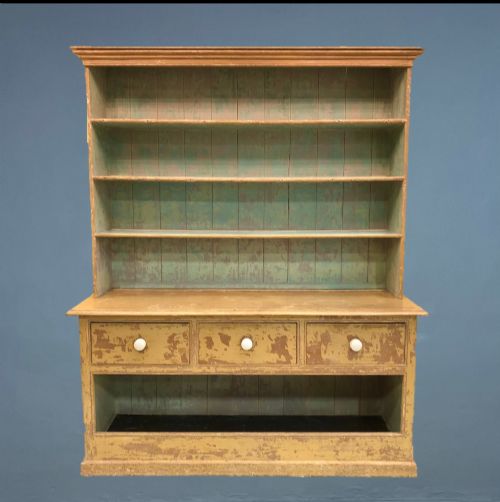
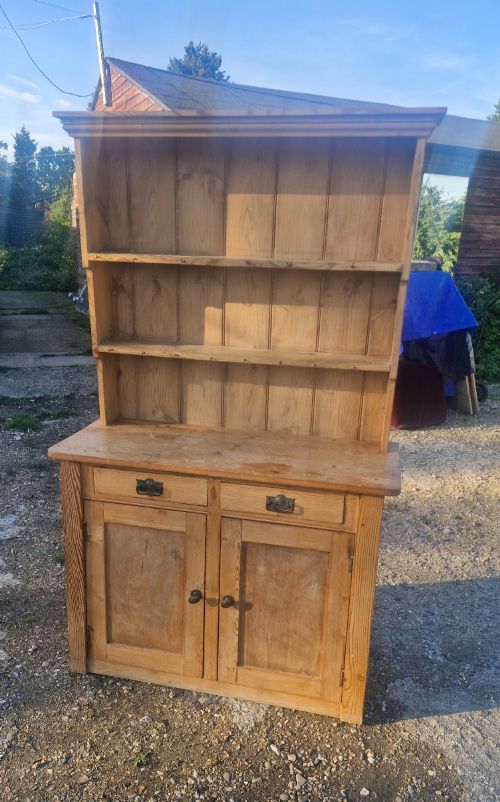
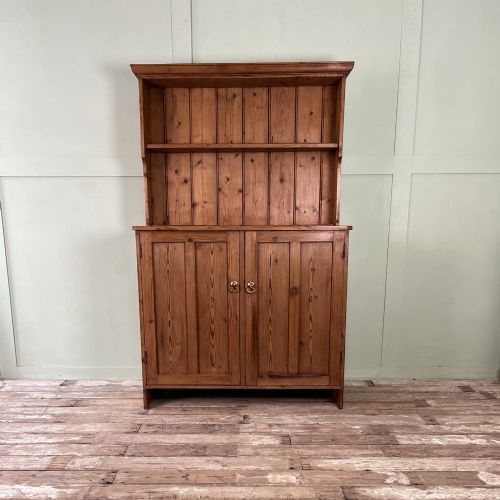
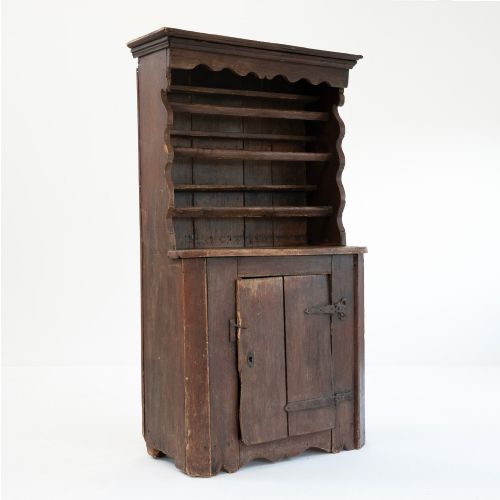
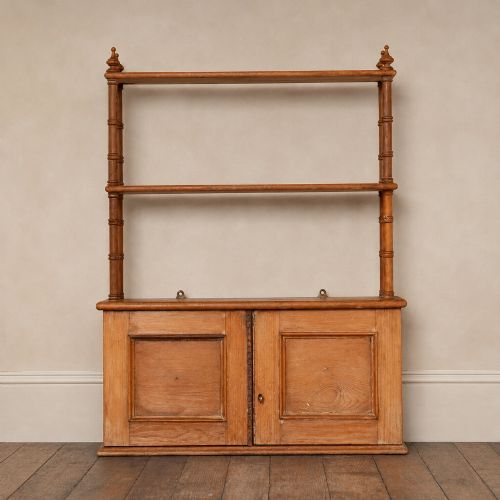
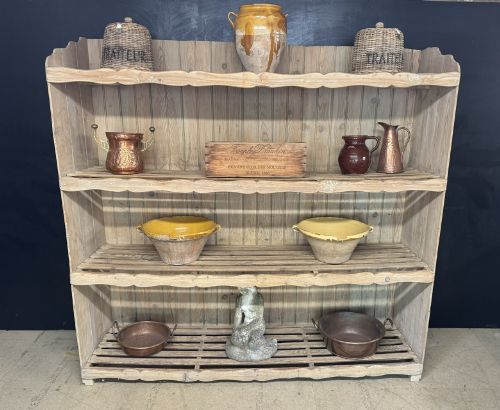
When you search for a rustic pine kitchen rack, you encounter wall-mounted shelves, plate racks, and larger dressers spanning the eighteenth and nineteenth centuries. These pieces originate from regional traditions across England, Wales, Ireland, Scotland, France, and Denmark.
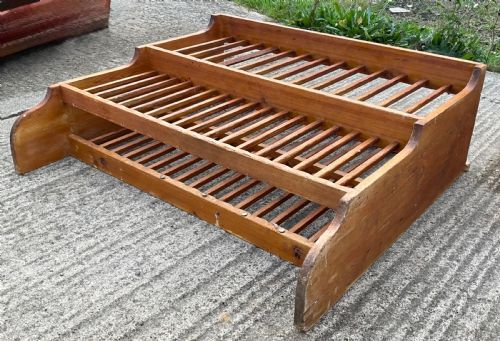
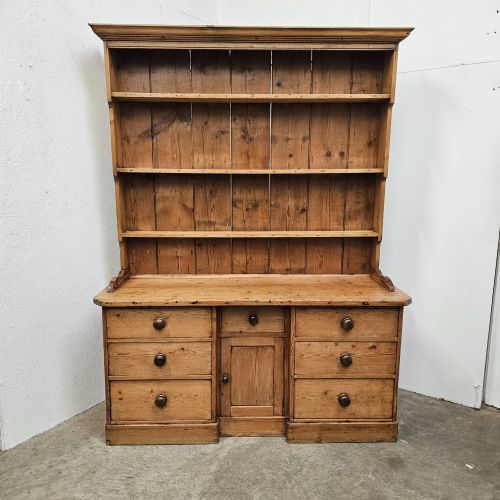
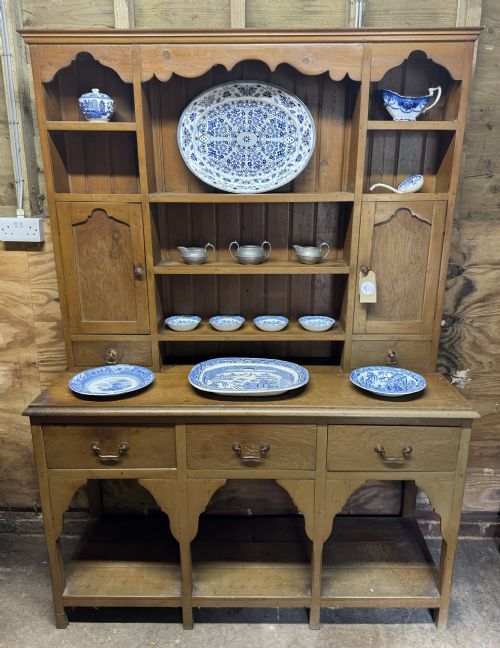
The versions most common here include simple wall shelves, Delft racks with fretwork, and complete kitchen dressers featuring integrated plate racks. They reflect vernacular country workshops rather than urban cabinet makers, prioritising practical storage for plates, bowls, and provisions.
Makers built these pieces for farmhouse kitchens and cottages, using local timber to create functional furniture that endured generations of domestic use. Their forms remain straightforward, designed to hold heavy earthenware and display everyday kitchenware.
How they were made
Carpenters constructed these items primarily from solid pine, occasionally incorporating oak for structural strength or contrasting details. Surfaces often display accumulated layers of original paint, waxed finishes, or stripped bare timber shaped by decades of scrubbing.
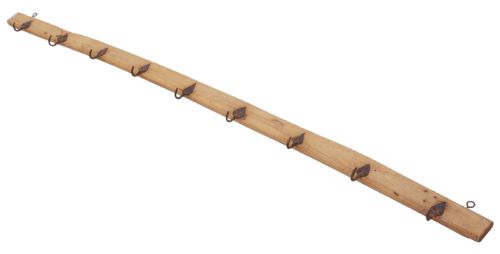
Joinery relied on traditional pegged and nailed construction suited to robust utility furniture. Metal elements such as wrought iron hooks, brass fixtures, and game hooks were integrated to suspend utensils and provisions securely from the woodwork.
Rustic Pine Kitchen Rack Retail Price Guide 2026
Typical asking prices for rustic pine kitchen rack among the pieces listed under this phrase on Sellingantiques today, from the lower quarter to the upper quarter. They describe what is for sale here now, not the wider market.
Some antique racks retain sturdy game hooks once used to suspend fresh catches directly above the kitchen floor.
What varies in quality
Quality rests in the survival of original surfaces, such as untouched paint or early patinated wax that records the history of use. Pieces showing uncompromised vernacular proportions and thoughtful joinery distinguish themselves from later alterations.
Details like decorative fretwork on plate racks, well-proportioned pot boards, and integrated brass or wrought iron hardware elevate individual pieces. Integrity of the timber and minimal replacement of structural parts define the upper tier of these utilitarian survivals.
The Rustic Pine Kitchen Rack Glossary
- Pot board
- A lower open shelf built into a dresser base, traditionally used for storing heavy pots and pans. This feature distinguishes many country kitchen dressers.
- Delft rack
- An open wall-mounted shelving unit designed specifically for displaying plates and ceramics upright. These racks often incorporate small cupboards or hooks.
- Fretwork
- Decorative pierced carving cut into thin boards, commonly found along the frieze or plate rails of 18th-century racks. It adds ornamental detail to otherwise utilitarian pieces.
- Patina
- The surface sheen and colour developed over decades through handling, waxing, and wear. Good patina reflects the authentic age and history of the timber.
- Vernacular
- Architecture and furniture built by local craftsmen using regional traditions and readily available materials, rather than following formal academic design styles.
Rustic Pine Kitchen Rack: Frequently Asked Questions
How do I hang a heavy pine wall rack?
Secure the rack directly into structural wall studs or masonry using appropriate heavy-duty fixings. Because these timber units carry heavy plates and ceramics, proper weight distribution is essential.
Check that the backboards and hanging points remain sound before mounting. Enlisting a professional ensures the rack supports the load safely.
What is the difference between a dresser and a plate rack?
A plate rack consists solely of open shelves designed to hold plates upright against a wall. A full dresser includes both a lower base unit with cupboards or drawers and an upper rack.
Both forms served central functions in historic kitchens. The choice depends entirely on your available floor space and storage needs.
How do I clean an antique pine rack?
Dust the timber gently with a dry, soft cloth to remove everyday particles. Avoid harsh chemical cleaners that strip historic wax or original painted surfaces.
Feed bare pine occasionally with traditional beeswax to nourish the wood. Preserving the existing surface character is vital for maintaining the piece's integrity.
How can I tell an 18th-century rack from a later one?
Examine the construction methods, tool marks, and fastener types used in the assembly. Earlier pieces often display hand-sawn boards, irregular pegging, and forged iron elements.
Timber shrinkage patterns and the depth of the surface patina also help indicate age. Comparing the joinery against known period examples clarifies the timeline.