


Rustic Pine Corner Cupboard
These rustic pine corner cupboard pieces turn awkward room angles into useful display space with the straightforward warmth of softwood.
Rustic Pine Corner Cupboard
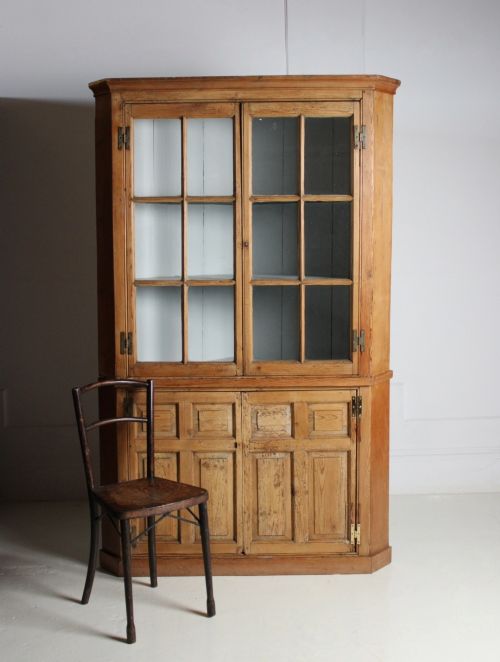
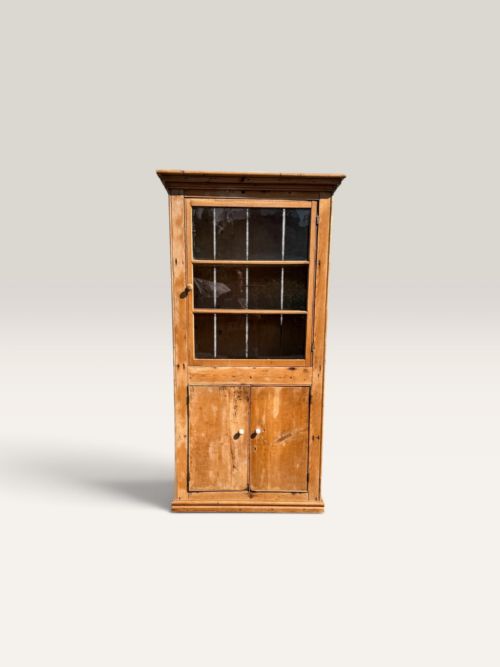
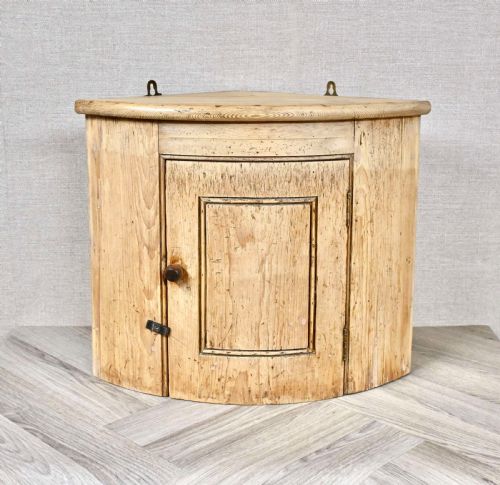
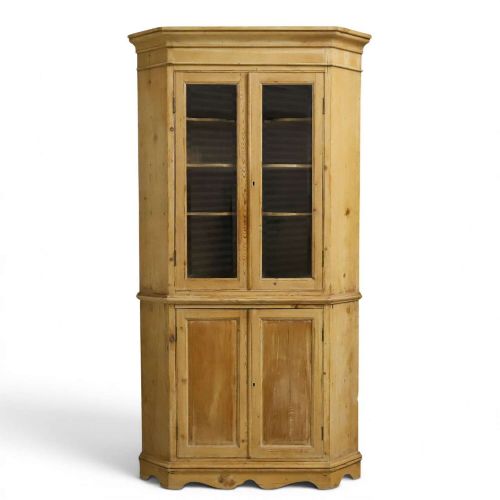
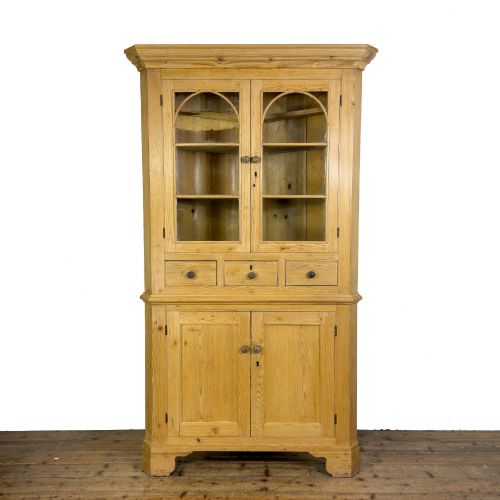
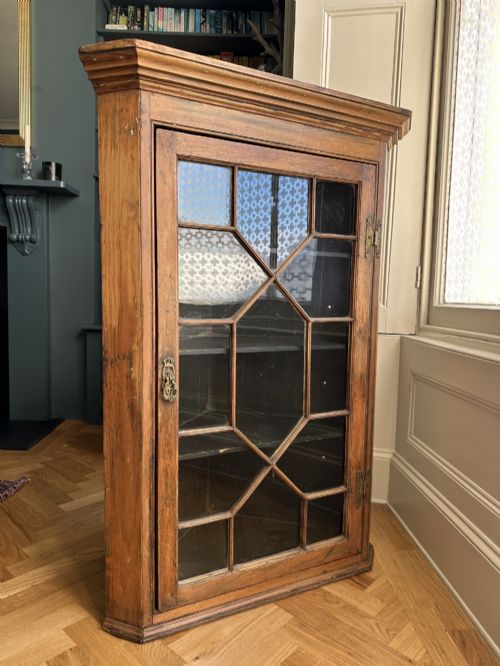
A rustic pine corner cupboard fits neatly into domestic angles, putting empty corners to work while keeping floor space clear. When people search for a rustic pine corner cupboard, they generally encounter hanging models, tall standing units, and two-part forms designed to fit domestic interiors.
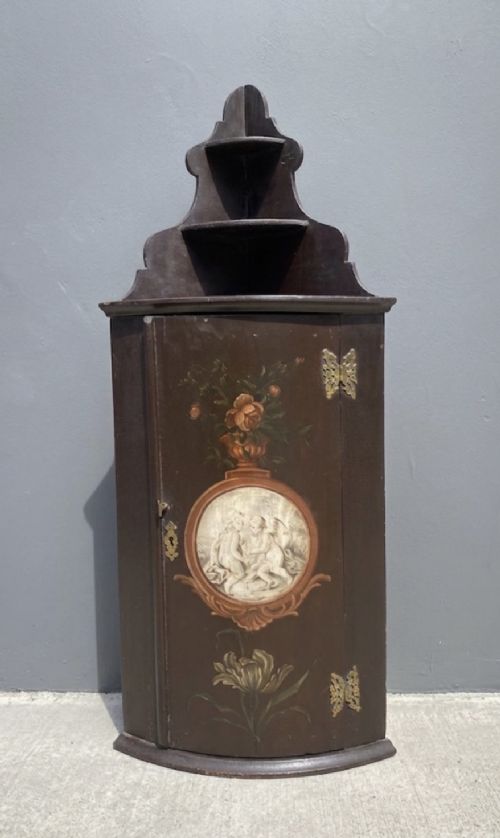
The pieces appearing on this page span the eighteenth century, the nineteenth century, and the early twentieth century, showing both English workshops and continental European traditions. Surviving examples range from stripped timber finishes to painted Scandinavian and German surfaces.
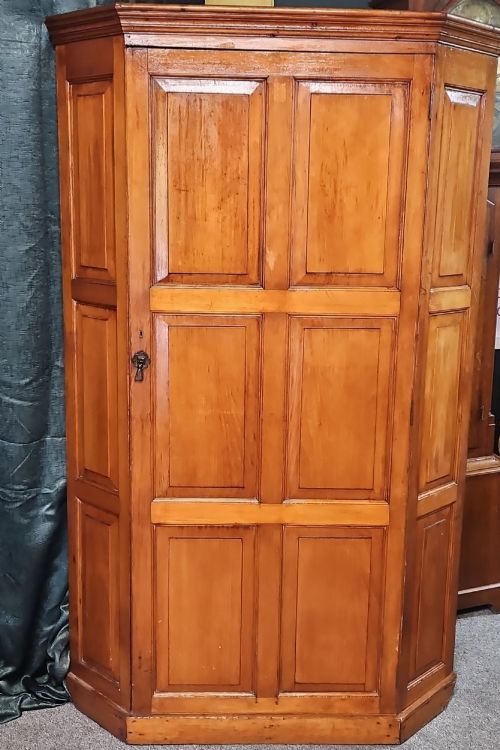
Formats vary from simple single-door hanging boxes to large multi-door standing cabinets and wardrobes. These variations reflect how different rural households stored provisions, textiles, and household goods over generations.
How they were made
Construction relies primarily on pine and pitch pine, joined using traditional cabinet-making methods suited to softwood timbers. Workshops utilised iron and brass hinges, latches, and locks to secure doors and hanging points.
Surface treatments play a significant role, with many pieces retaining original painted interiors, exterior folk art decoration, or stripped finishes that expose the grain. Glazed doors incorporate glass panes to display contents while protecting shelves from dust.
Listings feature pine alongside pitch pine, iron, brass, glass, and paint across eighteenth and nineteenth-century periods.
What varies in quality
Quality rests in the integrity of the original construction and the preservation of surface treatments. Pieces retaining undisturbed historic paintwork or untouched timber patination stand apart from examples that have undergone heavy intervention.
Proportion and scale dictate the visual success of a corner unit, alongside the complexity of the joinery used in cornice mouldings and panelled doors. Intact hardware and original glass panes contribute further distinction to surviving examples.
The Rustic Pine Corner Cupboard Glossary
- Pine
- A soft timber widely utilised in regional furniture making due to its availability and workability. It accepts paint and finishes readily.
- Pitch pine
- A denser, more resinous variety of pine often chosen for its durability and prominent grain pattern. It appears frequently in nineteenth-century utility furniture.
- Hanging corner cupboard
- A wall-mounted cabinet designed to utilise room angles without taking up floor space. These units usually feature a single hinged door.
- Two-part form
- A cabinet constructed in separate upper and lower sections to ease transport and placement. This configuration is common in taller standing cupboards.
- Bow front
- A convex curved cabinet front that projects forward from the corner walls. This shaping requires specialised joinery to curve the timber and doors.
Rustic Pine Corner Cupboard: Frequently Asked Questions
How do I hang a wall cabinet safely?
Hanging corner cupboards require secure fixing directly into wall studs or masonry rather than relying solely on plasterboard. The weight of timber and stored contents demands sturdy brackets and screws.
Check the internal hanging points and backboards of the cupboard to ensure the timber structure can support the load before mounting it at eye level.
How can I tell an older pine cupboard from a later one?
Older pine furniture often displays hand-cut joinery, wrought iron hardware, and timber shrinkage that creates natural irregularities across the boards. Machine-cut elements and uniform modern fixings point towards later production dates.
Examine the backboards, nail types, and interior construction methods to understand the manufacturing period.
Are painted finishes usually original?
Painted surfaces vary between original historic layers, later decorative updates, and modern cosmetic additions applied after stripping. Close inspection under natural light helps reveal underlying wear and earlier pigment layers.
Look for consistent wear patterns around handles and edges that match the age of the timber beneath.
How do I clean and maintain stripped pine?
Stripped pine benefits from gentle dusting and occasional application of appropriate wax polish to nourish the dry timber. Avoid harsh modern chemical cleaners that strip natural patination.
Keep softwood furniture away from direct heat sources and dramatic humidity changes to prevent warping and splitting.