
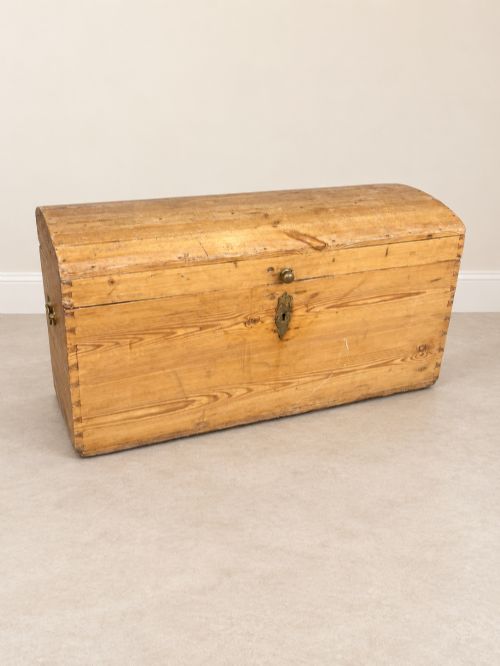
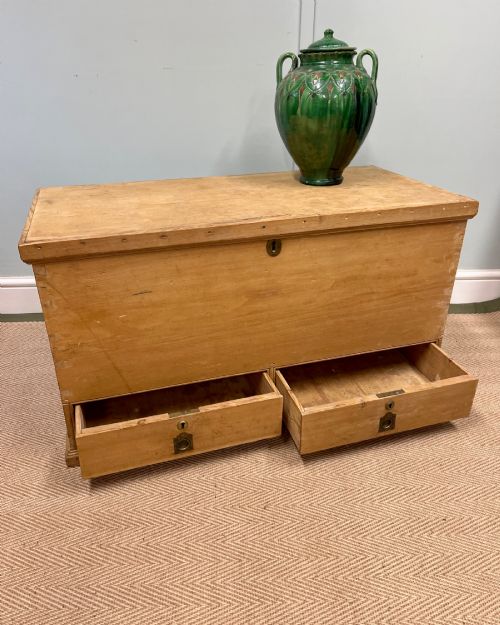
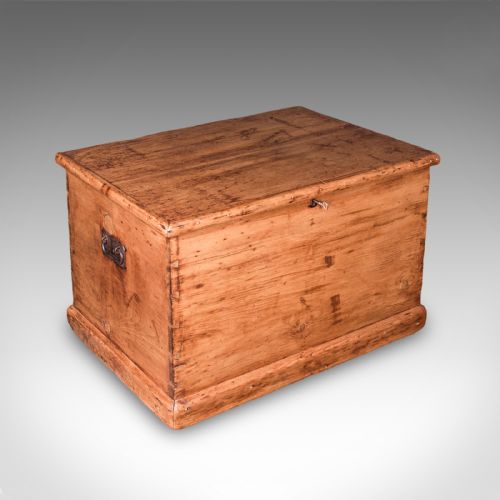
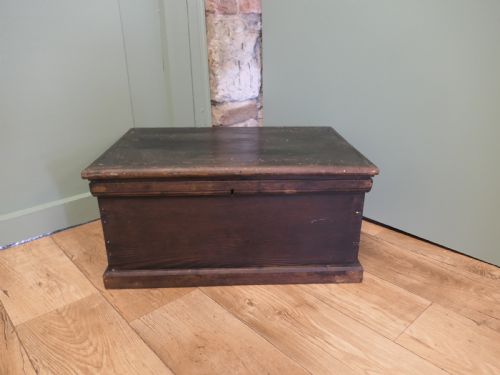
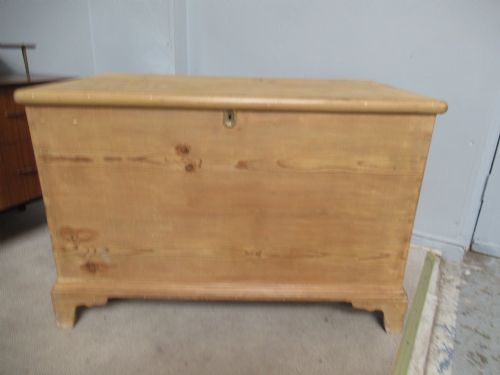
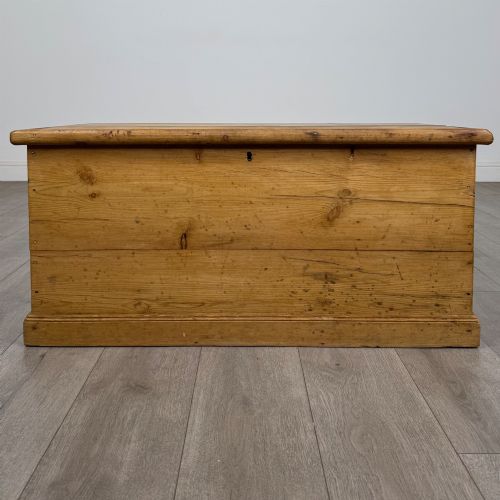
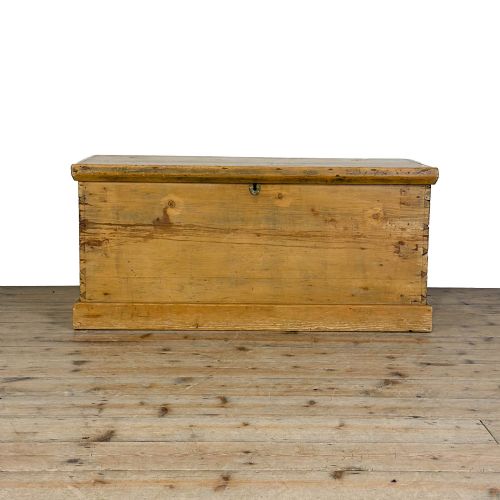
Rustic Pine Coffer Box
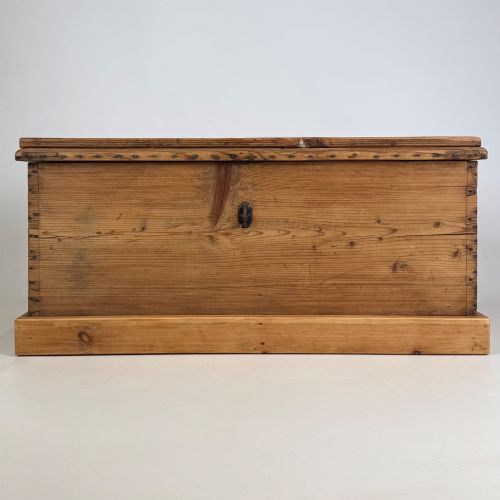
A rustic pine coffer box brings honest country utility and warm timber grain into a modern interior.
Rustic Pine Coffer Box
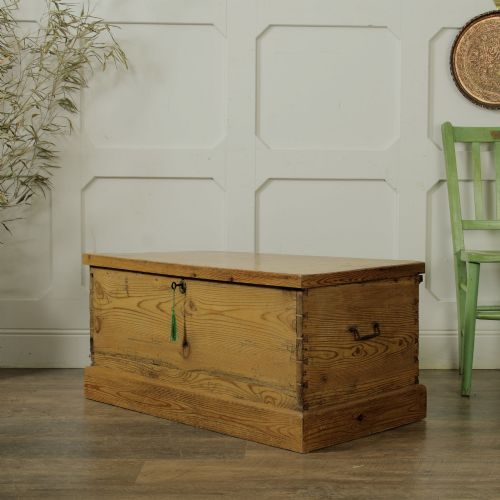
A rustic pine coffer box serves as a robust storage trunk or blanket chest, shaped by centuries of domestic and travel needs. When exploring this selection, buyers encounter forms ranging from Georgian mule chests with lower drawers to Victorian travel trunks and simple domestic storage boxes.
The origins span British workshops alongside continental European examples, including Scandinavian, French, Dutch, and Hungarian pieces. These chests display the practical utility demanded by rural households, functioning as seating, blanket storage, and secure travel containers.
Makers ranged from local provincial joiners to anonymous country craftspeople who utilised readily available softwood to build durable furniture. Their work prioritised solid construction over fine cabinetmaking, resulting in honest domestic pieces designed to endure heavy daily use.
Materials and Construction
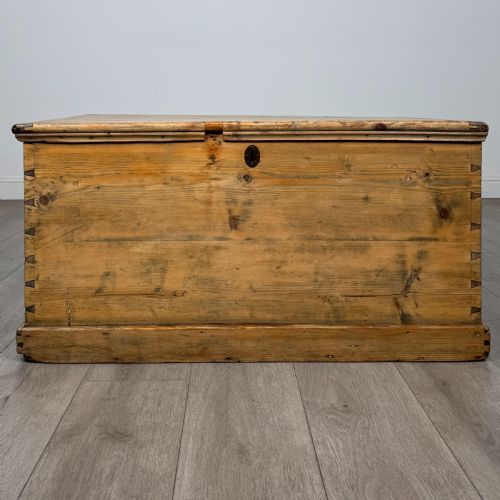
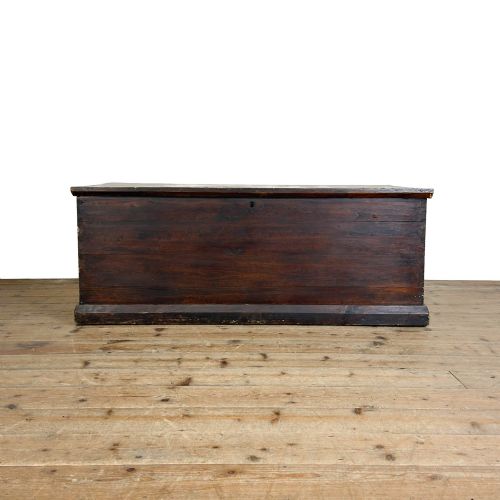
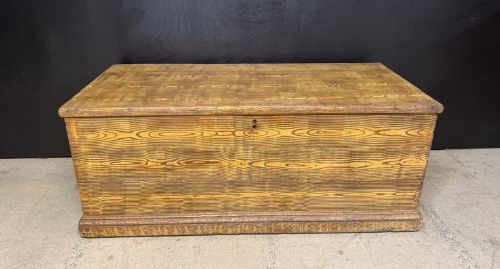
Construction relies heavily on solid pine and pitch pine boards joined simply, often complemented by secondary woods such as elm or oak in internal elements. Surfaces frequently retain original layers of paint, scumble finishes, or plain wax over time-worn timber.
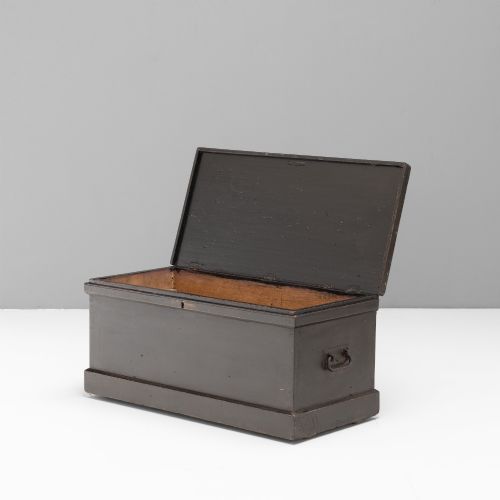
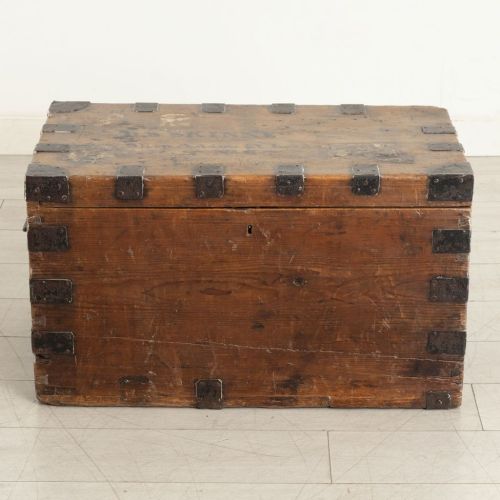
Iron forms an essential structural component, appearing as hand-forged strapwork, corner brackets, and robust hinges that reinforce the wooden walls. Brass fittings also appear on finer travel and campaign pieces, while paper sometimes lines the interior compartments.
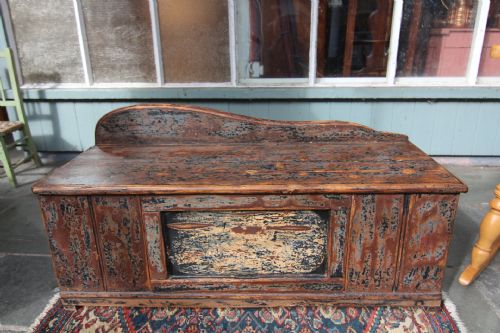
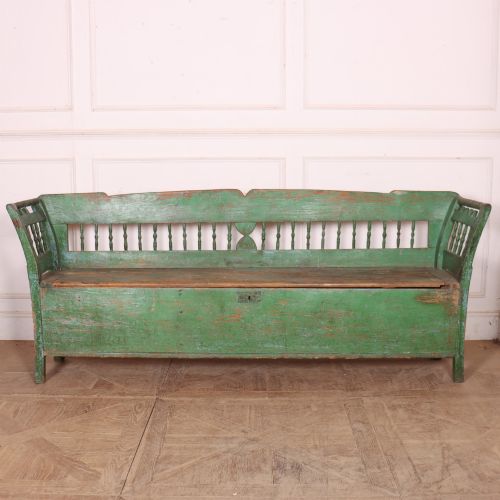
Hungarian and Scandinavian country workshops produced many of the painted settle and coffer forms found within this selection.
Judging Quality and Character
Quality rests in the integrity of the original construction, the depth of surface patination, and the survival of early or original paint finishes. Pieces that retain their hand-forged iron strapwork, internal candle tills, or fitted drawers command higher regard among collectors.
Proportion and scale also distinguish finer examples, where simple dovetailed joints and unaltered timber surfaces reflect thoughtful country craftsmanship rather than purely utilitarian mass production.
The Rustic Pine Coffer Box Glossary
- Coffer
- A large wooden chest used for storing valuables, linen, or personal possessions. They typically feature hinged lids and sturdy construction.
- Mule chest
- A traditional storage chest featuring one or more drawers built into the base beneath the main compartment. This form bridges the gap between a standard blanket box and a chest of drawers.
- Scumble paint
- A decorative surface treatment involving translucent layers of glaze manipulated to imitate the grain of more expensive hardwoods. It was widely used on country pine furniture.
- Strapwork
- Ornamental or reinforcing bands of metal, usually iron, fixed across the exterior of a chest to strengthen the joints. These straps are often hand-forged with shaped ends.
Rustic Pine Coffer Box: Frequently Asked Questions
What is a rustic pine coffer box used for?
These boxes served historical households as secure containers for blankets, clothing, tools, and personal valuables. Today, they function primarily as living room storage tables, bedroom blanket chests, and hallway statement pieces.
Their robust flat lids also allow them to double as occasional seating or display surfaces while concealing household clutter inside.
How can I tell the age of a pine chest?
Dating relies on examining construction techniques, such as hand-cut dovetails, forged iron hardware, and the type of fasteners used. Older pieces from the eighteenth century often display wider pine boards and simpler, pegged timber joints.
By contrast, Victorian examples frequently incorporate machine-sawn timber and standardised iron hinges, reflecting industrial manufacturing shifts.
Are painted finishes original on these boxes?
Many trunks retain early or original paint finishes, including scumble glazes and solid historical colours applied to protect the softwood. Close inspection under natural light reveals wear patterns, craquelure, and pigment build-up consistent with age.
Unpainted examples generally show deep wax patination accumulated through decades of domestic handling and polishing.
How do I care for antique pine furniture?
Preserving these wooden surfaces involves keeping them away from direct heat sources and dramatic humidity fluctuations that cause pine to split. Occasional applications of traditional beeswax nourish the dry timber without sealing the pores.
Cleaning should remain gentle, utilising a soft dry cloth to remove dust while protecting fragile painted or waxed patinations.