
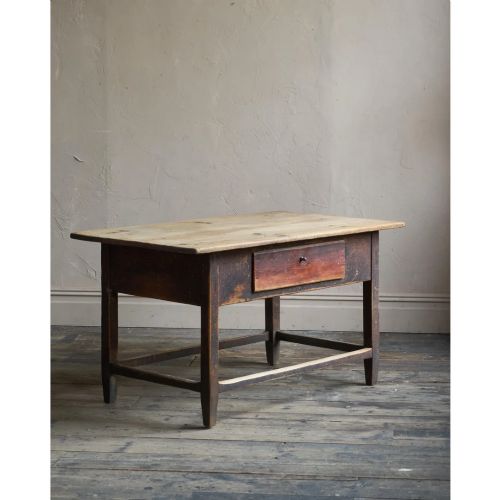
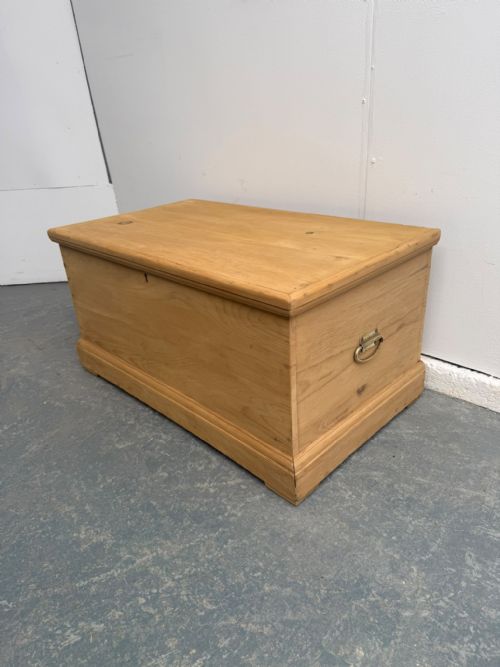


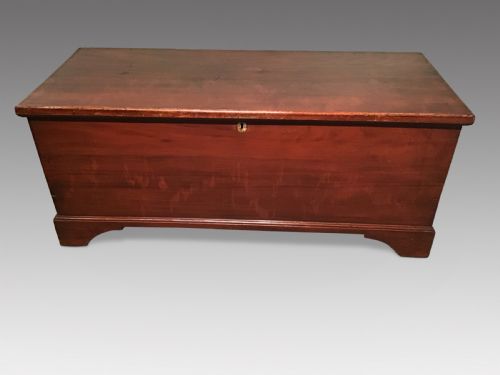


Rustic Pine Box Table
A rustic pine box table brings utilitarian history and sturdy character directly into a living space as practical furniture.
Rustic Pine Box Table
A rustic pine box table combines traditional storage trunks and blanket boxes with the surface utility of a low table. These pieces originate from various nineteenth century contexts, spanning both English domestic workshops and Scandinavian country traditions.
The inventory on this page ranges from low coffee tables and console units to fitted storage chests and writing slopes. Buyers encounter waxed finishes, painted surfaces, and metal-bound hardware across these utilitarian forms.
Most examples hail from the Victorian era and the broader nineteenth century, reflecting robust construction designed for daily household or military use. Their dual function as storage and surface makes them versatile additions to modern interiors.
Materials and construction
Solid pine forms the primary body of every piece, providing a resilient and straight-grained timber foundation. Workshops utilised simple dovetail or butt joints to construct the main storage boxes, ensuring long-term durability.
Iron and brass hardware frequently reinforce the corners, lids, and edges of these trunks. Surface treatments rely heavily on traditional wax or regional paint applications to protect the timber over decades of use.
Several trunks started life carrying ammunition or carpenter tools before finding a quiet retirement as living room coffee tables.
Judging quality and character
Quality in a rustic pine box table rests upon the integrity of the original timber and the retention of authentic surface patination. Pieces that maintain their original hardware, handles, and hinges command greater interest from collectors.
The distinction between a standard utility chest and a finer vernacular table lies in the proportion and proportioned adaptation for domestic seating or display. Subtle details like fitted interior drawers or original Scandinavian paintwork elevate particular examples.
The Rustic Pine Box Table Glossary
- Pine
- A softwood commonly utilised in vernacular furniture making throughout the nineteenth century. It accepts wax and paint finishes readily while offering a sturdy structure.
- Box stretcher
- A horizontal framework connecting the legs of a table near the base to provide additional structural stability. This feature appears on Scandinavian painted table variants.
- Blanket box
- A large chest traditionally used for storing linens and blankets in domestic settings. Many examples are repurposed today as coffee tables due to their convenient proportions.
- Waxed finish
- A surface treatment applied to timber to nourish the wood and produce a soft sheen. This method highlights the natural grain and age-related patination of pine.
Rustic Pine Box Table: Frequently Asked Questions
What is a rustic pine box table?
A rustic pine box table is a repurposed storage chest or trunk utilised as a low table. These items blend historical utility with practical everyday furniture.
They originate mostly from the nineteenth century and offer enclosed storage alongside a sturdy top surface.
How were these pine chests originally used?
Original uses varied from storing household blankets and tools to serving as military transport cases and writing desks. Carpenters and military personnel built them for durability.
Over time, many of these trunks transitioned into domestic living spaces as coffee tables and console units.
How do I identify a Victorian pine box?
Victorian pine boxes typically display nineteenth-century construction methods such as hand-cut joints, solid timber boards, and heavy iron or brass hardware. Their patination reflects decades of functional use.
Dates range from the mid to late nineteenth century, often supported by maker marks, utilitarian labels, or carpenter stamps.
Can I use a box table for storage?
These pieces retain their original hollow interiors, making them ideal for storing books, blankets, and household items. The hinged lids provide easy access while keeping the surface clear.
Living with a box table combines hidden organisation with a stable display surface for daily items.