




Rustic Oak Kitchen Shelf
When you search for a rustic oak kitchen shelf, you are looking at sturdy timber wall storage built to hold everyday plates and bowls.
Rustic Oak Kitchen Shelf
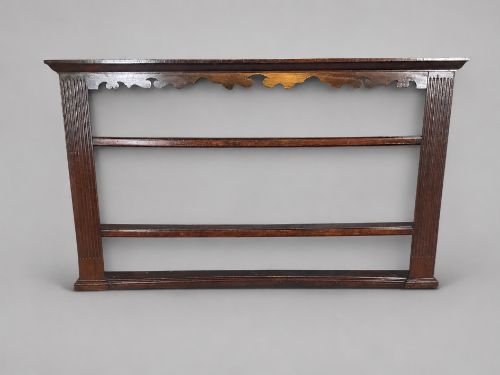
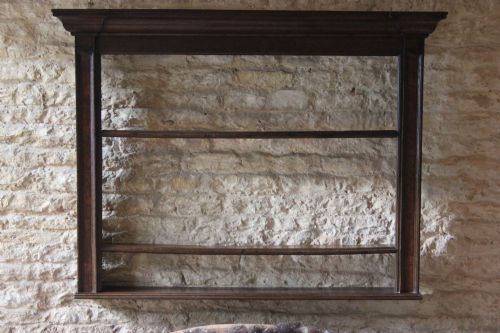
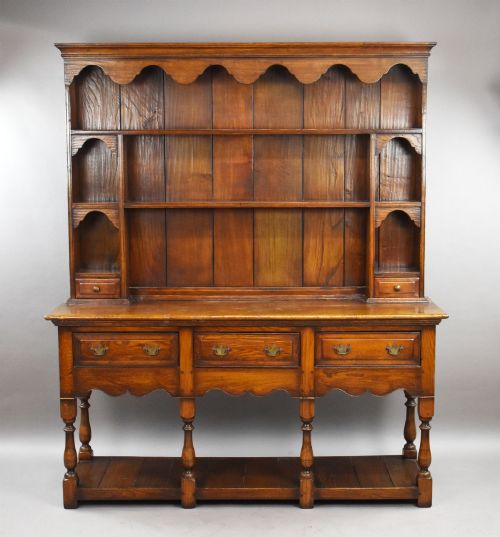
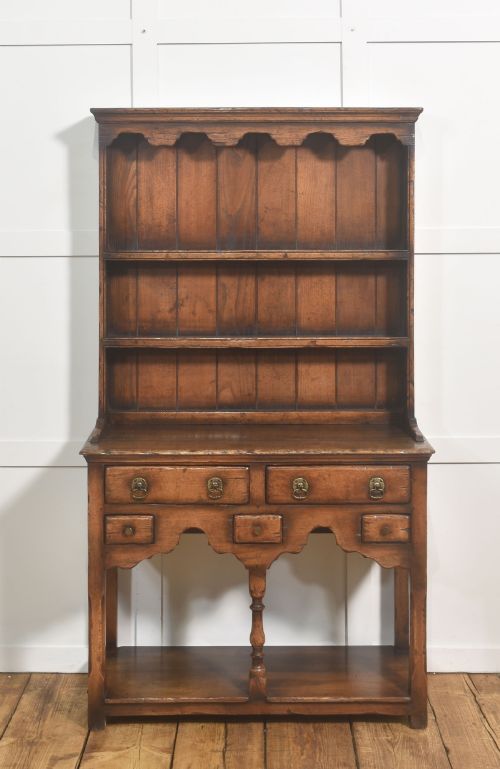
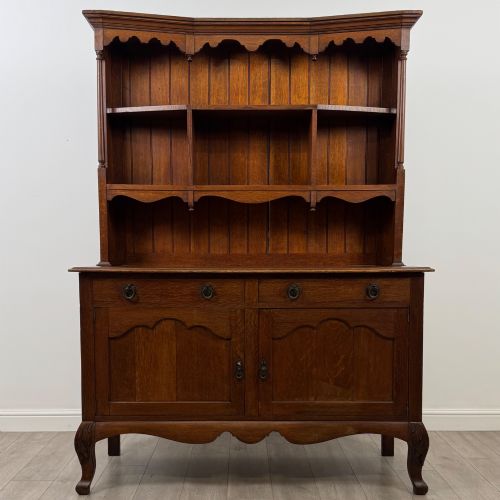
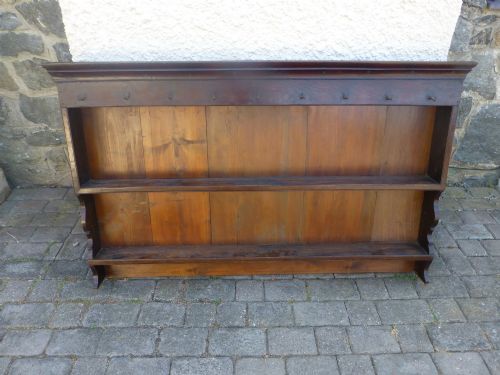
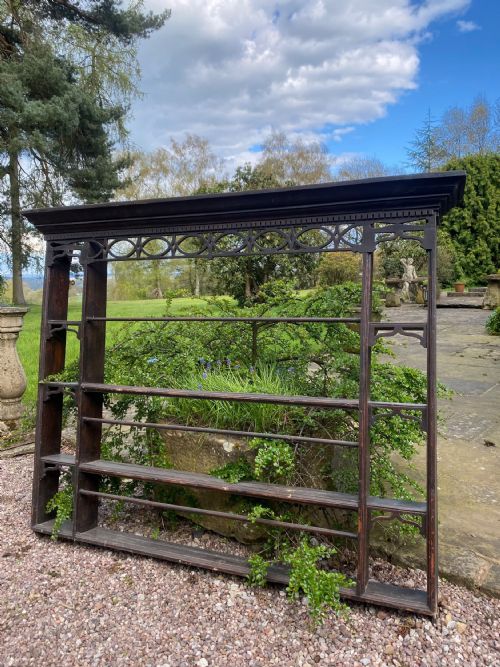
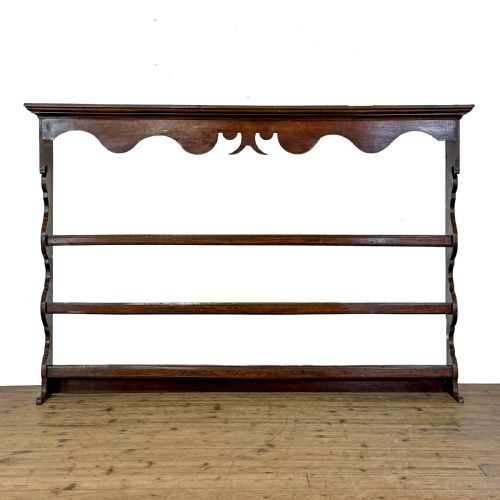
A rustic oak kitchen shelf takes several forms across our listings, appearing most frequently as an 18th century or Georgian wall rack designed for plates and delftware. These pieces range from simple hanging shelves to the upper sections taken from larger Welsh dressers.
Makers in the country tradition built these shelves for practical use in domestic kitchens, utilising solid timbers to display heavy earthenware. The selection spans straightforward country oak items alongside more refined George III examples and Arts and Crafts cottage pieces.
Buyers will also encounter related forms such as two-part dressers and wall-mounted plate racks in stained oak, elm, or fruitwood. Each piece reflects the utilitarian needs of historical rural households where crockery storage needed to be robust and accessible.
How they were made
Makers constructed these shelves primarily from solid oak, sometimes incorporating secondary timbers like elm, fruitwood, or burr walnut for contrast. Boards were hand-planed and joined with traditional methods suited to domestic daily use.
Metal fixings such as brass and iron appear on hooks, strap hinges, or hanging brackets, providing necessary structural support. The surfaces show the marks of hand tools, with finishes ranging from natural wax to polished golden oak tones.
Rustic Oak Kitchen Shelf Retail Price Guide 2026
Typical asking prices for rustic oak kitchen shelf among the pieces listed under this phrase on Sellingantiques today, from the lower quarter to the upper quarter. They describe what is for sale here now, not the wider market.
The listings feature rustic oak kitchen shelves spanning the Georgian era, the Victorian period, and the early 20th century.
What varies in quality
Quality in a rustic oak kitchen shelf depends heavily on the grade of timber selected and the integrity of the original joints. Finer examples display carefully proportioned mouldings and well-figured grain, while simpler vernacular pieces rely on honest, straightforward construction.
The survival of original surface patination and matching brass or iron hardware distinguishes better pieces. Alterations to plate grooves or replaced backing boards naturally affect the overall character and historical standing of the shelf.
The Rustic Oak Kitchen Shelf Glossary
- Delft rack
- A wall-mounted or dresser-top shelf specifically designed with grooves and retaining rails to display tin-glazed earthenware plates upright. These shelves keep ceramics secure while making them visible.
- Welsh dresser
- A large dining room or kitchen unit combining base cupboards or drawers with an open plate rack on top. Many surviving wall shelves were originally the upper portions of these two-part pieces.
- George III
- The stylistic period spanning the mid-to-late 18th century, characterised in country furniture by pleasing proportions and restrained decorative detail. Pieces from this era often balance utility with refined craftsmanship.
- Arts and Crafts
- A late 19th and early 20th century design movement that emphasised honest construction and simple, unadorned forms. Furniture from this style highlights the natural grain of the oak.
Rustic Oak Kitchen Shelf: Frequently Asked Questions
Were these shelves made for kitchens?
Most rustic oak plate racks and wall shelves served domestic spaces where cooks needed quick access to everyday crockery. They functioned as both drying racks and display units for imported delftware and local pottery.
Over time, many migrated to dining rooms as display furniture rather than working kitchen storage. Their robust construction suited the steamy, busy environment of historical domestic quarters.
How do I tell an 18th century rack from a later copy?
Examine the timber closely for tool marks, board shrinkage, and the characteristic warmth of an aged surface patina. Older oak exhibits hand-sawn board edges and timber movement consistent with centuries of dry ambient conditions.
Check the fixings and pegging methods used in the joinery. Later reproductions often betray their age through uniform machine milling and lack of genuine wear around the plate grooves.
Can I use these shelves for modern dinnerware?
Traditional plate racks feature specific groove depths and rail heights designed for historical ceramics. Modern heavy stoneware dinner plates may sit too thickly in older slots.
Measure the depth of your plates against the retaining ledge before placing them on display. Lighter earthenware and bowls fit most antique configurations without difficulty.