
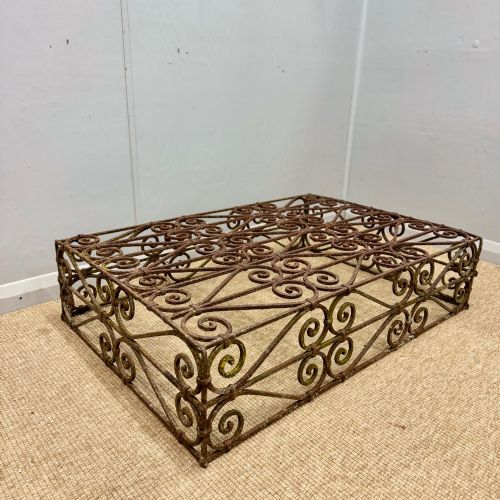
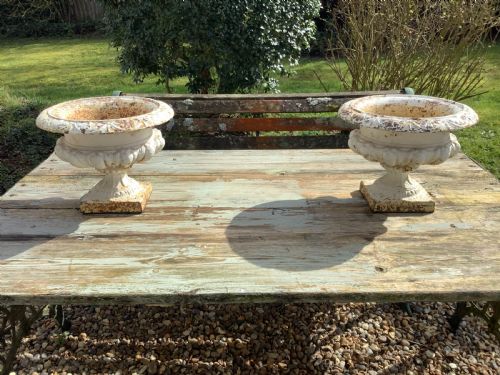

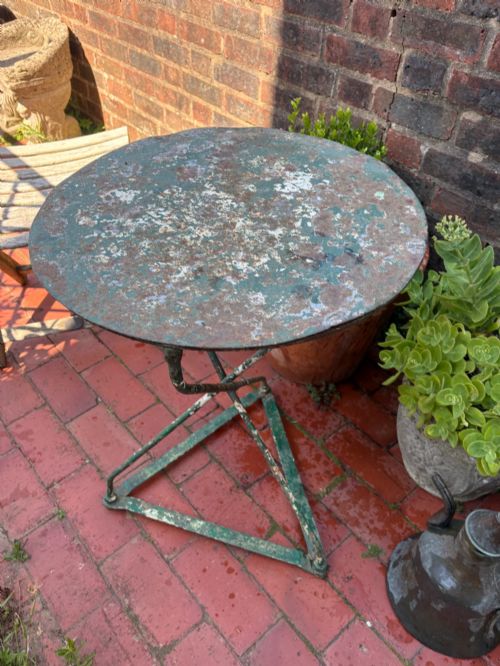


Rustic French Metal Table
A rustic french metal table brings industrial grit and provincial warmth together in one hard-wearing surface.
Rustic French Metal Table
A rustic french metal table combines utilitarian iron frames with weathered surfaces designed for gardens, potting sheds, and country kitchens. Buyers searching for this phrase encounter pieces spanning the nineteenth century through the early twentieth century.
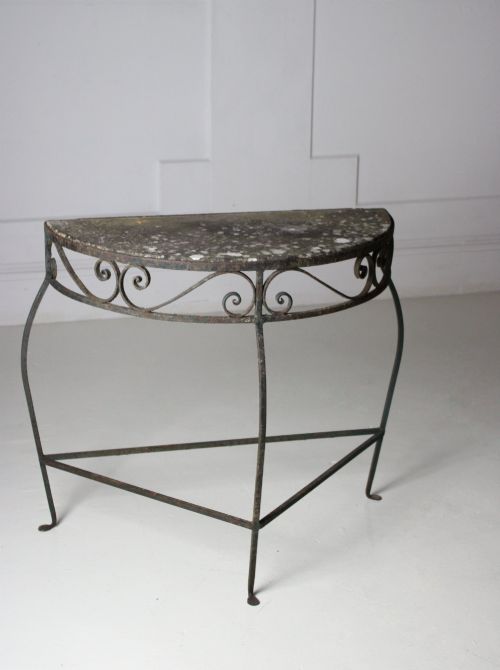
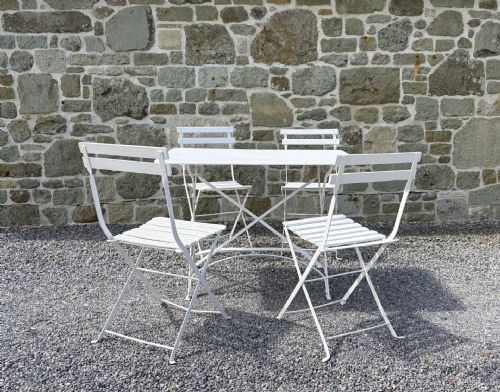
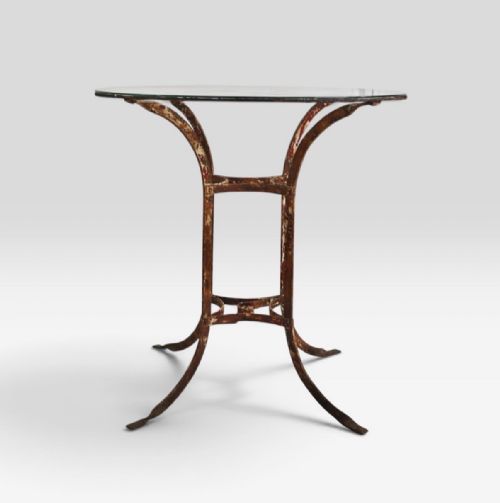
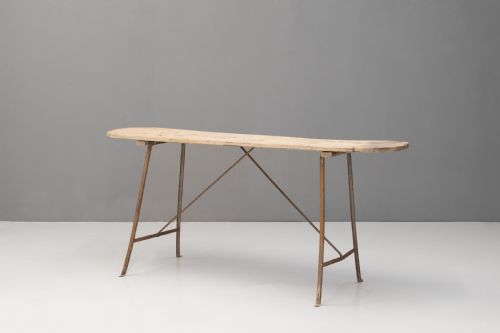
Forms on this page range from folding café tables and round gueridon designs to console tables, pastry tables, and low garden tables. Many examples incorporate wooden, marble, copper, or glass tops paired with robust iron or steel bases.
Origins trace directly to French provincial settings, including garden terraces, orangery spaces, and country houses. These practical tables served daily domestic and outdoor functions before finding new life in modern interiors.
Construction and materials
Makers utilised durable metals such as wrought iron, cast iron, and steel to build stable frames that withstand heavy daily use and outdoor exposure. Strapp work and metalwork fabrication created sturdy folding mechanisms and decorative bases.
Surfaces frequently pair the metal structure with contrasting natural materials like pine, bleached wood, marble, and copper. Paint finishes, including green and verdigris treatments, developed naturally over decades of use.
Materials documented across the inventory include wrought iron, cast iron, steel, paint, pine, glass, marble, and wood.
Evaluating quality and proportion
Quality rests in the integrity of the metalwork, the weight of the casting, and the authenticity of surface wear. Original painted finishes and patinated copper or marble tops elevate a piece above later replacements.
Proportion and structural balance separate standard utilitarian workshop items from finer provincial furniture. Well-executed joints, operational folding mechanisms, and pleasing proportions define superior examples.
The Rustic French Metal Table Glossary
- Wrought iron
- Iron beaten into shape while hot by a blacksmith. This material provides structural strength and allows for hand-forged scrollwork or clean structural lines.
- Gueridon
- A small round table supported by a central pillar or multiple legs. These French tables often feature stone or painted metal tops.
- Verdigris
- A green patina formed naturally on copper, brass, or bronze through atmospheric weathering. It indicates considerable age and exposure to the elements.
- Strapp work
- Metal straps joined together to form an openwork lattice or supportive frame. This technique appears frequently on garden furniture bases.
- Trestle table
- A table consisting of a horizontal beam supported by two trestles. This form allows for maximum legroom and sturdy support.
Rustic French Metal Table: Frequently Asked Questions
Are these metal tables suitable for outdoor use?
Most pieces originated as garden or café furniture designed to handle outdoor conditions. Regular maintenance protects the original metal and painted surfaces from further weathering.
Placing vulnerable timber or marble-topped variants under sheltered areas prevents moisture damage while preserving the antique finish.
How do I clean a rusted metal table?
Light brushing removes loose surface debris without disturbing the stable patination built up over decades. Preserving the original aged finish maintains both the character and historical integrity of the piece.
Harsh chemical strippers or aggressive sanding strip away the surface history that defines these antique items.
Can I use a pastry table indoors?
Pastry tables and console tables integrate seamlessly into modern kitchens, dining rooms, and hallways as functional work surfaces. Their narrow profiles and mixed material tops suit contemporary interior layouts.
Pairing an industrial metal base with warm wood or stone brings texture and contrast to residential spaces.
How can I tell an older table from a modern replica?
Examine the metal construction for hand-forged marks, heavy cast components, and period-specific fastening methods. Older examples show natural wear patterns consistent with decades of actual domestic or garden use.
Surface patination on iron, paint, and copper develops over generations and resists easy imitation by modern manufacturers.