


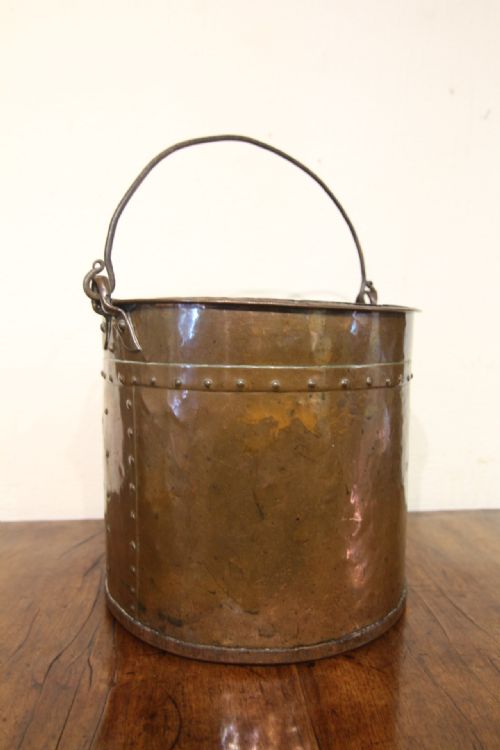


Rustic Fireside Bin
These rustic fireside bin examples are practical hearth containers built from copper, iron, and timber to hold wood and coal.
Rustic Fireside Bin
A rustic fireside bin serves as a sturdy hearth accessory designed to hold logs, coal, and kindling beside the fireplace. When searching for a rustic fireside bin, buyers encounter heavy metal buckets, wooden baskets, and utilitarian holders gathered from the nineteenth and early twentieth centuries.
The pieces listed here span styles such as Victorian, Arts and Crafts, and Scandinavian Country. Forms range from riveted copper buckets and cauldrons to oak log bins, pine baskets, and blacksmith-made coal wagons.
Examples from this selection often double as planters and vessels or simple log storage and holders. Most originate from the nineteenth century, alongside Edwardian and 1920s utilitarian designs.
Materials and construction
Rustic Fireside Bin Retail Price Guide 2026
Typical asking prices for rustic fireside bin among the pieces listed under this phrase on Sellingantiques today, from the lower quarter to the upper quarter. They describe what is for sale here now, not the wider market.
Materials span copper, wrought iron, oak, pine, and steel across the nineteenth and early twentieth centuries.
Evaluating quality and character
Quality rests in the substance of the materials and the honesty of the construction rather than applied decoration. Heavy-gauge copper with robust hand-riveting and original iron fittings commands attention.
Timber pieces display quality through sound joinery in oak or pine that resists drying out near a hearth. Plain, blacksmith-made items succeed through sturdy proportions and purposeful utility.
The Rustic Fireside Bin Glossary
- Cauldron
- A large metal pot with a rounded base and swing handle, often repurposed from kitchen use to hold hearth logs. These vessels typically feature heavy hand-riveted construction.
- Wrought iron
- Iron that has been heated and hammered into shape by a blacksmith, visible in the swing handles and frames of fireside containers. This material offers great tensile strength and a fibrous texture.
- Arts and Crafts
- A design movement valuing handcraftsmanship and simple forms over mass production. Pieces from this tradition show honest construction in copper and iron.
- Scandinavian Country
- A regional aesthetic focused on functional pine and timber items. These baskets and bins display plain, unpretentious woodworking.
- Log bin
- A deep container designed specifically to store split firewood near a fireplace. They appear in copper, oak, and steel across various nineteenth-century periods.
Rustic Fireside Bin: Frequently Asked Questions
What are rustic fireside bins made from?
These fireside containers utilise durable metals including copper, wrought iron, cast iron, and steel. Timber also forms a major component, with pieces constructed from solid oak and pine.
Combination pieces frequently pair a copper body with an iron handle or wooden accents. Each material was chosen for its ability to withstand heavy fuel loads.
How do I date a copper log bin?
Dating relies on manufacturing methods, such as hand-hammering and visible riveting patterns seen on nineteenth-century examples. The style of the iron handle and the purity of the metal form offer further clues.
Later pieces from the 1920s often adopt more industrial utilitarian lines. Earlier Victorian and Georgian pieces display heavier gauge metalwork.
Can these bins hold logs outdoors?
While constructed from tough materials like iron and copper, these antique vessels were built for indoor hearth use. Prolonged exposure to damp weather can degrade timber and accelerate corrosion on iron components.
Keeping them inside preserves the original surface patination. They function best as dry indoor fuel stores.
What is the difference between a coal box and a log bin?
Coal boxes often feature lids or enclosed scuttle designs to contain dusty slack and small fuel pieces. Log bins remain open-topped to accommodate bulky, irregular lengths of firewood.
Some utilitarian pieces combine both roles under general fireside storage. The proportions usually reflect the specific fuel they were designed to carry.