





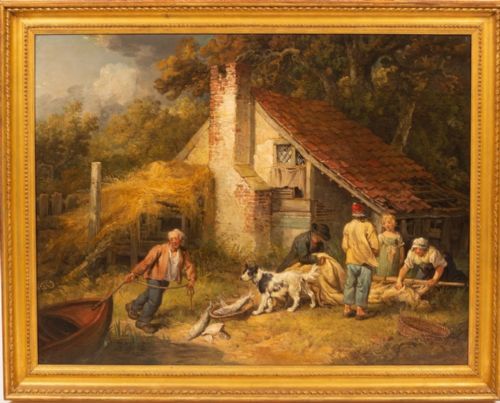
Rustic Cottage Oil Art
These rustic cottage oil art pieces capture rural domestic scenes and quiet country landscapes, offering collectors a glimpse into traditional pastoral life through historical brushwork.
Rustic Cottage Oil Art
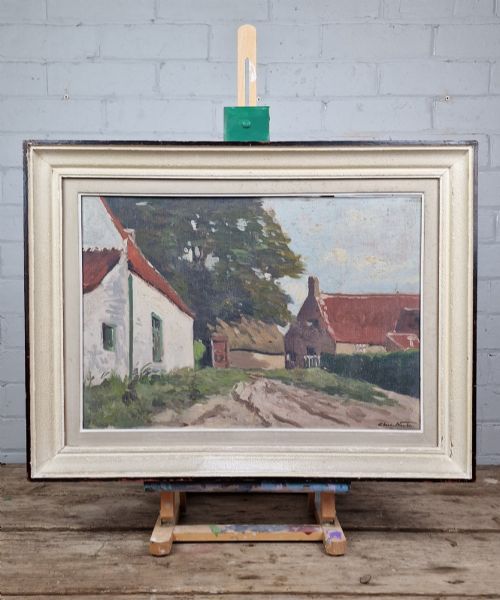
Rustic cottage oil art encompasses fine art paintings depicting rural dwellings, farmyards, and domestic genre scenes from the eighteenth, nineteenth, and twentieth centuries. Buyers searching this phrase typically encounter works attributed to the English School, British Impressionism, and various European traditions.
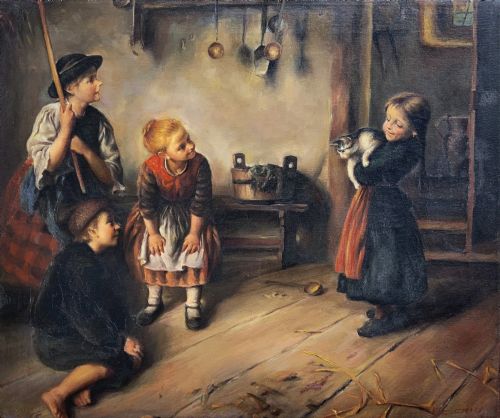
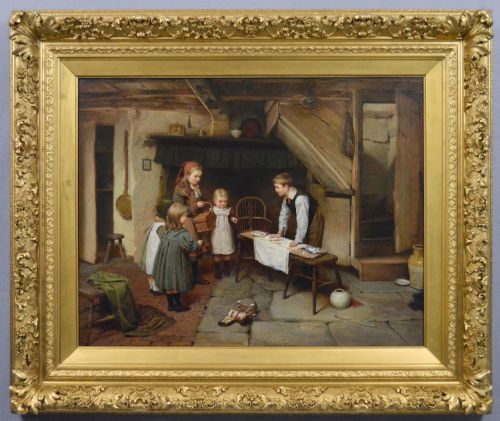
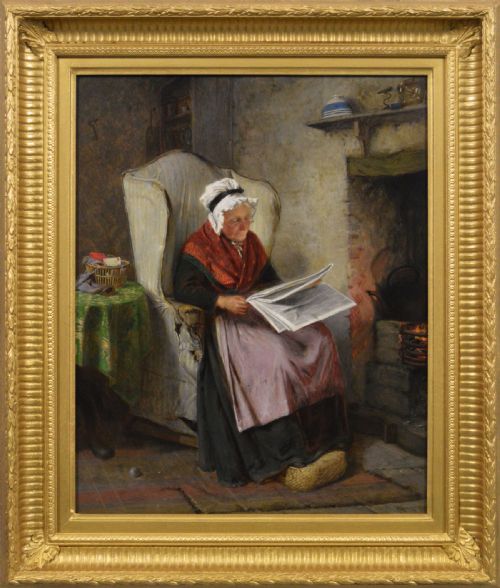
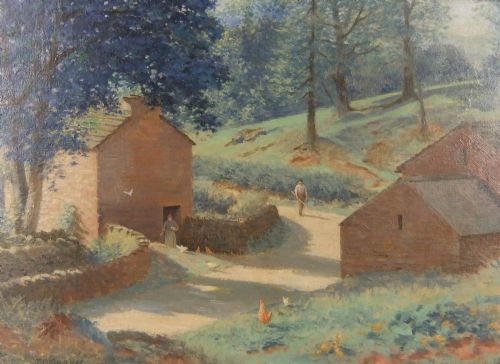
The subjects range from solitary farmhouses and thatched cottages to intricate interior genre scenes featuring figures spinning wool or children playing near the hearth. Many pieces capture specific regional landscapes across Britain, the Netherlands, and Northern Europe during periods spanning from the Georgian era through to the mid-twentieth century.
How They Were Made
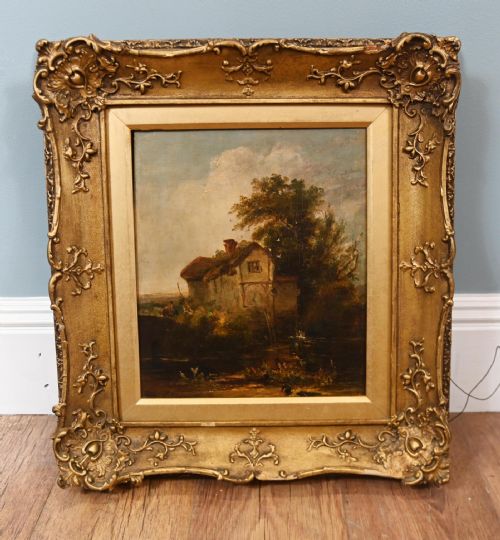
These works rely on oil paint applied to woven canvas, wooden panels, or canvas boards, often secured within period frames embellished with gesso and gold leaf. Painters built up compositions using layered oil pigments to achieve depth in dark interiors and natural light across pastoral landscapes.
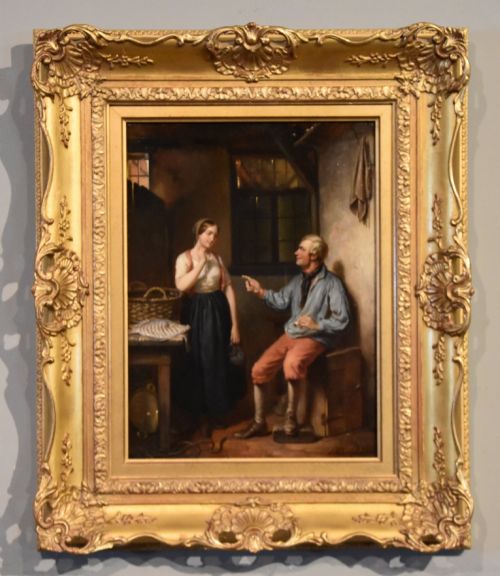
Framing often included gilt wood mouldings that complemented the tonal palette of the oil paint, preserving the physical integrity of the panel or stretched canvas over centuries.
Several cottage scenes squeeze an astonishing variety of livestock into one yard, featuring pigs, ponies, guinea pigs, rabbits, and dogs all at once.
What Varies in Quality
The standard of a painting depends heavily on the dexterity of the brushwork and the artist's ability to render light, shadow, and human expression within a confined domestic interior or expansive landscape. Works by established regional schools or named nineteenth-century artists demonstrate superior compositional balance compared to simpler amateur or primitive folk art examples.
Preservation of the original paint layer and panel stability also dictate the calibre of a piece, as craquelure and past restorations influence how clearly the artist's original technique remains visible today.
Charles Houben·Jacob Akkersdijk·Harry Brooker·Haynes King·James Kyd·Charles Vickers·Abraham Hulk Junior·Ernest Higgins Rigg·T.B. Garvie·William Greaves·James Ward·George Morland·Henry Singleton·Alfred Provis·Jonathan Pratt·Charles Hunt Jnr·John F. Pasmore·Georgina Lara·Joseph Paul·Kershaw Schofield
The Rustic Cottage Oil Art Glossary
- Genre painting
- Art depicting scenes from everyday life, typically involving ordinary people engaged in domestic or rural activities. These works frequently focus on cottage interiors and farmyard tasks.
- Chiaroscuro
- An artistic technique employing strong contrasts between light and dark to give a sense of volume to figures and interior spaces. This method is often seen in cottage scenes lit by a hearth or window.
- Oil on panel
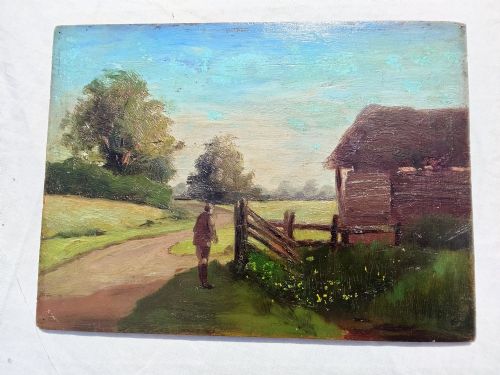
- A painting executed on a flat wooden support rather than stretched fabric. Wooden boards were commonly utilised by artists working on smaller rural landscapes.
- English School
- A loose association of painters working in England across various centuries rather than a formal academy. Many rustic landscapes and cottage paintings originate from these regional practitioners.
- Gesso
- A plaster-like mixture applied to wood or canvas as a base for painting or applied to wood to form moulded frames. Gilt leaf was frequently laid over this preparation on period frames.
Rustic Cottage Oil Art: Frequently Asked Questions
What periods do these cottage paintings usually date from?
The available selection spans from the eighteenth century through to the mid-twentieth century, encompassing Georgian, Victorian, and Edwardian eras. Many examples originate specifically from the nineteenth century.
Artists of these periods frequently recorded traditional rural architecture and farming communities before industrialisation altered the countryside permanently.
How were these oil paintings traditionally displayed?
These works were typically housed in wooden frames, often finished with gesso and gold leaf to complement the warm tones of the oil paint. They hung in domestic parlours and sitting rooms to bring pastoral scenery indoors.
Today, collectors continue to display them in residential settings where period lighting can accentuate the texture of the oil on canvas or panel.
What subjects appear most often in these artworks?
Common subjects include thatched cottages, farmyards, rural lanes, and domestic interior scenes featuring figures at work or hearthside. Animals such as donkeys, pigs, and dogs also frequently populate the foregrounds.
These motifs reflect a widespread nineteenth-century artistic interest in picturesque rural life and domestic labour.
How can I tell a panel painting from a canvas?
Panel paintings utilise solid wooden boards as a rigid support for the oil paint, whereas canvas paintings use stretched woven fabric. Wooden boards often feel heavier and lack the characteristic bounce of stretched canvas when lightly tapped.
Both supports were widely used by artists depicting cottage scenes, though panel works frequently appear in smaller portable formats.