
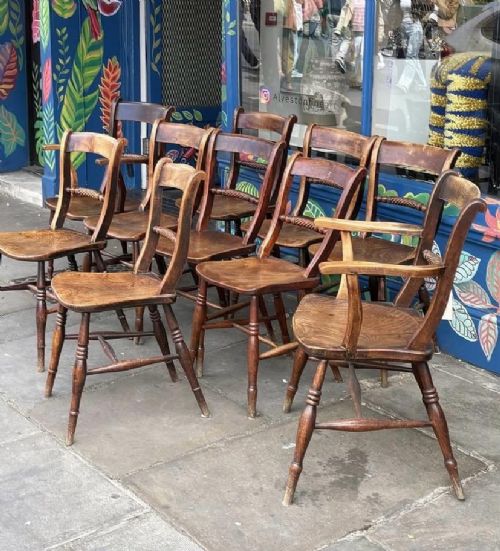
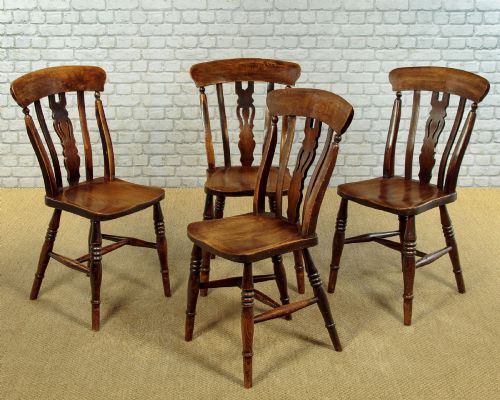
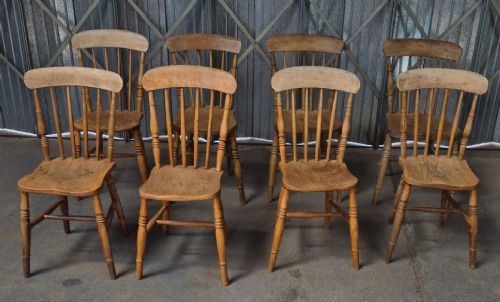



Rustic Cottage Chairs
These rustic cottage chairs bring vernacular charm to interiors, offering honest construction and regional character from centuries past.
Rustic Cottage Chairs
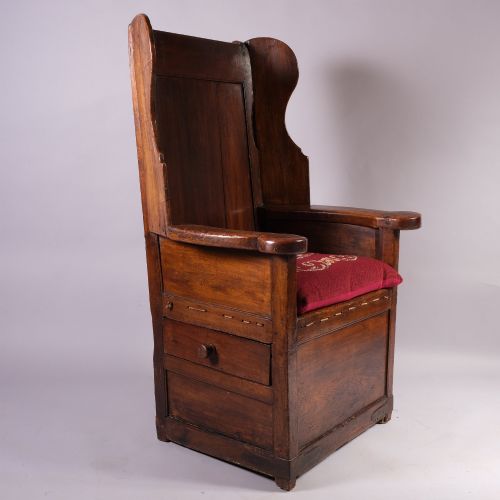
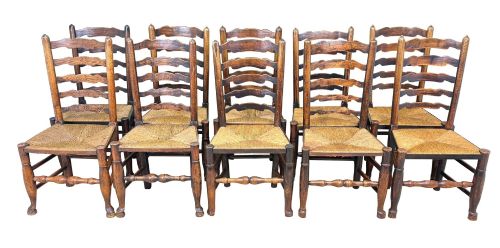
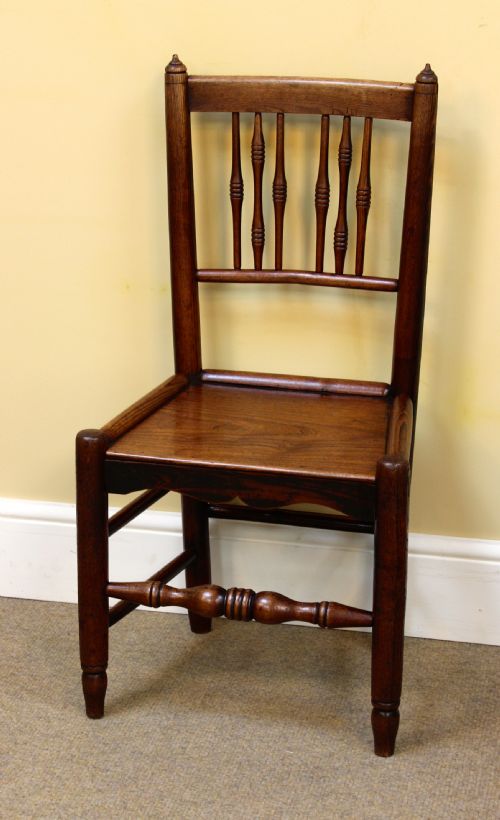
Rustic cottage chairs encompass everyday seating produced for domestic use in rural farmhouses, kitchens, and cottages across Britain and Ireland. Buyers seeking these pieces encounter vernacular forms shaped by local tradition rather than formal court taste. The selection spans straightforward ladderback designs, spindlebacks, and Windsor seating.
The material record on this page relies heavily on native timbers, predominantly elm, ash, beech, and oak, paired with seats woven from rush or straw. Chronologically, the inventory stretches from the eighteenth century through the nineteenth century, including Victorian country variants and specific regional types like Thames Valley or Dales chairs.
Materials and construction
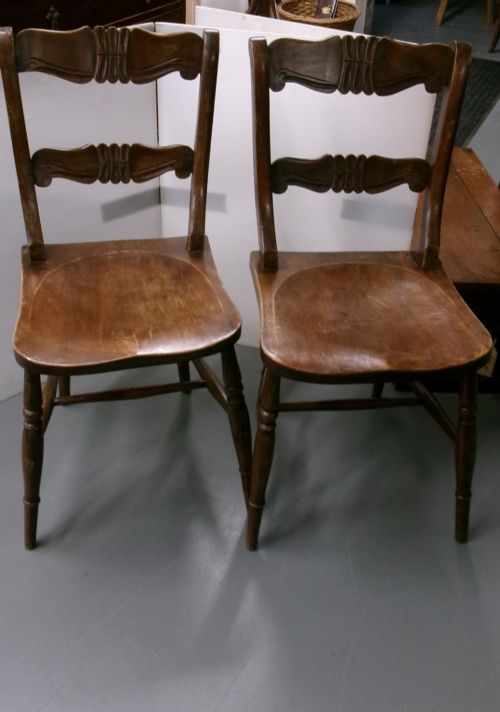
Local bodgers and regional cabinetmakers built these chairs using green woodworking techniques combined with seasoned timber. Seats were frequently carved from solid elm planks, chosen for its interlocking grain that resisted splitting under pressure from legs and spindles.
Turned components in beech or ash were wedged into bored sockets, while rush and straw were tightly plaited to form resilient, tactile seating surfaces. Frames often received surface treatments such as scumbling to simulate finer grain or simply weathered through daily domestic use.
The listings span from the eighteenth century to the late nineteenth century, with elm, ash, and rush appearing frequently.
Assessing quality and integrity
Quality in these vernacular pieces rests upon the integrity of the original construction and the survival of surface patina. Superior examples retain their original timber components without excessive replacement parts or structural compromise.
Subtle differences in turning crispness, timber selection, and regional proportion separate everyday utility seating from finer vernacular work. The presence of matching sets, particularly in larger numbers, elevates the standing of a group.
Worksop Allsop
The Rustic Cottage Chairs Glossary
- Windsor chair
- A chair built with a solid wooden seat into which the legs and back sticks are tenoned directly. This method provides robust structural stability without requiring a heavy frame.
- Rush seat
- A seating surface woven from dried marsh rushes, prized for its pliable strength and traditional appearance. It offers a comfortable texture derived from natural plant fibres.
- Stick back
- A chair back constructed from plain turned spindles inserted into the seat and top rail. This vernacular design approach prioritises functional simplicity.
- Vernacular furniture
- Domestic pieces made by local craftsmen using regional styles and readily available native materials. These items reflect the practical needs of rural communities rather than metropolitan fashion.
- Scumbling
- A decorative paint technique used to mimic the appearance of more expensive wood grain or figure. Artisans applied translucent glazes over a base coat to achieve the desired effect.
Rustic Cottage Chairs: Frequently Asked Questions
What defines a rustic cottage chair?
These chairs are traditional vernacular seats produced in rural regions for everyday domestic use in kitchens and farmhouses. They rely on local timbers and straightforward construction methods rather than academic design rules.
Their appeal lies in honesty of form and regional diversity, ranging from simple spindlebacks to substantial Windsor chairs.
How do I care for rush seats?
Rush seats require a dry environment and regular gentle dusting with a soft brush to prevent the natural fibres from drying out and fracturing. Avoid placing them in direct sunlight or damp areas.
Occasional light cleaning helps maintain the flexibility of the plaited straw without introducing damaging moisture.
Are these chairs suitable for daily dining?
Most nineteenth-century and earlier country chairs were built for daily utility and continue to function well for regular dining use. Solid timber seats and pegged joints offer surprising durability.
Buyers should check individual stability, as centuries of use can loosen joints and require professional consolidation by a conservator.
How can I tell different regional styles apart?
Regional variations show in the turning details of legs and spindles, the shape of the crest rails, and the choice of local woods. Thames Valley chairs often display specific elm and ash combinations.
Dales chairs and Irish súgán seating utilise distinct framing proportions and weaving patterns unique to their localities.