

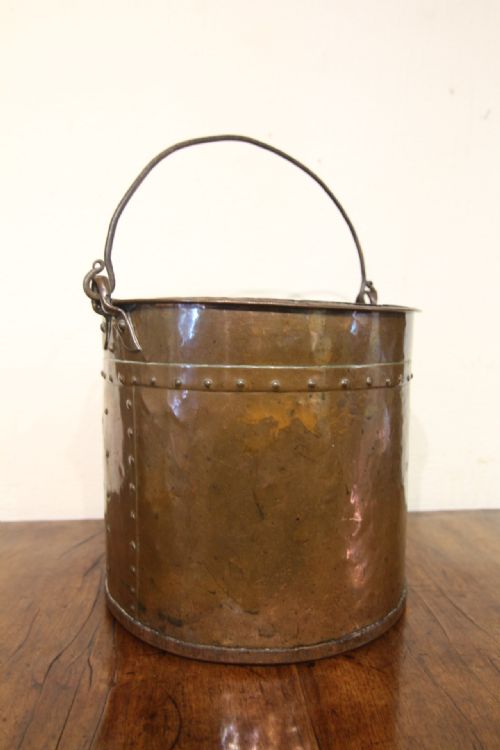


Rustic Copper Log Container
These heavy metal vessels, sold as a rustic copper log container, bring hearthside warmth and practical storage to a period fireside.
Rustic Copper Log Container
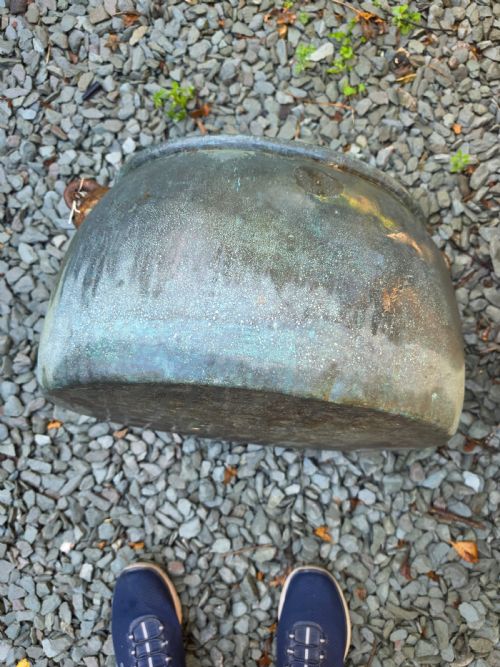
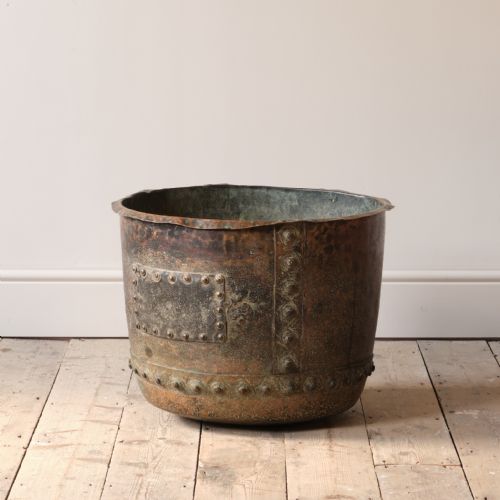
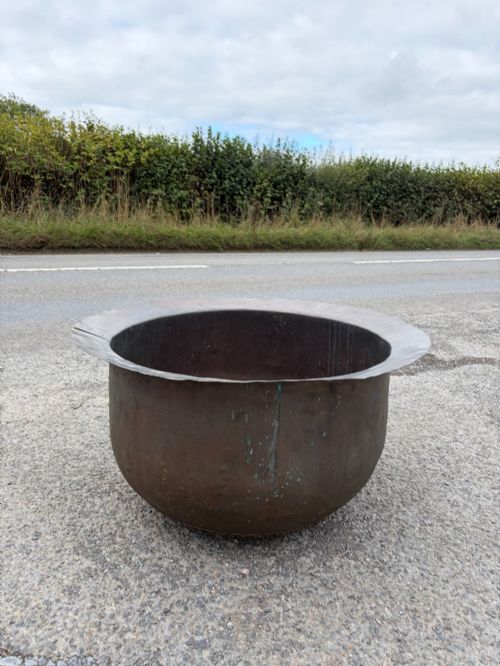
A rustic copper log container on this page typically takes the form of a large nineteenth-century cauldron, riveted bucket, or domestic planter repurposed for fuel storage. Dating predominantly from the eighteen-hundreds, these vessels span Victorian, Georgian, and Arts and Crafts styles, reflecting utilitarian origins in country houses and farmhouses. Buyers seek them out to hold firewood beside an open hearth, where their metal surfaces catch the light.
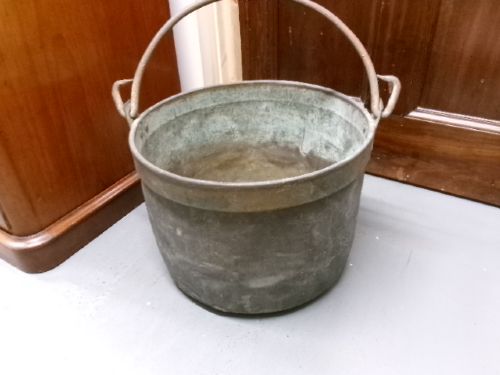
Forms vary from lidded bins and swing-handled vessels to deep cooking pots and open planters. Many retain the dual character of a log bin and a garden planter, moving between interior hearths and outdoor spaces. The nineteenth-century examples dominate the selection, offering substantial proportions and aged patinas.
How they were made
Construction relies on heavy sheet copper joined by hand-hammered rivets, securing the overlapping seams of the body to a reinforced base. Wrought iron or brass handles are attached via sturdy mounts, designed to bear the heavy weight of timber or water. Internal zinc linings or iron reinforcements sometimes appear to strengthen the primary copper structure against moisture and wear.
Metalworkers shaped these containers using traditional hammering and beating techniques on anvils, producing undulating surfaces with individual tool marks. Brass components and swing handles contrast with the warmer tone of the copper body. The resulting vessels combine functional durability with the distinct hand-finished character of nineteenth-century metalwork.
Rustic Copper Log Container Retail Price Guide 2026
Typical asking prices for rustic copper log container among the pieces listed under this phrase on Sellingantiques today, from the lower quarter to the upper quarter. They describe what is for sale here now, not the wider market.
What varies in quality
Quality rests in the weight of the metal, the crispness of the hand-hammered rivets, and the integrity of the original handles and mounts. Thicker copper walls resist denting and hold their structural form better over centuries of domestic use. The presence of makers' touches, such as neat rows of uniform rivets and well-balanced swing handles, separates standard utility items from finer examples.
Surface condition and original mounts dictate desirability. Vessels that retain their authentic unpolished patina and sturdy iron fittings possess greater visual presence by the hearth. Alterations, replacement handles, or excessive smoothing of the metal diminish the historic character that collectors value.
The Rustic Copper Log Container Glossary
- Cauldron
- A large round metal pot with a wide opening, traditionally used for cooking or boiling over a fire. In domestic interiors, surviving examples serve as sturdy log bins or planters.
- Riveted
- Joined together using short metal pins hammered flat at the ends. This method creates strong mechanical bonds between overlapping sheets of copper.
- Swing handle
- A movable arched handle attached to opposite sides of a bucket or pot. It drops down against the vessel wall when not in use.
- Arts and Crafts
- A design movement valuing hand-craftsmanship and traditional materials over industrial mass production. Pieces from this period often display visible hand-beaming and honest construction.
Rustic Copper Log Container: Frequently Asked Questions
How do I clean a copper log bin?
Wash the surface gently with warm soapy water and a soft cloth to remove dust and soot. Avoid harsh chemical polishes that strip away the aged patina.
Dry the metal thoroughly with a soft towel to prevent water spots. Leaving the natural oxidation intact preserves the historic appearance of nineteenth-century copper.
Can I use these outdoors as planters?
Many of these vessels function well as garden planters because their durable copper and iron construction withstands the elements. Drainage varies, so check the base before planting directly inside.
Using a plastic liner protects the historic interior from constant soil moisture. The metal weathers further outdoors, developing deeper greens and browns over time.
Are the handles strong enough for logs?
Original wrought iron and brass swing handles were built for heavy domestic labour such as carrying water or fuel. They generally support the weight of firewood easily.
Lift the vessel by the base if the age or mount stability is uncertain. Inspecting the rivet fixings inside the rim ensures the handle mounts remain secure.
How do I date a nineteenth-century copper bucket?
Dating relies on manufacturing techniques, such as hand-hammered body construction and hand-cut copper rivets used before industrial stamping became common. Stylistic clues from Georgian and Victorian periods also guide the timeline.
Matching form and material with known nineteenth-century examples provides a reliable estimate. Minor variations in handle mounts and rim rolls help narrow the decade of production.