


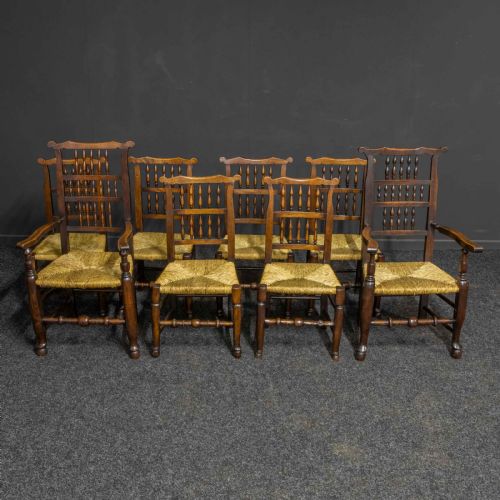


Rush Seated Spindlebacks
Rush seated spindlebacks offer enduring utility, combining turned uprights and woven seats across Georgian and Victorian country houses.
Rush Seated Spindlebacks
Rush seated spindlebacks are traditional wooden seating forms created across the Georgian and Victorian eras. These dining chairs and armchairs appear in sets, pairs, and single pieces within English country vernacular styles.
You are most likely to meet elm and ash examples featuring woven rush seats and turned spindles. The forms span dining chairs and armchairs originating from regional workshops like Lancashire.
How they were made
Local makers utilised native timber such as elm, ash, and oak to turn structural uprights and spindle backs on lathes. Seats were woven tightly using natural rush material to provide a resilient and flexible platform.
Joinery relied on traditional pegged and turned construction methods suited to vernacular furniture production. Frameworks occasionally incorporated added fabric elements on specific seating variants.
Rush Seated Spindlebacks Retail Price Guide 2026
Typical asking prices for rush seated spindlebacks among the pieces listed under this phrase on Sellingantiques today, from the lower quarter to the upper quarter. They describe what is for sale here now, not the wider market.
Countless sturdy spindles waited patiently while generations debated dinner table politics.
What varies in quality
Quality rests in the balance of the turned spindles and the crispness of the timber framing. Better examples maintain strong structural harmony across larger dining sets.
The tightness and regularity of the rush weaving distinguish finer seating. Uniformity in timber selection and historic patination elevate specific regional pieces above standard utilitarian chairs.
The Rush Seated Spindlebacks Glossary
- Spindleback
- A chair style characterised by a backrest composed of vertical turned wooden rods. These slender uprights support the sitter while keeping the furniture light.
- Rush
- A marsh plant used to weave traditional woven seating bottoms. This organic material yields a durable and textured platform.
- Vernacular
- Everyday domestic objects built by regional craftspeople using local materials rather than high-style court designs. This approach prioritises utility and local tradition.
- Elm
- A resilient native hardwood frequently utilised for vernacular chair seats and frames. Its interlocking grain resists splitting under daily domestic use.
Rush Seated Spindlebacks: Frequently Asked Questions
How do I date an older spindleback?
Dating relies on examining the turning style, timber species, and construction wear. Georgian pieces often display different proportions compared to later Victorian iterations.
Examining tool marks and timber shrinkage provides further clues to age. Regional variations help place the chair within its historical context.
Are rush seats strong for daily dining?
Traditional rush seating is surprisingly resilient and supports regular daily use. The woven material offers flexible comfort while maintaining structural integrity.
Proper care keeps the natural fibres sound for generations. Avoid excessive moisture to preserve the woven material.
How should I clean the wooden frames?
Dust the turned spindles regularly with a soft, dry cloth. This preserves the historic patination accumulated over centuries.
Avoid modern chemical polishes that can damage the timber finish. Traditional wax feeds the wood safely.
What defines a Lancashire spindleback?
Lancashire pieces typically feature specific regional turning patterns on the back posts and stretchers. These chairs reflect the distinct vernacular traditions of northern workshops.
They often appear in larger dining sets or armed variants. Their robust construction suits everyday country house interiors.