



Rush Bottom Dining Chair
A rush bottom dining chair brings earthy texture and honest vernacular form to a room, offering sturdy seating rooted in centuries of rural craftsmanship.
Rush Bottom Dining Chair
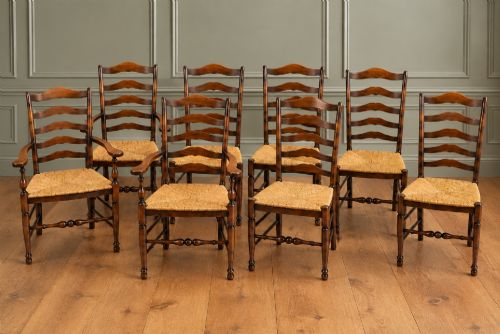
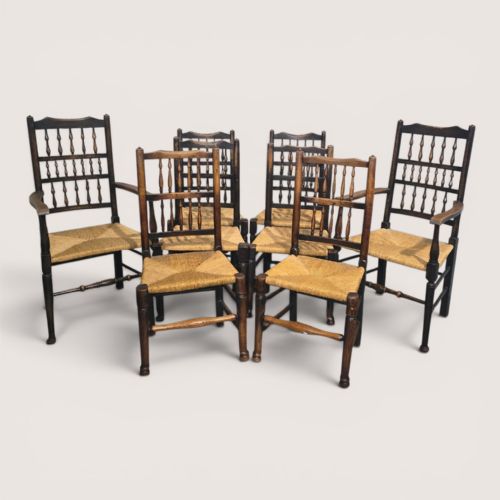
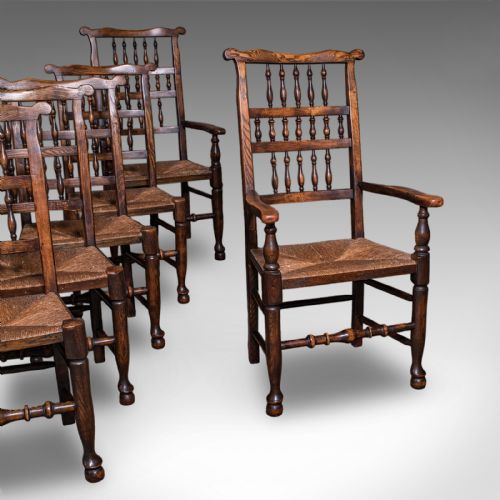
A rush bottom dining chair represents traditional country seating, designed for daily use and constructed with functional simplicity. When you search for a rush bottom dining chair, you encounter forms ranging from side chairs to carvers and ladderbacks.
The pieces on this page span several periods, including the eighteenth century, the Georgian era, and the nineteenth century. Examples also appear from the Edwardian period and the early twentieth century.
Makers shaped these chairs within regional traditions, categorised under styles such as English country, rustic farmhouse, and French provincial. The most common format is the ladderback or spindleback chair utilising a woven seat.
Construction and materials
Makers relied on locally sourced woods for the frames of a rush bottom dining chair, selecting timber such as oak, elm, beech, fruitwood, ash, and alder. These native hardwoods provided the necessary strength for upright posts and supporting stretchers.
Seats were hand-woven using natural rush, twisted into cords and tightly wrapped around the seat rails in a distinct pattern. This seating material offered a resilient surface that yielded slightly to the sitter while maintaining structural integrity.
Rush Bottom Dining Chair Retail Price Guide 2026
Typical asking prices for rush bottom dining chair among the pieces listed under this phrase on Sellingantiques today, from the lower quarter to the upper quarter. They describe what is for sale here now, not the wider market.
The inventory includes matched harlequin sets alongside pairs and individual carvers spanning the Georgian to Edwardian eras.
Assessing quality
Quality in a rush bottom dining chair rests upon the harmony of the timber frame and the tightness of the woven seat. Superior pieces display well-turned spindles or balanced ladder backs that show careful hand-shaping rather than hasty production.
The condition and density of the rush work dictate the longevity of the seat. Tightly packed, uniform weaving indicates skilled execution, whereas loose or uneven strands point to lesser craft or heavy subsequent repair.
The Rush Bottom Dining Chair Glossary
- Rush
- Dried marsh grass utilised for weaving chair seats. It provides a durable, tactile surface that wears to a warm sheen over decades of use.
- Ladderback
- A chair back featuring horizontal slats set between two vertical uprights. This design is frequently paired with woven rush seating in vernacular furniture.
- Carver
- An armchair designed to sit at the head of a dining table. These pieces often match a set of smaller side chairs.
- Spindleback
- A chair back constructed with multiple thin vertical rods or spindles. This style lightens the visual weight of the timber frame.
- Vernacular
- Everyday objects made by regional craftspeople following local traditions rather than high-style metropolitan fashions.
Rush Bottom Dining Chair: Frequently Asked Questions
Can broken rush seats be repaired?
Traditional rush seating can be completely re-woven by a skilled artisan using matching natural materials. The old strands are cleared away, and fresh rush is wound around the original wooden frame.
This restorative process preserves the antique frame while giving the chair many more decades of practical utility.
Are these chairs suitable for daily dining?
Vernacular dining chairs were originally built for heavy daily use in farmhouses and kitchens. Their robust frames handle regular sitting remarkably well when joints remain stable.
Inspect the stretcher connections periodically to ensure the wooden framework stays rigid and secure under daily pressure.
How do I date an antique chair?
Dating relies on observing tool marks, timber choice, and structural construction methods. Eighteenth-century examples often display hand-carved details and deeper patination on native woods like elm.
Later nineteenth-century and Edwardian pieces show more standardised turning techniques while retaining traditional regional forms.