
Rural Countryside Artwork
Rural countryside artwork captures agrarian life and open fields through nineteenth and twentieth-century paintings.
Rural Countryside Artwork
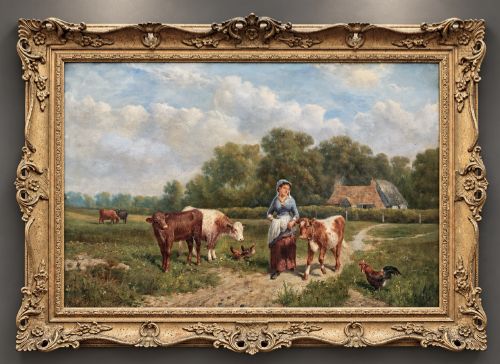
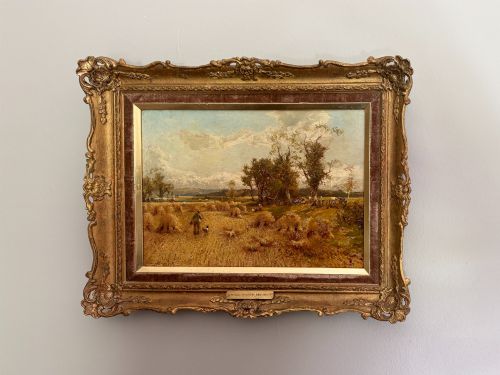
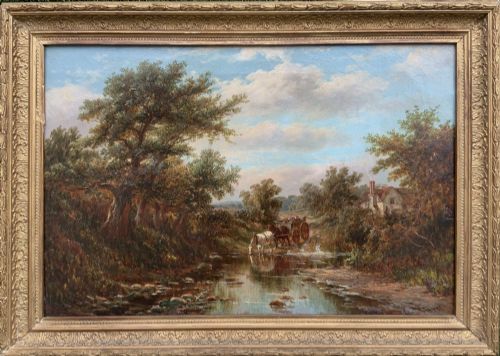
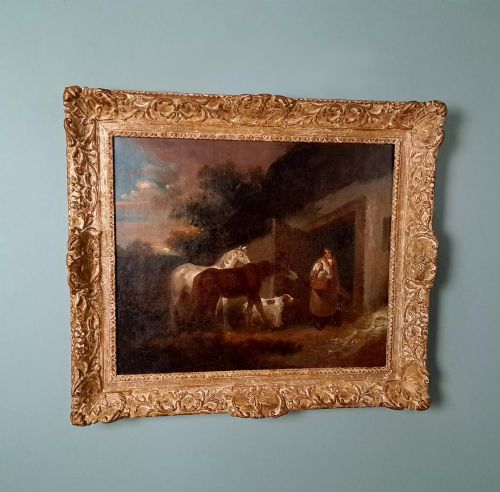
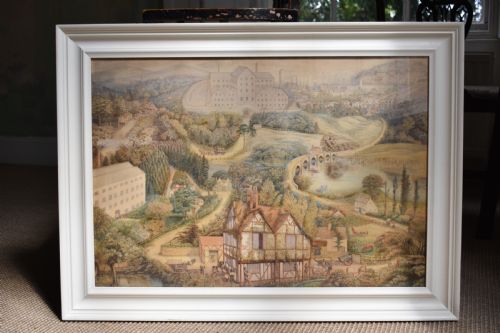
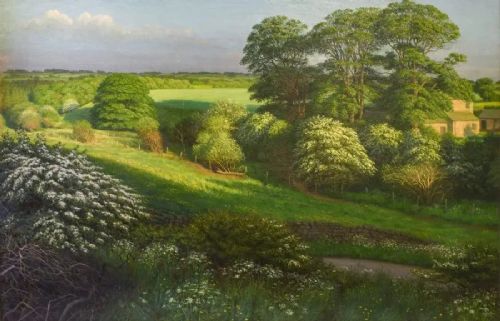
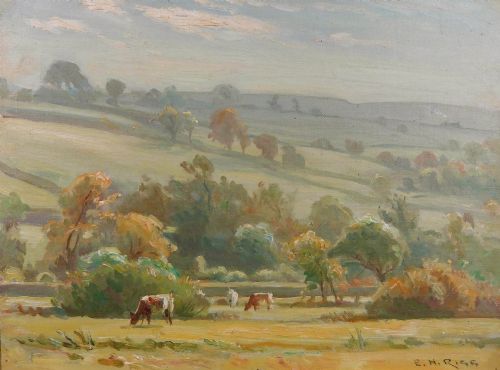
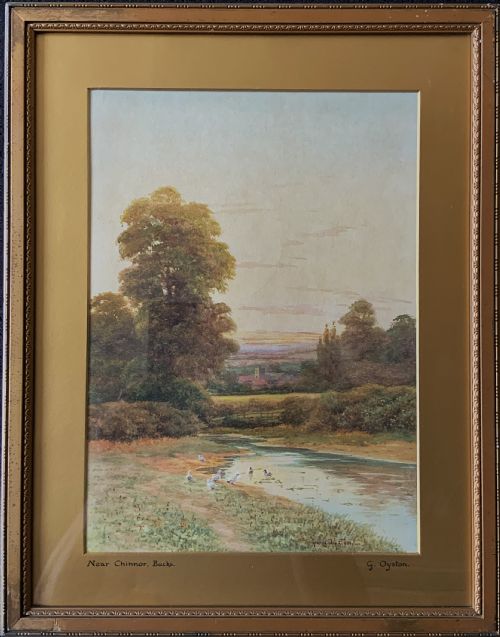
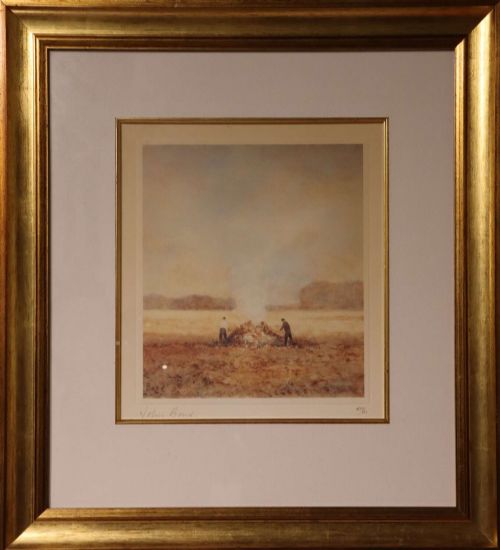
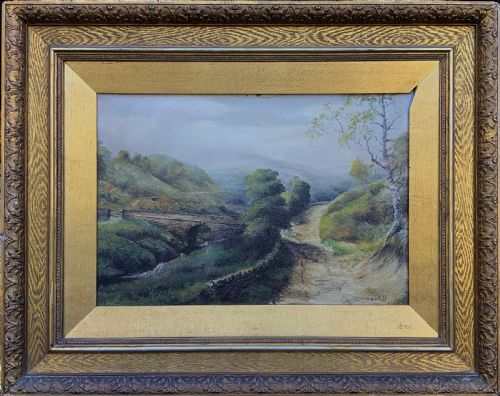
Rural countryside artwork depicts traditional British pastoral scenes, farmsteads, and village life through paintings and watercolours. These pieces document agricultural landscapes, livestock, and cottages from the nineteenth century onwards.
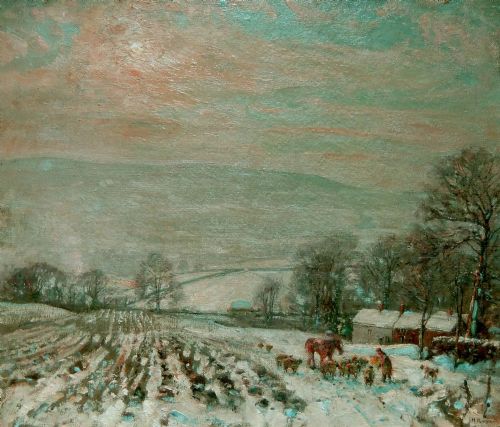
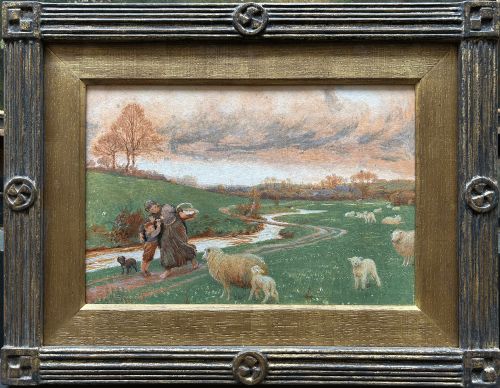
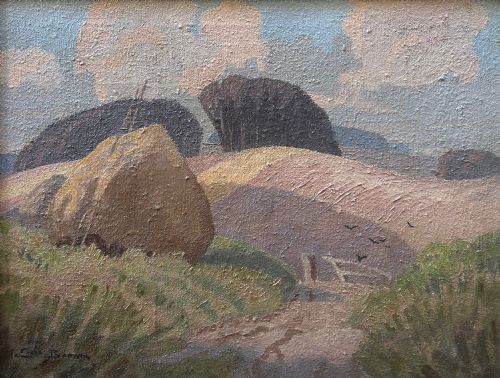
The selections found here rely heavily on oil on canvas and watercolour on paper, framed for domestic display. Subjects range from horse ploughing and sheep driving to quiet river valleys and winter snow scenes.
Materials and construction methods
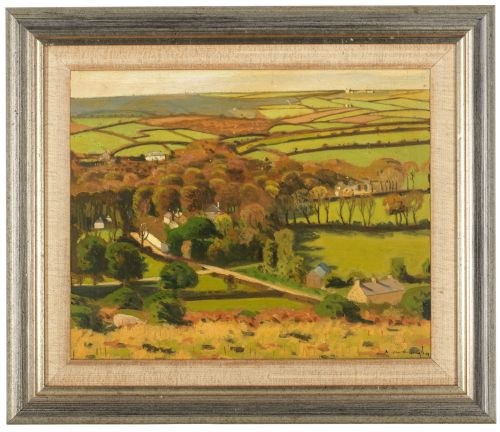
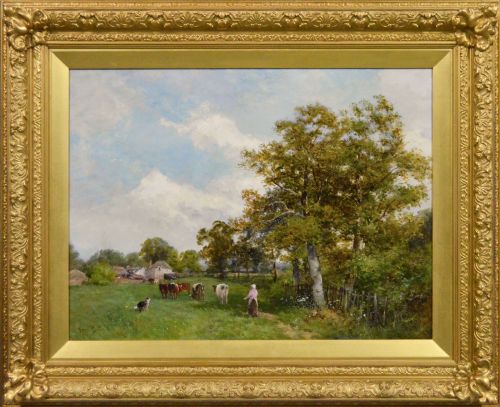
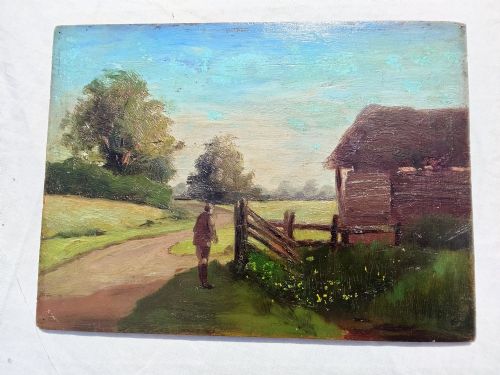
Painters utilised oil paint on stretched canvas, wooden board, or watercolours on paper, often finished with gilt or ebonised wood frames. Pigments were applied with brushwork that developed from detailed Victorian realism to broader British Impressionism.
Canvases were mounted on wooden stretchers while watercolours were protected behind glass. Signatures, exhibition labels, and ink inscriptions frequently appear on the reverses or mounts.
Listings feature canvases, wooden boards, and watercolours spanning the nineteenth century to the nineteen-sixties.
Distinctions in quality
Quality rests in the handling of light, atmospheric perspective, and the specific accuracy of figures, livestock, and topography. Stronger compositions demonstrate confident brushwork and balanced colour harmonies rather than rigid formulaic rendering.
Condition of the canvas, stability of the ground paint layer, and originality of the period frame influence the standing of a piece. Works carrying clear provenance or attribution to named regional artists hold distinct interest.
William Joseph Shayer Senior·David Bates·George Oyston·Henry Charles Fox·William Sydney Cooper
The Rural Countryside Artwork Glossary
- British Impressionism
- A style adopting looser brushwork and lighter palettes influenced by French movements but rooted in British landscapes.
- Pastoral
- Art depicting country life, fields, shepherds, and agricultural scenes in an idealized or traditional manner.
- Watercolour
- A paint consisting of pigment suspended in a water-soluble vehicle, commonly applied to paper for countryside views.
- Canvas
- Heavy woven fabric stretched across a wooden frame to act as a firm support for oil paintings.
- Gilt
- A thin layer of gold leaf applied to the surface of wooden picture frames for decorative enrichment.
Rural Countryside Artwork: Frequently Asked Questions
What periods do these paintings cover?
The works span from the nineteenth century through the Edwardian era into the mid-twentieth century. They reflect shifting artistic approaches to the British countryside over several decades.
Victorian and Edwardian examples sit alongside later modern interpretations.
How were these artworks framed originally?
Many pieces retain period wooden frames, occasionally finished in gilt or ebonised styles suited to domestic interiors of the era. The framing often complements the palette of the canvas or watercolour within.
Original frames provide context for how the pictures were displayed historically.
Who are the typical artists represented?
Makers include regional British painters such as David Bates, Henry Charles Fox, and William Sydney Cooper. Many signed their canvases or left inscriptions detailing specific villages and counties.
Local English and Scottish schools feature prominently across the selection.
How do I care for antique watercolours?
Watercolours on paper require protection from direct sunlight to prevent fading of pigments and yellowing of the paper support. Glazing helps shield the delicate surface from dust and atmospheric moisture.
Stable indoor humidity preserves both the paper and the original frame.