





Rural Art Print
Rural art print covers framed works on paper, canvas and wood depicting country life, from historic etchings to twentieth-century lithographs.
Rural Art Print
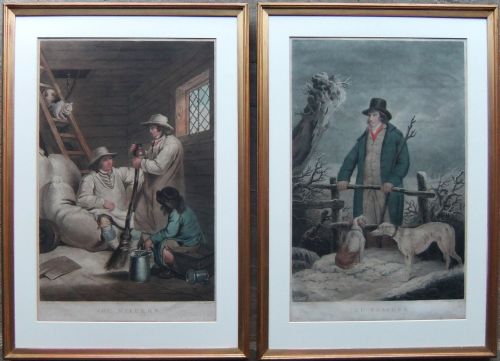
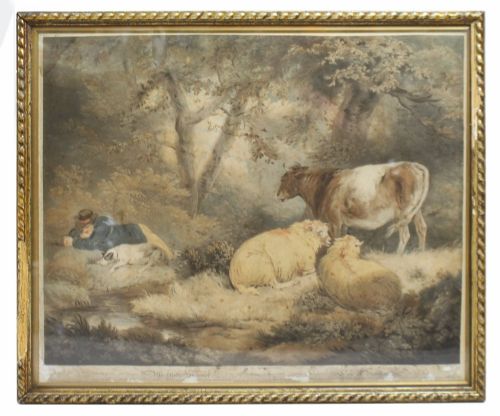
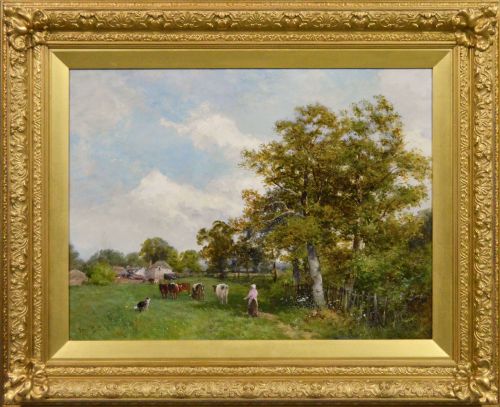
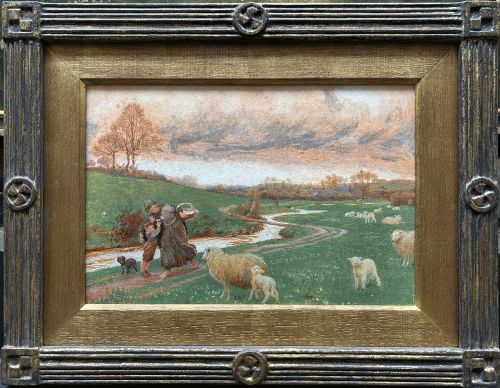
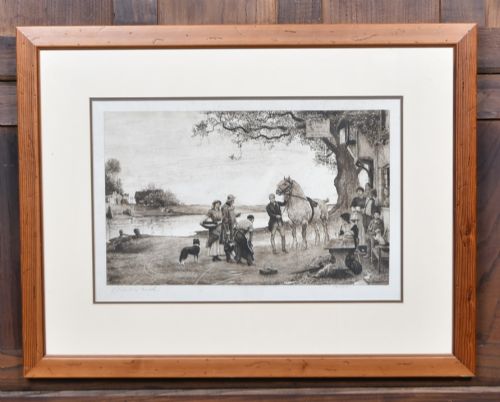
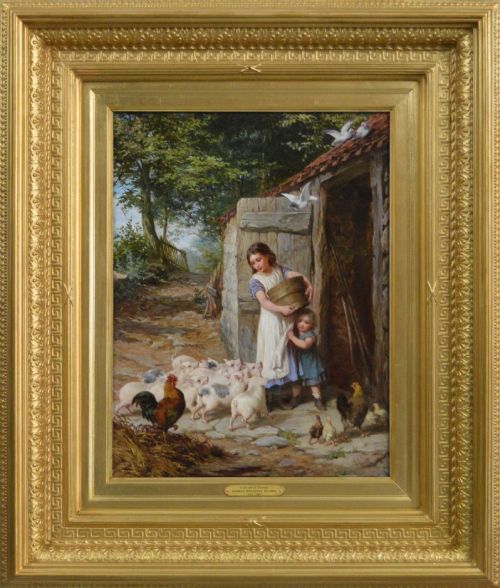
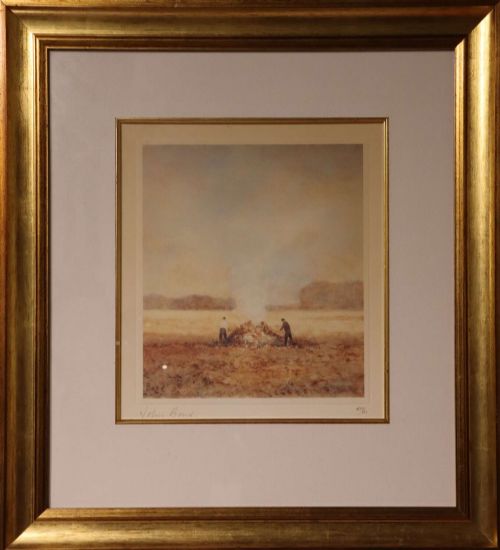
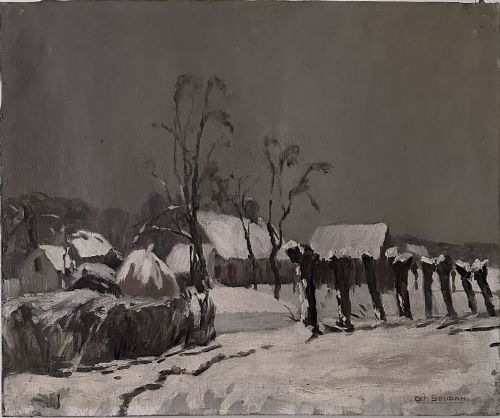
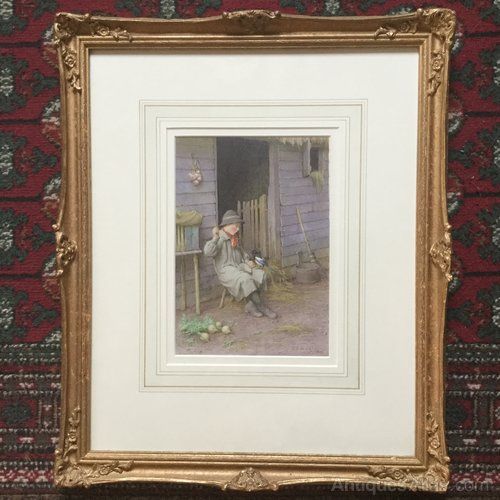
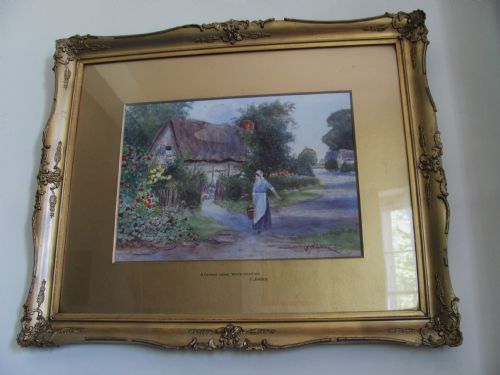
A rural art print is a framed image on paper capturing country scenes, including village views, farm workers, and pastoral landscapes. These works record rural life across different eras, from nineteenth-century etchings to Edwardian watercolours and mid-century lithographs.
The pieces on this page span several centuries and styles, ranging from Georgian mezzotints to Victorian pastoral scenes and contemporary British prints. Makers utilise various traditional formats, such as framed etchings, lithographs, and hand-coloured engravings, to present these country subjects.
Buyers seeking a rural art print will encounter varied depictions of cottage life, agricultural labour, and open landscapes. These works bridge traditional oil painting and accessible printmaking, offering framed wall art ready for display.
Materials and construction
These works rely primarily on paper sheets housed behind glass within timber frames, often accented by gold leaf or giltwood mouldings. Artists and printmakers applied ink, paint, or watercolour directly onto paper or canvas surfaces to create the final image.
Traditional printmaking techniques such as mezzotint and etching involve incising plates to transfer inked designs onto paper. Watercolour and oil paints appear alongside these printed methods, set into wooden frames that protect the delicate surfaces within.
Rural Art Print Retail Price Guide 2026
Typical asking prices for rural art print among the pieces listed under this phrase on Sellingantiques today, from the lower quarter to the upper quarter. They describe what is for sale here now, not the wider market.
Listings feature works created across several centuries, including Victorian and Edwardian pieces executed in oil, watercolour, and etching.
Judging quality in these works
Quality rests in the precision of the printmaker's lines and the preservation of the paper or canvas over time. Finer examples show sharp detail in complex subjects like animal forms and architectural elements.
The execution of the frame also marks the grade of the piece, with genuine gilt wood surrounds elevating the presentation. Stronger works demonstrate assured handling of light and shadow across pastoral and domestic subjects.
William Barnard·David Bates·Robert W. Macbeth·George Augustus Holmes·Frederick Walker·John Bond·Charles Edward Wilson·Herbert Dicksee·James William Booth·B. Kaufmann·Hubert Coutts·Joseph Kirkpatrick·Herbert Royle·George Morland·I R Smith·V Jordan·Lois Wilton
The Rural Art Print Glossary
- Mezzotint
- A printmaking process where the copper plate is roughened to achieve rich tonal gradations in dark areas. This method allows for subtle shifts in shade suited to historic pastoral scenes.
- Etching
- A technique in which lines are bitten into a metal plate with acid before being inked and pressed onto paper. It yields fine, precise details found in many nineteenth-century works.
- Lithograph
- A planographic printing process using stone or metal plates to produce multiple impressions of an original image. Mid-century examples utilise this method for limited edition prints.
- Giltwood
- Wood carved and coated with a thin layer of gold leaf or metallic powder. It frames many traditional paintings and prints on this page.
- Pastoral
- A style of art concerning itself with rural life, shepherds, and country landscapes. It forms a central theme across Victorian and Edwardian works.
Rural Art Print: Frequently Asked Questions
What periods do these pieces span?
The works stretch from the early nineteenth century through the Victorian and Edwardian eras into the twentieth century. This timeline captures shifting approaches to country subjects across generations.
Collectors can find eighteenth-century plates alongside modernist lithographs, representing diverse periods of printmaking and painting.
How should I frame and care for paper prints?
Paper works require protection behind glass to prevent atmospheric damage and fading from direct sunlight. Acid-free mounts keep the paper from touching the glass directly.
Keeping these pieces in stable indoor conditions preserves both the paper support and any applied watercolour or ink.
What subjects appear in these works?
Common subjects include farm laborers, cottage exteriors, animals such as cows and sheep, and wide country skies. Artists documented daily rural tasks like harvesting and herding.
These scenes offer a visual record of historical agricultural communities and pastoral landscapes.
Are these works original or reproductions?
The selection includes original watercolours and oil paintings alongside period etchings, mezzotints, and signed limited-edition lithographs. Each listing specifies the exact medium used to create the piece.
Historic print techniques generate period impressions rather than modern machine reproductions.