



Ruby Rose Gold Jewellery
Ruby rose gold jewellery brings together warm metal tones and rich crimson stones across Victorian, Edwardian, and 1940s pieces.
Ruby Rose Gold Jewellery
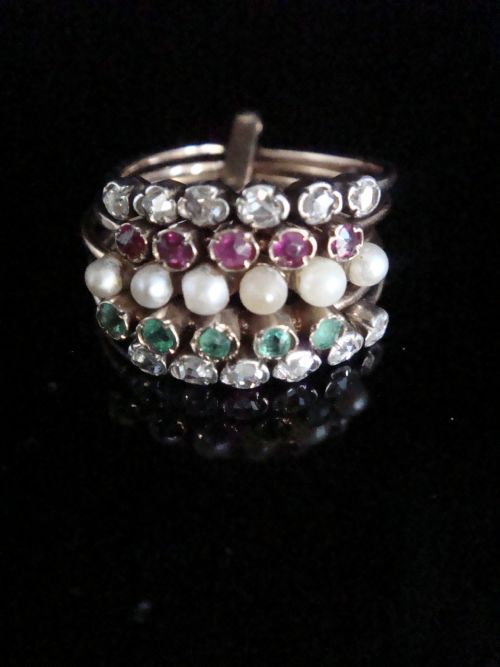
The selection ranges from early Georgian brooch designs featuring flat cut rubies to substantial 1940s vintage bracelets and cocktail rings set in lower and higher carat rose gold. French craftsmanship appears alongside British examples, incorporating rubies paired with diamonds, sapphires, emeralds, and pearls.
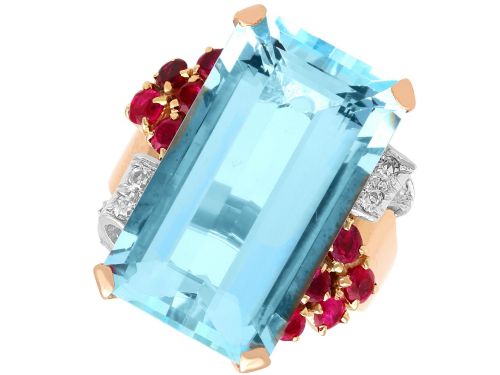
Pieces frequently combine rose gold with silver settings, particularly in older items where stones were foiled or backed to enhance their colour. The forms vary from delicate star bangles and double heart necklaces to heavy stacking bands and large aquamarine focal stones flanked by rubies.
How they were made
Makers utilised various gold purities including 8ct, 9ct, 14ct, 15ct, and 18ct rose gold, often combining yellow and rose metal within a single item. Stones were set by hand, employing techniques suited to the period such as closed-back settings in Georgian pieces and open settings in later Victorian and Edwardian work.
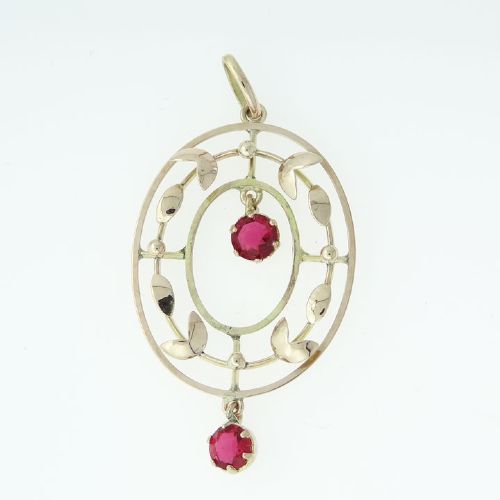
Diamonds cut as rose cuts or brilliant cuts accompany natural rubies, alongside simulated rubies found in specific pendant examples. Metalwork involved casting, wire twisting for chains and mounts, and hand engraving on bangles and brooches.
Ruby Rose Gold Jewellery Retail Price Guide 2026
Typical asking prices for ruby rose gold jewellery among the pieces listed under this phrase on Sellingantiques today, from the lower quarter to the upper quarter. They describe what is for sale here now, not the wider market.
A tiny ruby-eyed butterfly brooch proves that Victorians loved pinning insects to their lapels.
What varies in quality
Quality depends upon the natural origin and treatment of the gemstones, distinguishing unheated natural rubies from treated or simulated stones. The weight and proportion of the central stones relative to the supporting diamond melee also determine the character of each piece.
The fineness of the metalwork, the integrity of the original settings, and the preservation of hand-cut facets on both diamonds and rubies separate standard production from superior examples.
The Ruby Rose Gold Jewellery Glossary
- Navette
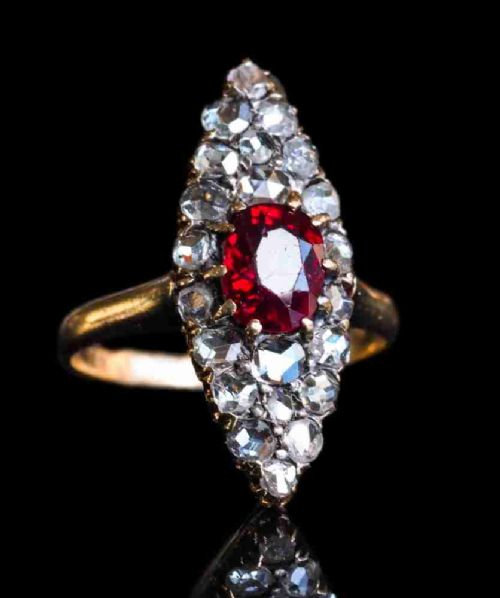
- A boat-shaped ring setting that tapers to points at either end. This elongated silhouette is typical of late Victorian cluster designs.
- Rose cut
- A historic diamond cut featuring a flat base and a domed crown composed of triangular facets. It creates a soft, translucent sparkle.
- Cluster ring
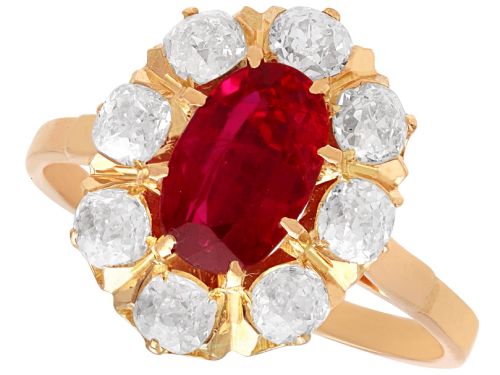
- A ring design featuring a central gemstone surrounded by a tight border of smaller stones. Diamonds frequently encircle a central ruby in this arrangement.
- Crescent brooch
- An ornamental pin shaped in the form of a crescent moon. These pieces often alternate rubies and diamonds along the curve.
- Carat
- A unit of weight used for gemstones, and a measure of gold purity when expressed as parts per 24.
Ruby Rose Gold Jewellery: Frequently Asked Questions
How do I date ruby rose gold jewellery?
Dating relies upon stylistic markers such as the boat shape of navette rings, the subject matter of butterfly and crescent brooches, and the presence of specific carat marks. Construction techniques like closed-back gemstone settings also point toward earlier Georgian or Victorian periods.
Changes in metal alloys and gemstone cuts further differentiate Victorian and Edwardian items from 1940s retro pieces. Comparing the mounting style against known historical jewellery designs provides a reliable timeline.
What is rose gold?
Rose gold is an alloy created by combining pure yellow gold with a higher proportion of copper, which imparts a warm pinkish or reddish tint to the metal. Different carats reflect varying ratios of gold to alloy metals.
The colour intensity varies across different eras based on regional preferences and metallurgical practices. Victorian and Edwardian items often display a subtle rosy hue compared to later 1940s interpretations.
Are the rubies natural?
Many listings specify natural unheated rubies, whilst others feature stones without specific treatment notes or include simulated ruby alternatives. Evaluating the internal characteristics under magnification helps identify natural origin.
Gemstone reports, when present, confirm whether a ruby has undergone thermal enhancement. Natural stones display distinct growth patterns and inclusions unique to their geographic source.
How should I care for antique rose gold jewellery?
Antique jewellery requires gentle handling due to the age of the settings and the delicate nature of soft backing foils in older pieces. Cleaning should be done with a soft cloth, avoiding harsh ultrasonic cleaners or chemical dips that can damage pearls, emeralds, or foil-backed stones.
Staging regular checks with a professional jeweller ensures that claws holding rubies and diamonds remain secure. Storing items individually prevents scratching between softer gold surfaces and harder gemstones.