

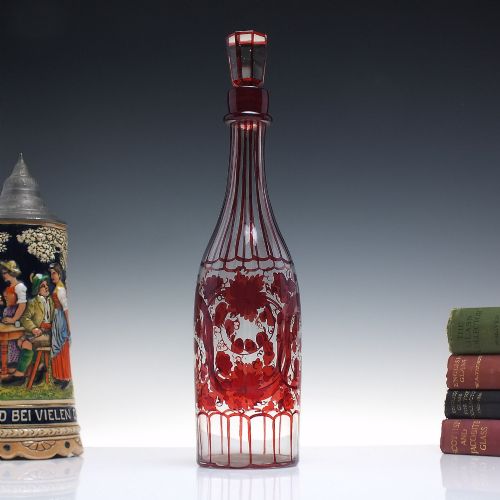


Ruby Red Glassware
Ruby red glassware brings intense colour and rich decorative presence to a room, spanning Victorian jugs, Bohemian vases and delicate wine glasses.
Ruby Red Glassware
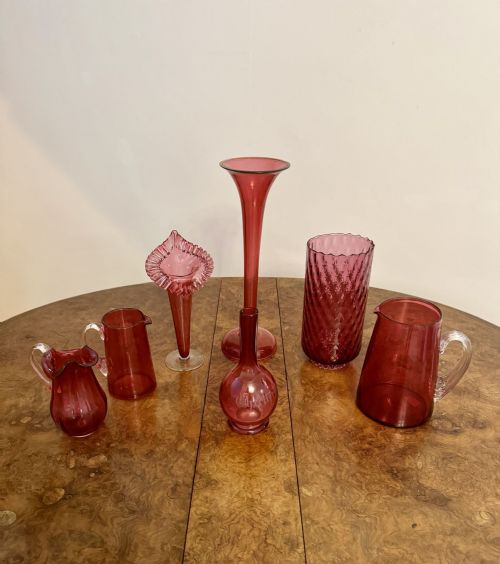
Ruby red glassware encompasses a vibrant range of decorative and functional vessels, including wine glasses, decanters, jugs, vases, and bells. When searching for ruby red glassware, buyers encounter items intended for display or service, spanning the eighteenth, nineteenth, and early twentieth centuries.
The Victorian period dominates the selection, bringing matching sets of wine glasses, preserve bowls, and tall decanters into focus. Alongside these utilitarian and dining forms, pieces from Bohemian and English workshops introduce specialised items such as lidded biscuit jars, tazzas, and engraved tumblers.
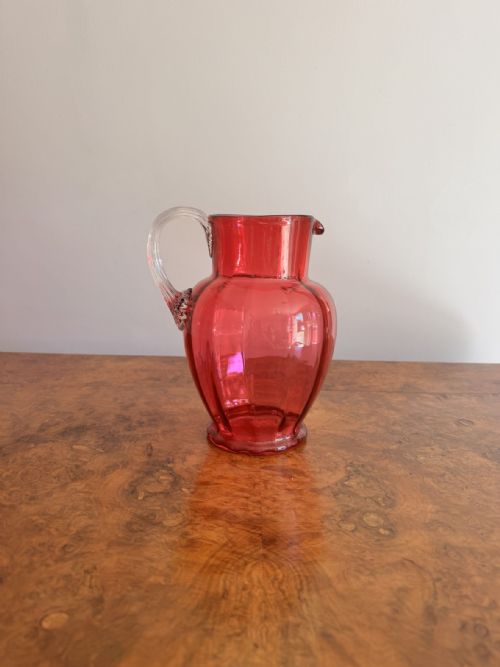
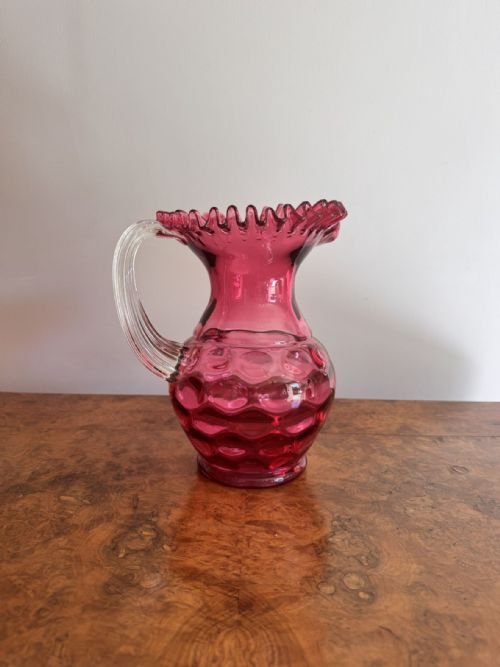
Vessels take many shapes, from ovoid panelled vases to handled jugs and footed champagne coupes. Some items rely purely on rich colour and clean silhouettes, while others incorporate contrasting white handles, clear crystal elements, or distinct decorative motifs.
Materials and production methods
Production centres on glass, utilising specialised techniques like cranberry glass formulations and ruby flash or red over crystal casing. Skilled artisans blew molten material by hand, shaping wine glasses, beakers, and pitchers while maintaining structural balance.
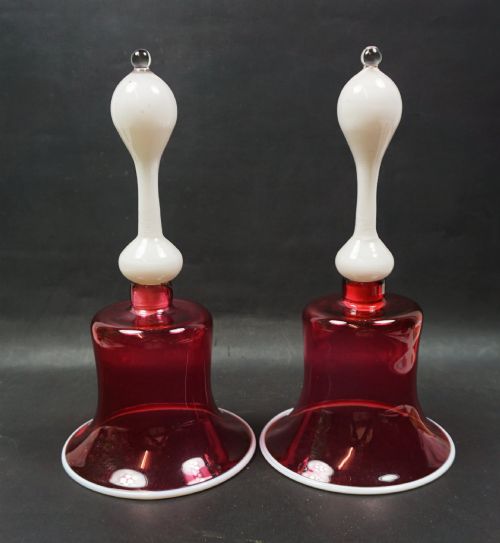
Decoration often involved surface work such as hand-painting, enamel detailing, gold leaf application, and precise wheel engraving. Artisans created layered visual depth by cutting through a ruby overlay to reveal clear crystal beneath, or applied white glass handles and rims to cranberry bodies.
Ruby Red Glassware Retail Price Guide 2026
Typical asking prices for ruby red glassware among the pieces listed under this phrase on Sellingantiques today, from the lower quarter to the upper quarter. They describe what is for sale here now, not the wider market.
Common forms include wine glasses, decanters, jugs, vases, and preserve dishes created in English and Bohemian workshops.
Distinctions in quality
Quality rests upon the depth and evenness of the glass coloration, the precision of hand-blown forms, and the refinement of surface decoration. Finer pieces demonstrate crisp wheel engraving, meticulously applied gold leaf, and delicate hand-painted enamel work rather than plain, heavy-handed application.
The integrity of combined materials, such as clear crystal underlays or contrasting white glass handles, determines the overall sophistication of a vessel. Pieces bearing distinct stylistic attribution or coordinated sets maintain greater visual harmony than solitary, utilitarian examples.
The Ruby Red Glassware Glossary
- Cranberry glass
- A transparent, pinkish-red glass coloured by the addition of gold chloride to the molten batch. It gained immense popularity during the Victorian era for tableware and decorative items.
- Ruby flash glass
- A thin layer of ruby-coloured glass applied over a clear glass base before being cut away to reveal the contrasting crystal underneath. This technique creates sharp, patterned panels and decorative motifs.
- Tazza
- A shallow ornamental cup or saucer mounted on a stem and foot, used historically for serving small delicacies or as a decorative centrepiece. Fine examples often feature gilding and engraved surfaces.
- Mary Gregory glass
- Glassware decorated with silhouette figures, typically white enamel children amidst foliage or landscapes, popular in the late nineteenth century. The technique is frequently found on cranberry vases, jars, and jugs.
- Champagne coupe
- A shallow, broad-bowled stemmed glass designed for sparkling wines, appearing in Victorian sets with engraved botanical or geometric decoration.
Ruby Red Glassware: Frequently Asked Questions
How do I care for ruby red glassware?
Wash these delicate pieces gently by hand using lukewarm water and mild soap, avoiding abrasive sponges or harsh detergents that might damage older surfaces.
Dry them immediately with a lint-free cloth to prevent water spots, and store them securely away from direct sunlight to preserve their rich colour.
Were these pieces used for dining?
Many items, including wine glasses, decanters, jugs, and preserve bowls, served functional roles during nineteenth-century dining and entertaining.
Others, such as bells, jars, and decorative vases, remained purely ornamental, intended for display on mantelpieces, sideboards, and cabinets.
How can I tell Victorian from Edwardian pieces?
Victorian items often display heavier ornamentation, including rich enamel painting, intricate gilding, and robust cranberry tones associated with mid to late nineteenth-century manufacture.
Edwardian examples frequently lean towards lighter proportions and refined Edwardian aesthetic sensibilities while retaining traditional glass-making techniques.
What is Bohemian ruby glass?
Bohemian glass originates from the historic regions of Bohemia, renowned for exceptional coloured glass production and advanced overlay cutting techniques.
These items often feature deep ruby over crystal layers, elaborate wheel-engraved motifs depicting vines or landscapes, and substantial, high-quality craftsmanship.