

Ruby Red Glass
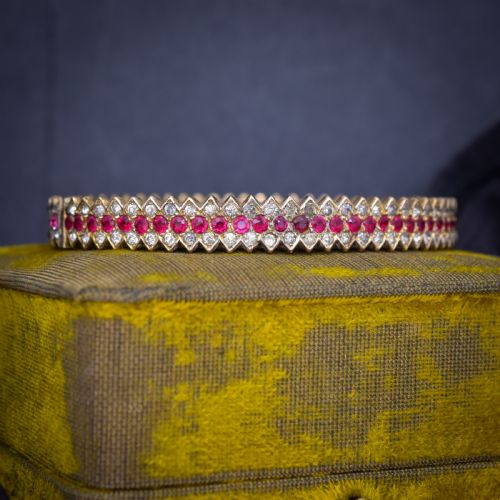
Ruby red glass brings a deep, rich warmth to interiors and tabletop collections through items crafted from the Victorian period to the Art Deco era.
Ruby Red Glass
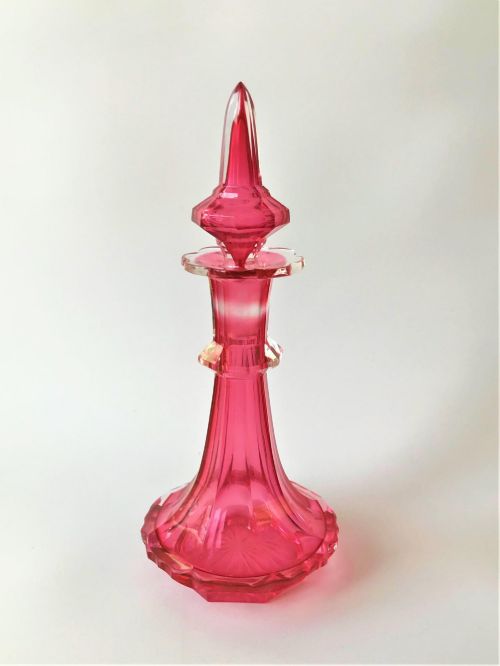
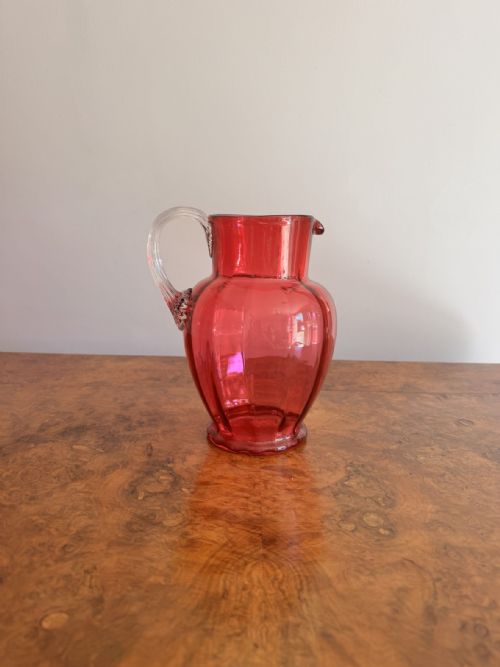
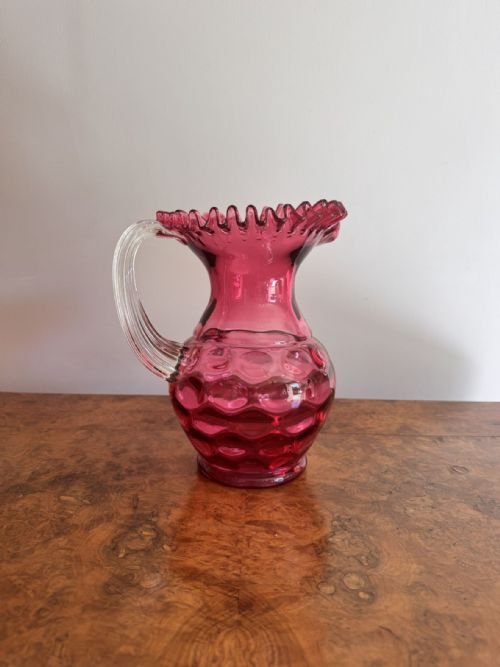
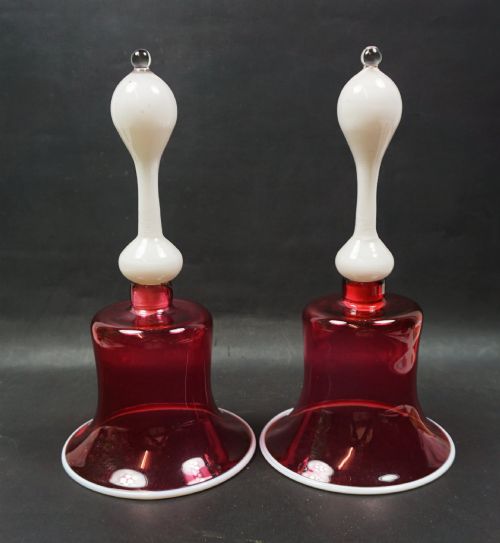
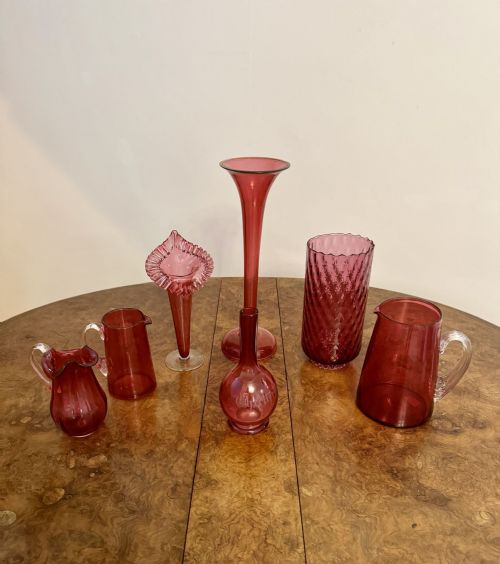
When searching for ruby red glass, buyers encounter a diverse array of decorative and utilitarian objects spanning the nineteenth and early twentieth centuries. The selection on this page centres heavily on Victorian and Edwardian items, alongside pieces influenced by Bohemian and Art Deco styles.
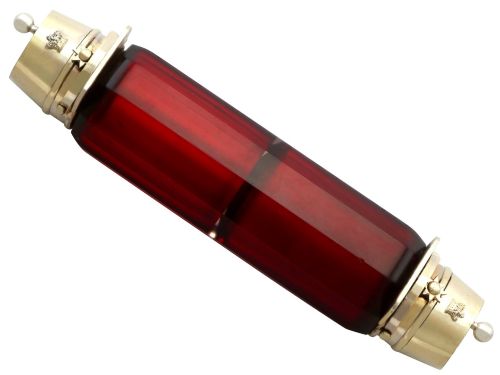
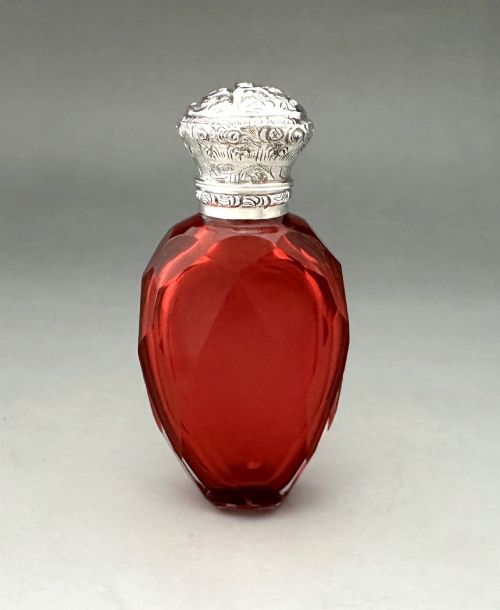
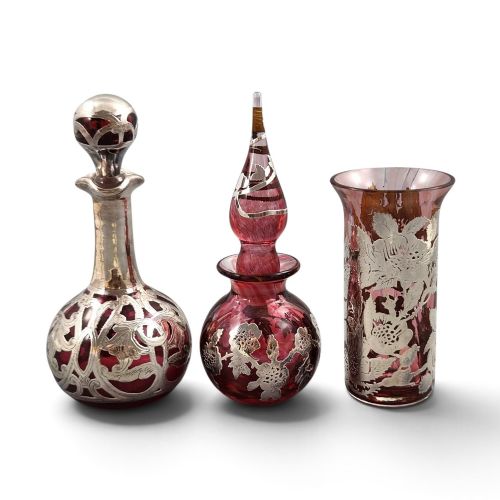
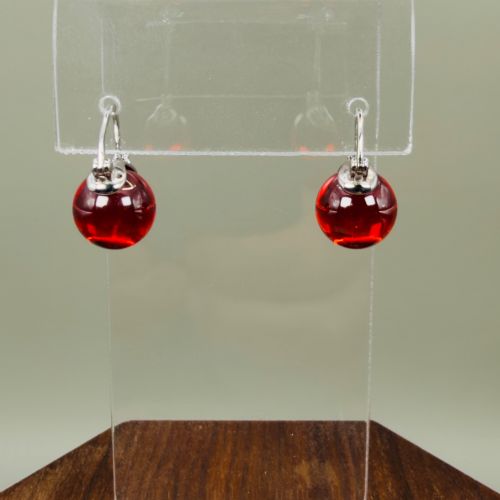
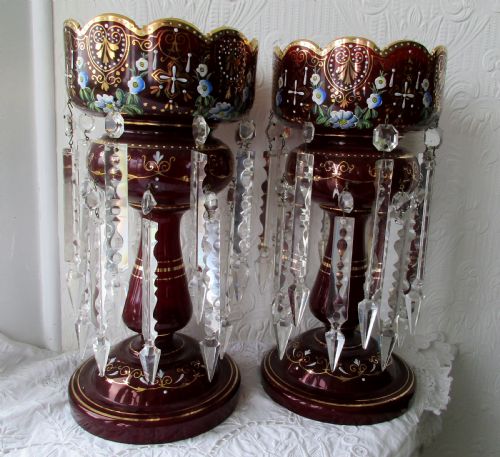
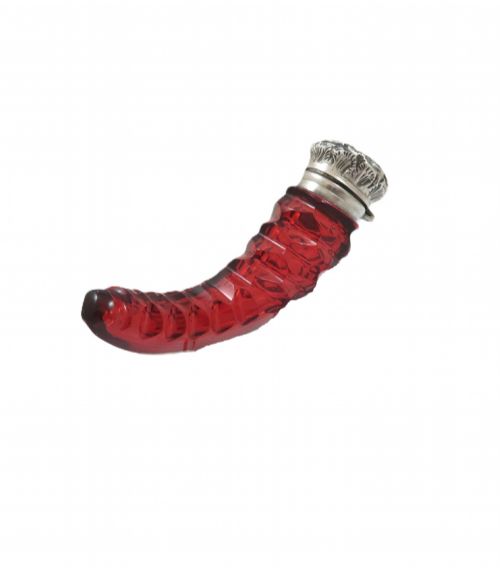
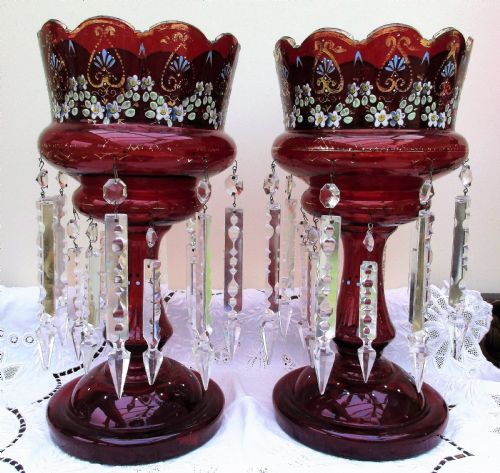
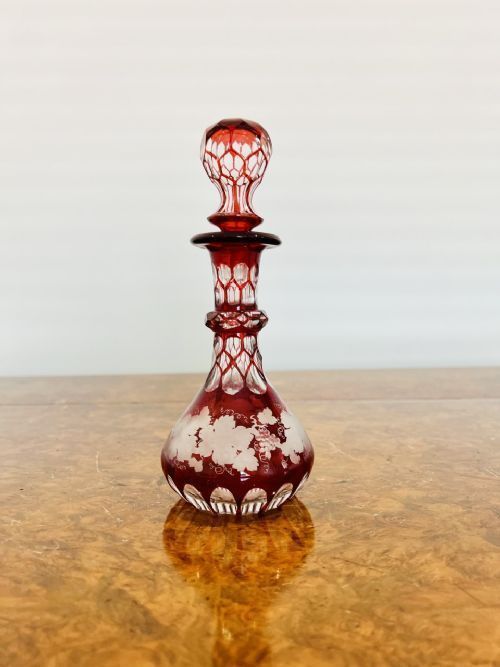
The most common forms found in this collection include scent bottles, decanters, wine glasses, vases, and mantel lustres. These range from small perfume flasks mounted in sterling silver to large, imposing pairs of table lustres and decorative bowls.
Originating largely from English, French, and Bohemian workshops, these pieces demonstrate the widespread popularity of deeply tinted glassware across multiple decades. Collectors find examples that served practical dining functions as well as purely decorative roles in period homes.
Materials and production techniques
The characteristic crimson hue is achieved by incorporating gold or copper compounds into the molten batch during glassmaking, producing the intense shades seen in ruby and cranberry glass. Many items utilise a layered technique, known as cased or overlay glass, where a thin layer of ruby glass is fused over clear or crystal glass before cutting.
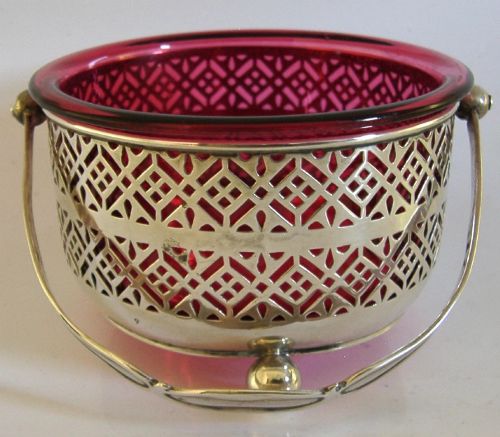
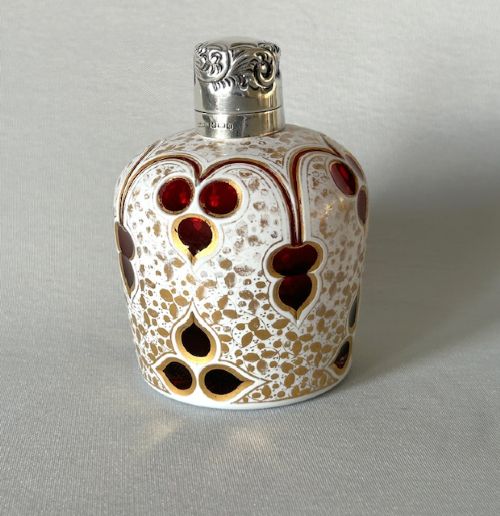
Decoration often involves wheel-cutting, hand-painting, and gilding, with artisans cutting through the red surface layer to reveal the clear or white glass beneath. Metal mounts in sterling silver, silver plate, or ormolu frequently accompany the glassware, serving as hinged caps, swing handles, or decorative rims.
Ruby Red Glass Retail Price Guide 2026
Typical asking prices for ruby red glass among the pieces listed under this phrase on Sellingantiques today, from the lower quarter to the upper quarter. They describe what is for sale here now, not the wider market.
Listings feature items from the eighteenth century up through the Edwardian period and Art Deco era, incorporating sterling silver, gold leaf, and enamel.
Assessing craftsmanship and execution
The distinction between standard and exceptional pieces rests upon the precision of the glass cutting and the quality of any applied decoration. Finer examples display deep, sharp facets and intricate, hand-etched or gilded motifs rather than simple moulded patterns.
The integration of metalwork also influences overall standard, as heavier silver mounts and fully hallmarked fittings indicate superior original commissioning. Furthermore, the clarity of the underlying metal and the evenness of the colour saturation demonstrate higher mastery in the furnace.
Gorham·Karl Palda·Val St Lambert·Moser
The Ruby Red Glass Glossary
- Cranberry glass
- A transparent pinkish-red glass coloured with gold chloride, widely utilised for Victorian tableware and decorative vessels. It appears frequently in wine glasses, jugs, and bowls.
- Mantel lustre
- A decorative glass vase hung with cut crystal prisms or teardrops, designed to be placed on a fireplace mantelpiece. Pairs of these items often feature elaborate gilding and painted details.
- Overlay glass
- A vessel formed of two or more distinct layers of glass, typically a coloured exterior over a clear or white body. Artisans cut through the outer layer to create contrasting patterns.
- Roemer
- A traditional Germanic large drinking glass featuring a patterned foot and a rounded bowl, often seen in etched ruby glass. These stemware pieces date across the nineteenth and early twentieth centuries.
- Tazza
- A shallow ornamental chalice or bowl raised on a stem and foot, utilised for serving or display. Antique examples in this category are frequently gilded and etched.
Ruby Red Glass: Frequently Asked Questions
What is the difference between ruby glass and cranberry glass?
Ruby glass and cranberry glass both derive their red colour from metallic additives, but cranberry glass generally exhibits a lighter, pinker translucent tone. Ruby glass can range from a bright crimson to a deeper, more saturated hue.
In practical terms, both terms describe similar nineteenth-century decorative and tableware traditions, though makers used different recipes and layer thicknesses to achieve distinct visual depths.
How do I care for antique glass with silver mounts?
Cleaning requires lukewarm water and mild soap, keeping moisture away from any glued joints or paper labels. Silver polish should be applied carefully with a cloth, avoiding contact with the glass surface.
Displaying pieces away from direct, harsh sunlight helps preserve the integrity of any delicate hand-painted gilding or enamel work over time.
How can I tell Victorian pieces from later reproductions?
Victorian glass often exhibits the subtle irregularities of hand-blown production, including pontil marks on the base and slight variations in thickness. Mounts on period items frequently bear hallmarks or early silver plate stamps.
Later items and twentieth-century interpretations tend to show more uniform machine moulding and sharper, less organic lines in their decorative cutting.
What were mantel lustres used for?
Mantle lustres served primarily as decorative ornaments on nineteenth-century drawing room mantelpieces rather than functional candle holders. The hanging glass prisms were intended to catch and refract ambient light from lamps and fires.
They were typically produced in matched pairs, flanking a central clock or ornament to complete a formal Victorian mantel display.