






Ruby Red Decanter
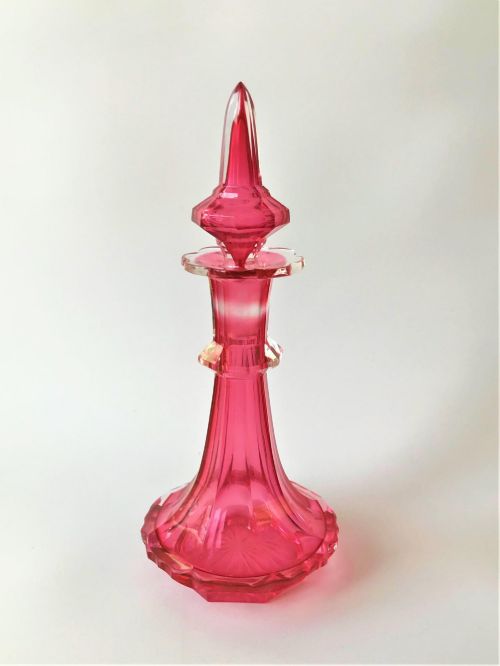
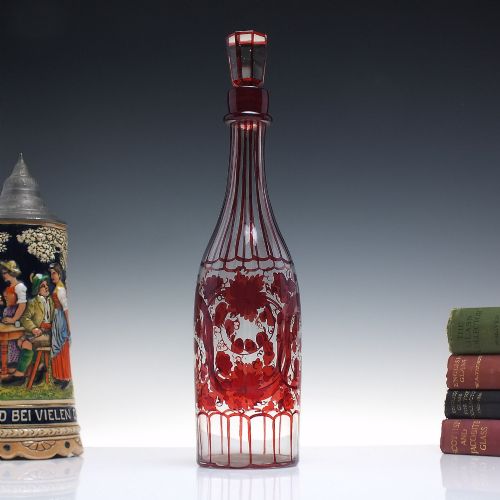
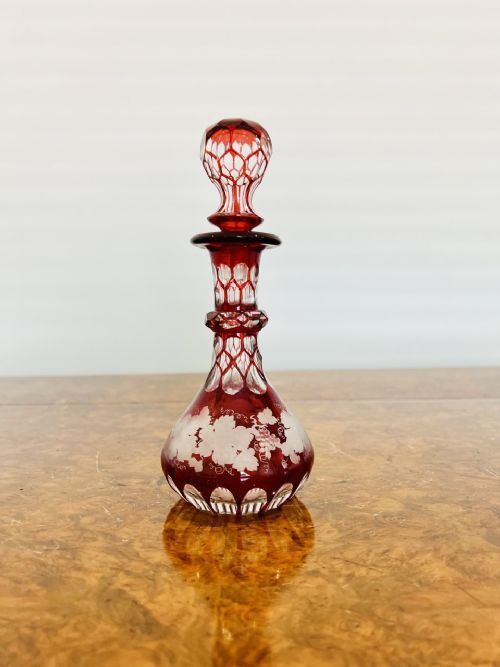
A ruby red decanter brings a striking depth of colour to a sideboard, formed from rich glass shaped across the Victorian and Edwardian eras.
Ruby Red Decanter
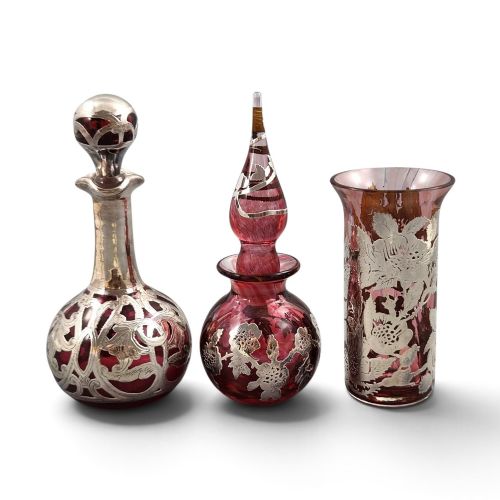
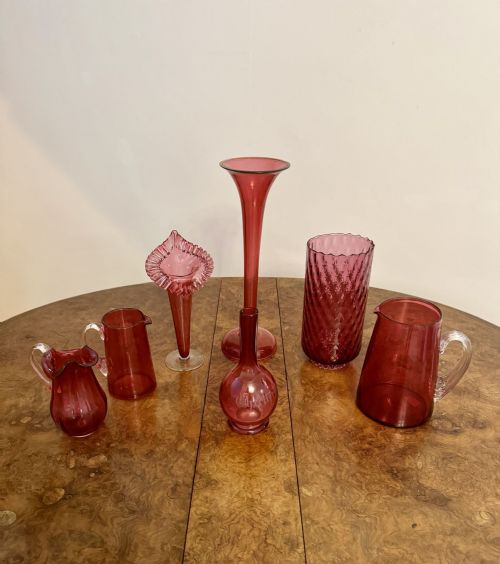
The selections on this page span the mid-nineteenth century through to the early twentieth century, taking in both English and Bohemian manufacture. Buyers will frequently encounter cranberry glass and ruby overlay variants, alongside silver-mounted examples from around nineteen hundred.
How they were made
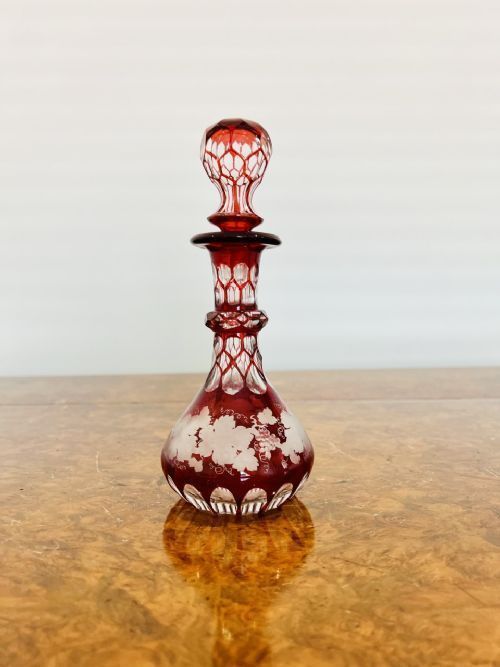
The intense colour in these vessels relies on glass production techniques involving gold salt additives to create the distinctive cranberry and ruby tones. Artisans shaped the molten material by hand before employing wheel-cutting, etching, or gilding to decorate the surface with floral and vine motifs.
Many items incorporate mounts and stoppers made from sterling silver or silver plate, whilst overlay techniques involve fusing a layer of red glass over a clear core before cutting through the upper stratum to reveal the contrasting base.
Ruby Red Decanter Retail Price Guide 2026
Typical asking prices for ruby red decanter among the pieces listed under this phrase on Sellingantiques today, from the lower quarter to the upper quarter. They describe what is for sale here now, not the wider market.
Some Victorian wine jugs feature finely engraved vines that look ready to spill a vintage long before the cork is even drawn.
What varies in quality
The distinction between standard vessels and superior examples rests on the crispness of the glass cutting and the delicacy of any engraved work, such as birds among vines. Heavier crystal bodies and well-balanced proportions indicate finer craftsmanship.
The presence of hallmarked sterling silver mounts rather than plated alternatives elevates a piece, as does an original matching stopper that fits the neck securely without excessive wobble.
Gorham
The Ruby Red Decanter Glossary
- Cranberry glass
- A transparent, pinkish-red glass created by adding gold chloride to the molten batch. It became particularly popular during the Victorian period for tableware and decorative items.
- Ruby overlay
- A technique where a thin layer of red glass is fused over a colourless glass body. Portions of the red layer are then cut away to create contrasting patterns and clear windows.
- Claret jug
- A large serving pitcher specifically designed for pouring red wine at the dining table. These frequently feature decorative silver handles and mounts.
- Finial
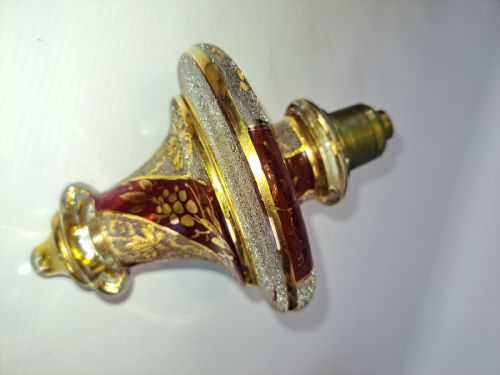
- The topmost decorative knob or ornament on a decanter stopper or lid. In Bohemian pieces, these are sometimes individually etched and gilded.
- Sterling silver
- An alloy of silver containing ninety-two point five percent pure silver and seven point five percent other metals, commonly used for the collars and mounts on Edwardian decanters.
Ruby Red Decanter: Frequently Asked Questions
Are ruby glass decanters safe for serving wine?
Most nineteenth-century glass is stable enough for occasional serving, provided the interior is clean and free from persistent staining. Modern testing standards did not apply to these historic pieces.
Many collectors prefer to use them strictly for display to preserve the fragile hand-cut surfaces and delicate silver mounts from unnecessary wear.
How can I tell a Victorian decanter from an Edwardian one?
Victorian examples often lean towards heavier, richly engraved floral designs and deep cranberry tones dating from the mid to late nineteenth century. Edwardian pieces frequently incorporate crisp sterling silver collars with distinct date hallmarks from around nineteen hundred.
Form also provides a clue, as Edwardian makers often produced taller, slender wine decanters alongside vanity sets and perfume bottles.
Should the stopper match the decanter?
An original matching stopper sits flush and shares the same colour, glass thickness, and cutting style as the body. Hand-ground stoppers were individually fitted to each neck during production.
Inspect the ground glass portion of the stopper for tiny matching grind marks that confirm it belongs to that specific vessel.