


Ruby Marquise Ring
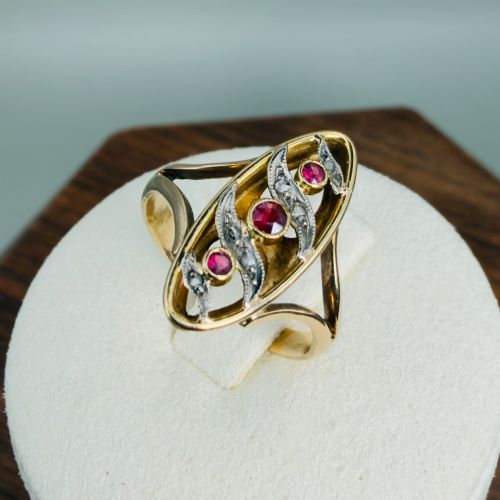
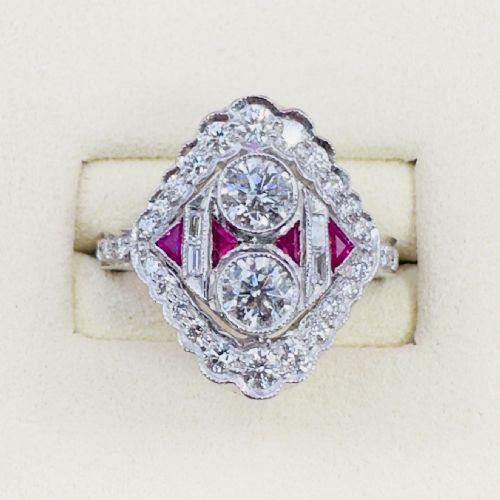
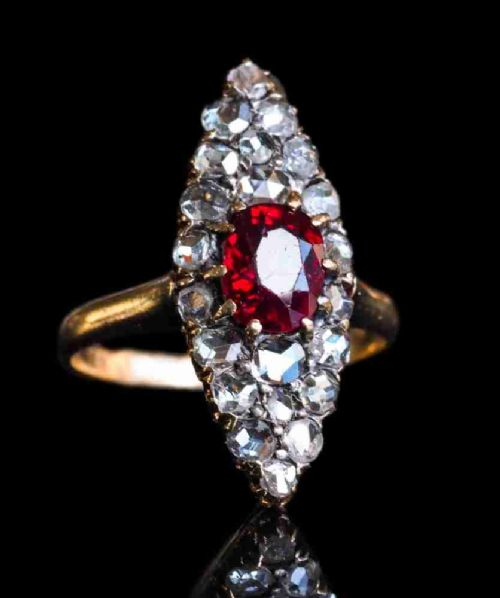
A ruby marquise ring brings together a pointed boat-shaped cluster of diamonds and rubies in gold, offering elongated elegance on the hand.
Ruby Marquise Ring
A ruby marquise ring displays an elongated silhouette, often referred to as a navette shape, designed to flatter the finger with a striking focal point. This page holds pieces from the Victorian, Edwardian, and Art Deco periods, alongside mid-twentieth-century examples.
The stones are set within gold, spanning yellow, white, and occasionally platinum-topped mounts, accompanied by old cut, rose cut, or brilliant cut diamonds. Dress rings dominate the selection, featuring cluster arrangements that frame the central ruby with sparkling attendants.
Originating across British, French, and general antique workshops, these rings reflect distinct stylistic shifts from floral Victorian motifs to geometric Art Deco symmetry.
Materials and Construction
Goldsmiths utilise 18ct gold, alongside rarer 15ct variations, forming the foundational bands and basket settings that secure the gems. White gold and platinum frequently appear in later or French pieces to contrast with the deep red of the rubies.
Gemstones are hand-set using claw, bezel, or flush techniques, accommodating natural unheated rubies, Burmese stones, and pearls alongside supporting diamonds. Hallmarks stamped into the shanks often reveal regional English assay offices or French control marks.
Listings span the Victorian, Edwardian, and Art Deco eras, utilising 18ct yellow gold, 18ct white gold, and platinum.
Markers of Quality
Quality rests in the proportional harmony of the navette outline and the matching symmetry of the surrounding diamond cluster. Finer examples maintain crisp millegrain edges and robust gallery work that elevates the stones above the finger.
The depth of colour and clarity in the central ruby dictate the upper tier of the range, particularly when paired with certified natural unheated stones or substantial old cut diamonds.
The Ruby Marquise Ring Glossary
- Navette
- A French term meaning little ship, describing a pointed, boat-shaped ring design that tapers at both ends. This shape is synonymous with the marquise style.
- Old cut
- A hand-faceted diamond cut from the eighteenth and nineteenth centuries, characterised by a high crown, small table, and open culet. These stones catch candlelight with a softer glow than modern brilliant cuts.
- Rose cut
- A vintage diamond cut featuring a flat base and a domed crown composed of triangular facets. It resembles an unopened rosebud.
- Millegrain
- A decorative jewellery technique featuring a row of tiny raised metal beads along the edge of a setting. This adds a delicate texture typical of Edwardian and Art Deco work.
- Hallmark
- An official stamp or series of marks applied to precious metals indicating purity, origin, and maker. English pieces often display assay office symbols alongside date letters.
Ruby Marquise Ring: Frequently Asked Questions
What is a ruby marquise ring?
A ruby marquise ring is a finger-elongating piece featuring a pointed, boat-shaped cluster of rubies and diamonds. The design draws the eye along the length of the hand.
Most examples arrange a central red ruby within a border of smaller sparkling diamonds, mounted securely on a gold band.
How do I care for an antique ring?
Antique rings require gentle handling due to their age and delicate settings. Remove the piece before engaging in heavy manual work or swimming.
Clean the metal and stones gently with warm soapy water and a soft brush, avoiding harsh chemical dips that might damage softer gems or pearls.
Can these rings be resized?
Many gold and platinum rings can be adjusted by a skilled jeweller who works with antique pieces. The feasibility depends on the shank thickness and the pattern along the shoulders.
Consult a professional to ensure the alteration preserves any historical hallmarks stamped inside the band.
How do I date my ring?
Dating relies on a combination of assay hallmarks, gemstone cutting styles, and overall metalwork techniques. Victorian pieces often feature heavy yellow gold settings, while Art Deco examples lean towards geometric white metal.
Comparing the mounting style against known historical periods provides a reliable estimate of the decade of manufacture.