


Round Wooden Stand
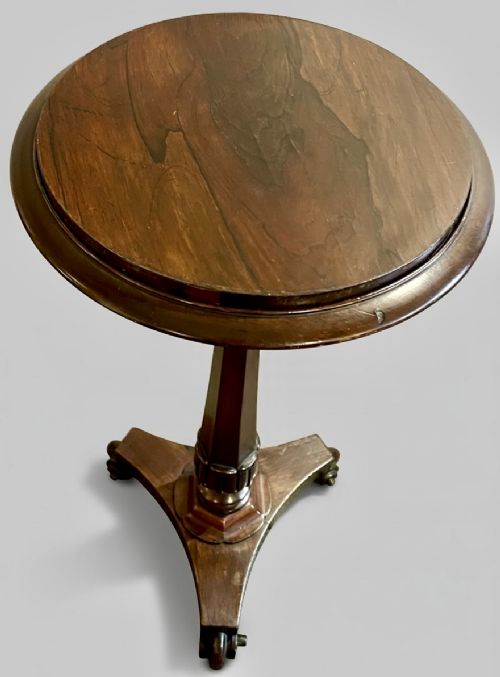
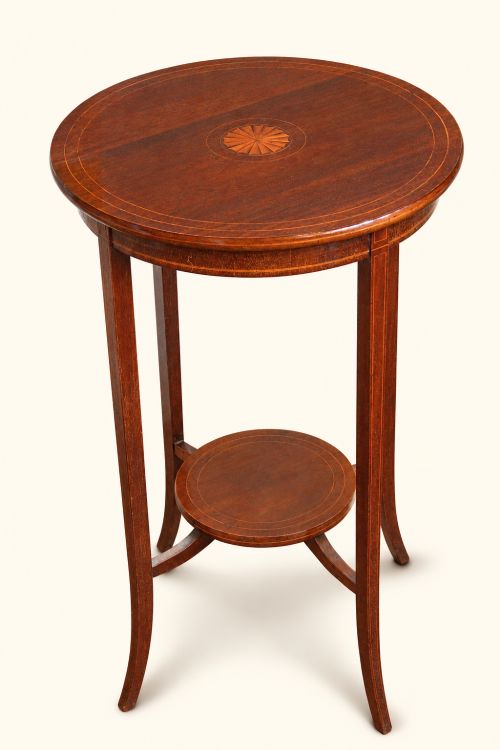
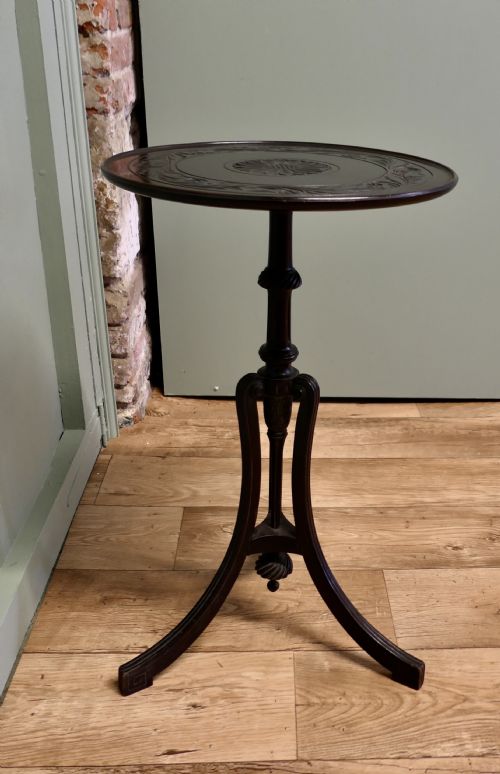
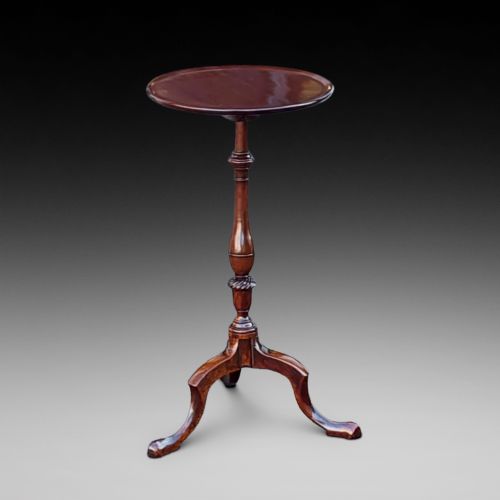
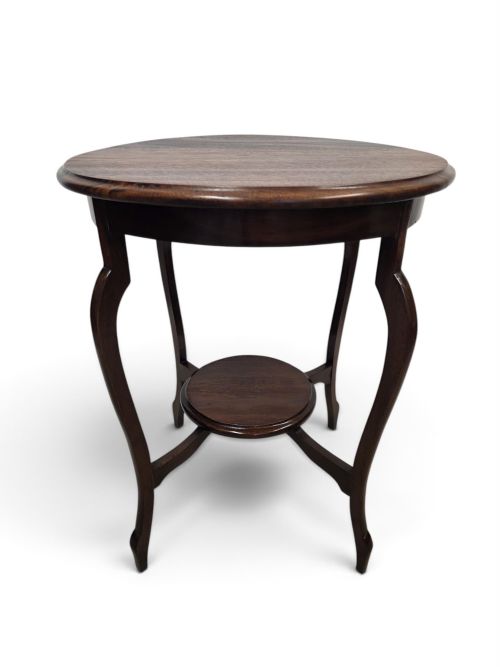
A round wooden stand offers a compact surface for a lamp, plant, or wine glass, anchoring corners with centuries of turning and carving.
Round Wooden Stand
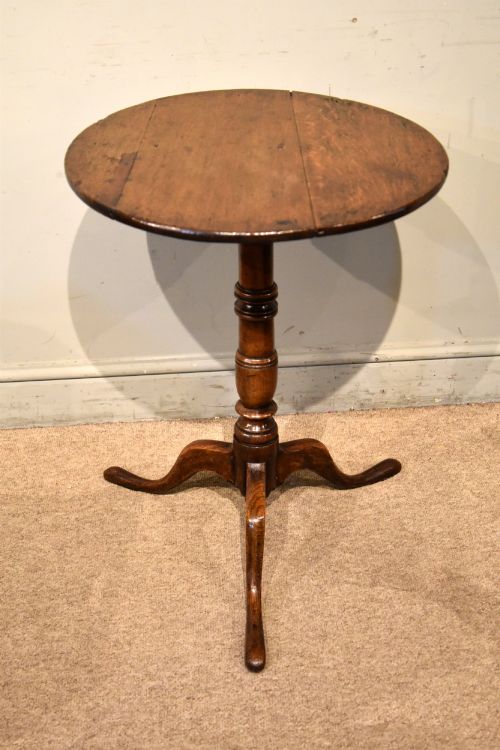
When you search for a round wooden stand, you encounter small tables, plant holders, and occasional surfaces designed to sit beside seating or in corners. These pieces span centuries of domestic life, serving functional roles from holding wine glasses in the Georgian era to supporting lamps in Victorian parlours.
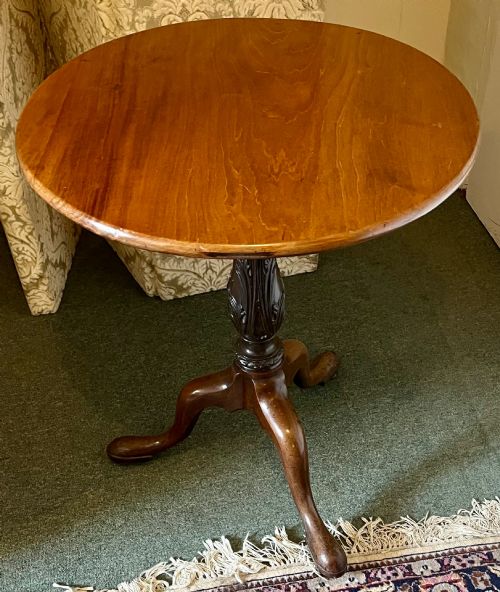
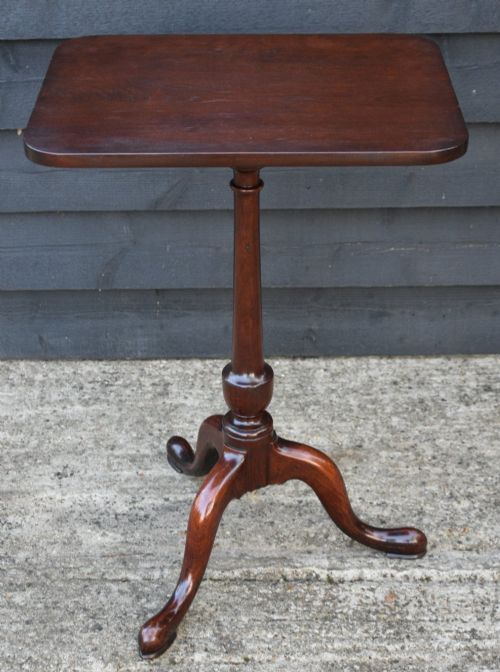
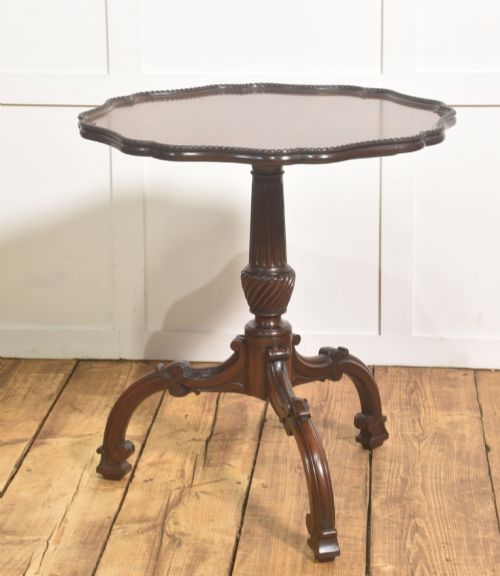
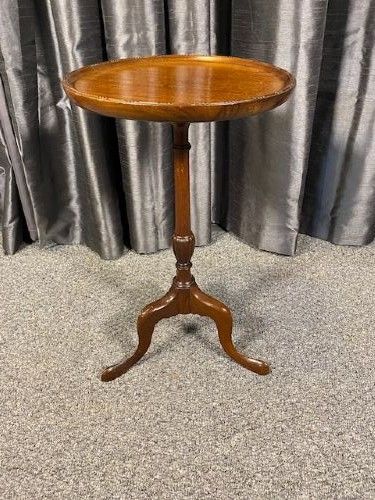
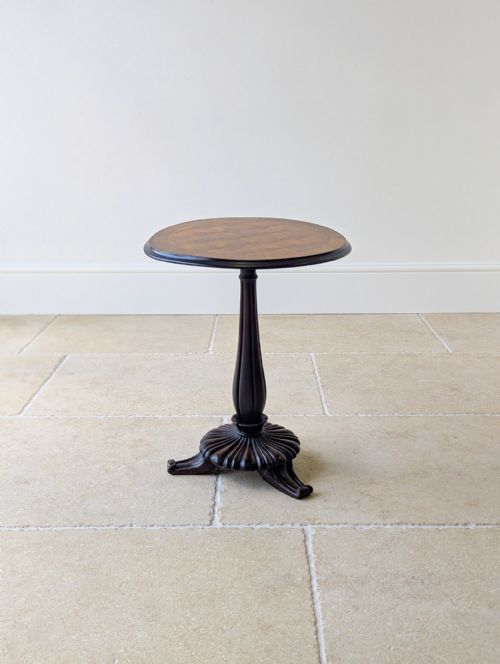
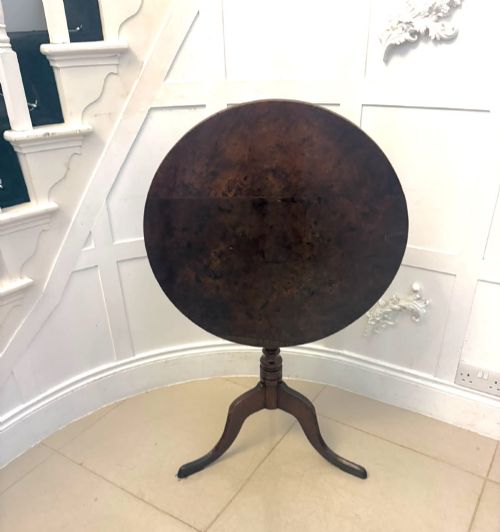
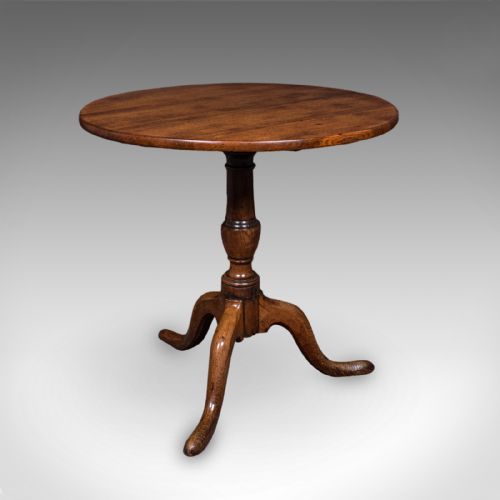
The most common examples on this page are wine tables and occasional tables resting on tripod legs, predominantly fashioned from mahogany or oak. You also find specialised forms like washstands, sculpture pedestals, and carved occasional tables from periods ranging from the eighteenth century through the Edwardian years.
Materials and construction methods
Cabinetmakers utilised dense hardwoods such as mahogany, walnut, and oak to build these circular surfaces and their supporting structures. Timber was often selected for distinct grain patterns, including burr oak, while secondary supports incorporated beech and brass fittings.
Construction techniques frequently involved turning upright pillars on a lathe and joining them to three-legged tripod bases, sometimes incorporating tilt-top mechanisms for storage. Carving was executed by hand, yielding detailed motifs on pedestals and table edges.
Round Wooden Stand Retail Price Guide 2026
Typical asking prices for round wooden stand among the pieces listed under this phrase on Sellingantiques today, from the lower quarter to the upper quarter. They describe what is for sale here now, not the wider market.
Several stands feature carved elephant motifs, bringing a touch of nineteenth-century Anglo-Indian exoticism straight to the corner of a modern sitting room.
Distinctions in craftsmanship and design
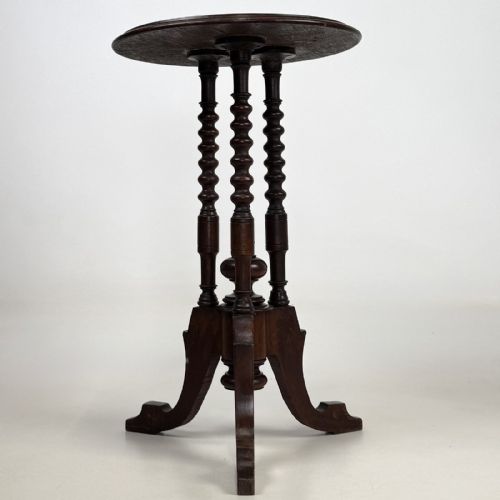
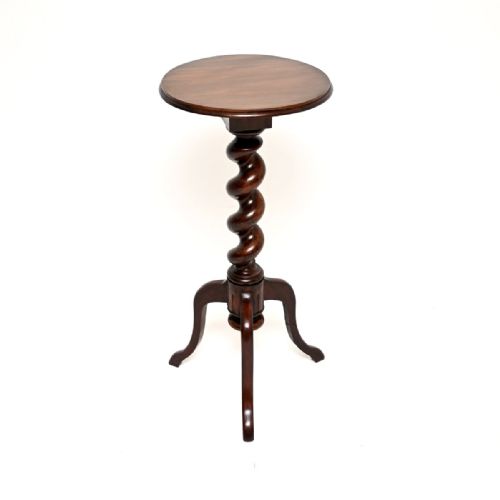
The degree of hand-carving and the choice of timber set finer examples apart from simpler utility items. Well-executed turned elements, such as barley twist stems or crisp tripod legs, demonstrate superior joinery and proportional balance.
Origin and period characteristics also define the hierarchy, with eighteenth-century pieces showing precise cabinetmaking compared to later mass-produced variations. The integration of functional mechanisms, like a smooth tilt-top action, marks better workshop practice.
Bulstrode Cambridge
The Round Wooden Stand Glossary
- Tripod table
- A small freestanding table supported by a pillar on three legs. This form gained popularity during the Georgian period for its stability on uneven floors.
- Tilt top
- A tabletop hinged to the pedestal so it can be pivoted vertically when not in use. This mechanism saved floor space in smaller eighteenth-century rooms.
- Barley twist
- A cylindrical wooden column turned in a helical spiral resembling a twisted rope. This decorative turning appears frequently on Victorian pedestals.
- Wine table
- A compact occasional table designed to hold a single glass or bottle. These surfaces usually feature circular tops and elevated rims.
Round Wooden Stand: Frequently Asked Questions
What were round wooden stands used for?
These versatile stands served varied domestic duties, holding evening drinks, reading lamps, or decorative vases in principal rooms. Lower versions functioned as plant holders or sculpture pedestals.
Their compact footprints allowed them to tuck beside armchairs or fill neglected corners without obstructing movement through the room.
How do I identify a Georgian stand?
Georgian examples typically exhibit understated mahogany or oak construction with slender tripod legs terminating in spade or pad feet. The timber patination shows deep, warm tones acquired through centuries of polishing.
Look for pegged joints and hand-turned pillars rather than modern mechanical fixings. Tilt-top mechanisms on these pieces often rely on simple wooden catches.
Where should I place one at home?
A round stand fits naturally beside a sofa or armchair as a resting spot for a book or cup. They also occupy awkward corners effectively when topped with a small lamp or trailing plant.
Because of their modest diameters, they require minimal floor space while adding architectural interest to empty wall segments.
What is a tilt-top mechanism?
A tilt-top mechanism allows the circular surface to pivot ninety degrees against the central pillar. This clever engineering enabled servants to store multiple tables flat against walls when rooms needed to be cleared.
When lowered for use, a wooden or brass catch locks the surface securely horizontal atop the turned pedestal.