

Round Wood Top Table
A round wood top table serves as a versatile centrepiece, bringing warmth and utility through centuries of cabinet-making traditions.
Round Wood Top Table
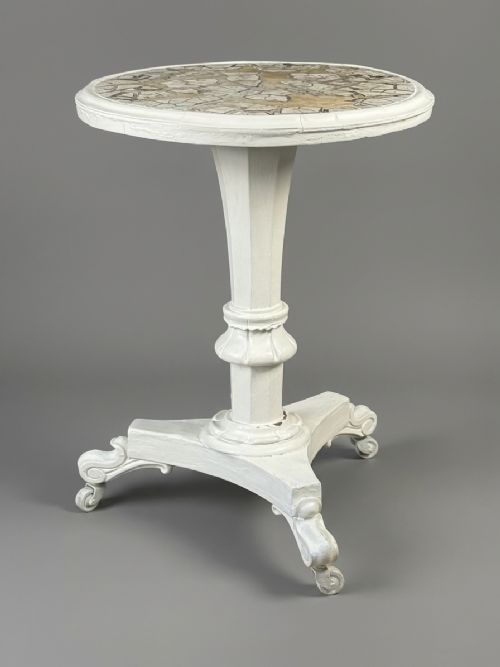
When searching for a round wood top table, buyers encounter a diverse selection spanning the Georgian, Regency, Victorian, and early twentieth-century periods. These versatile items function as occasional tables, breakfast tables, wine tables, and lamp tables, serving domestic spaces with circular surfaces supported by pedestals or tripod legs.
The inventory on this page draws from multiple origins, including English workshops, French regions, and Anglo-Indian production. Mahogany, rosewood, walnut, and oak form the primary surfaces, frequently paired with tilt-top mechanisms or fixed pedestals.
How they were made
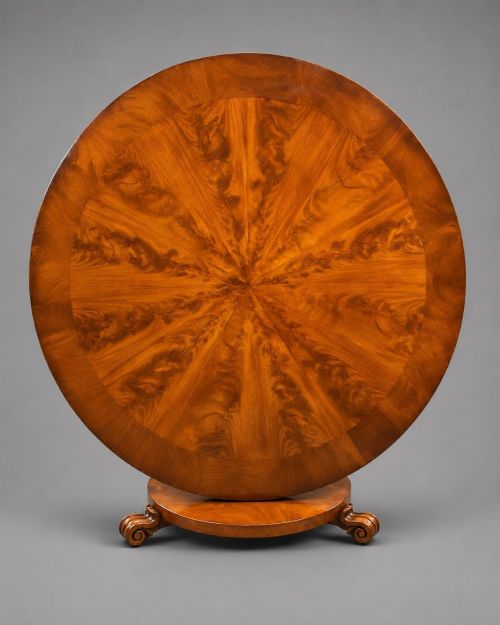
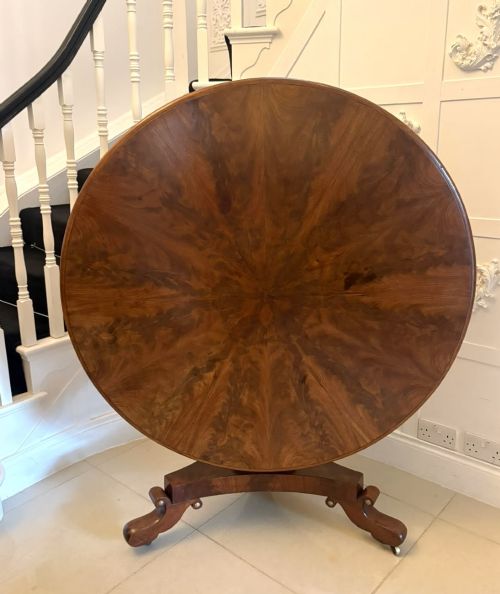
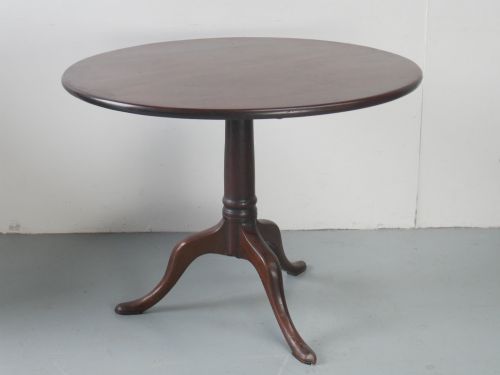
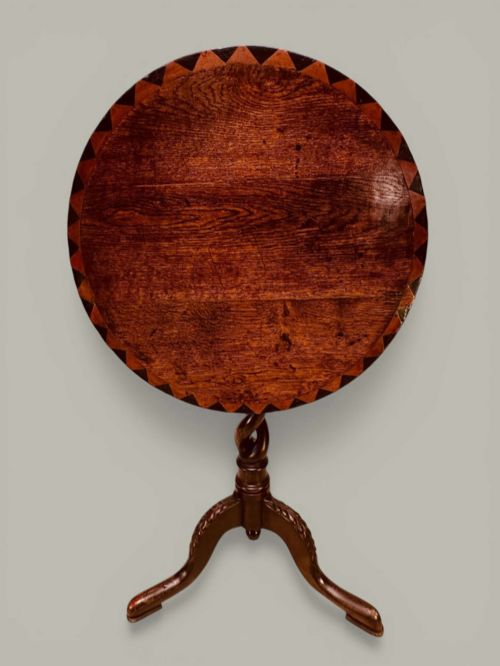
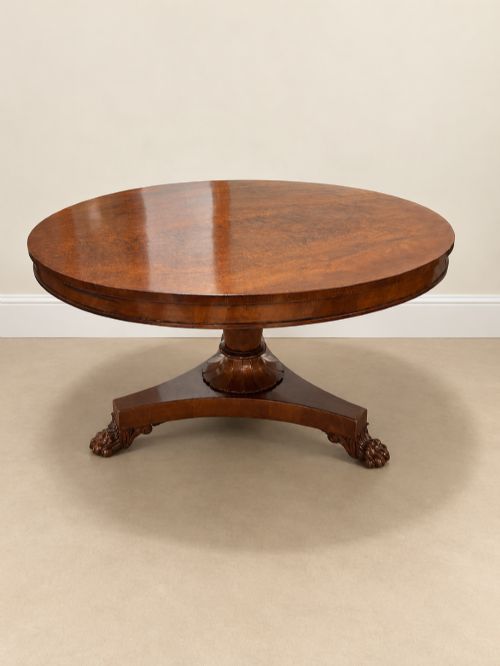
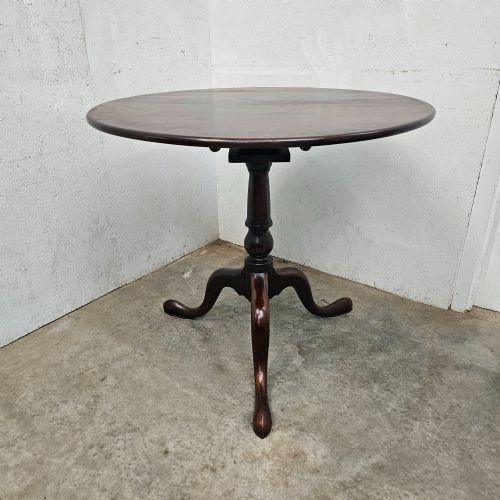
Cabinet-makers constructed circular table tops from solid timbers such as mahogany, oak, and elm, or applied flame mahogany veneer and burr wood over secondary woods. Many examples utilise tilt-top mechanisms, known as birdcage actions in Georgian pieces, allowing the top to pivot vertically when not in use.
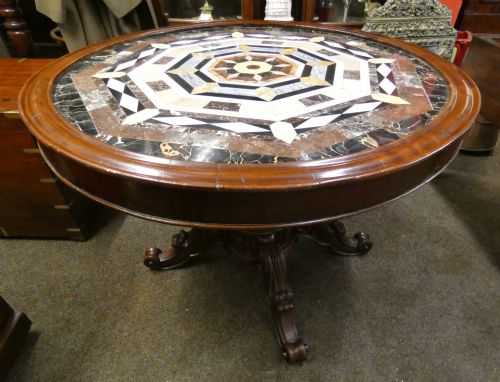
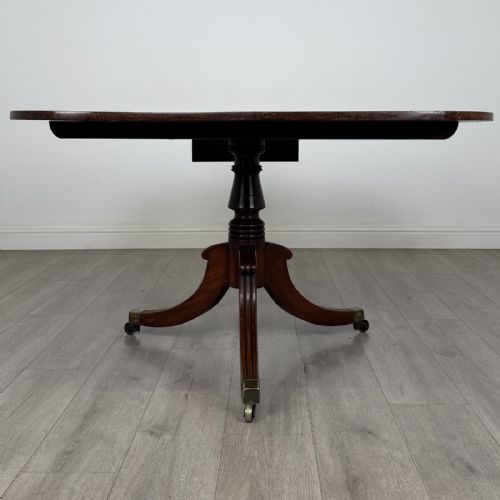
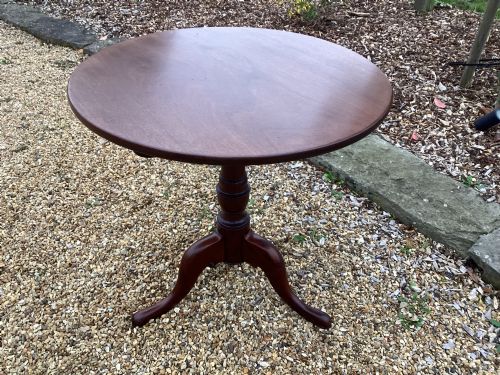
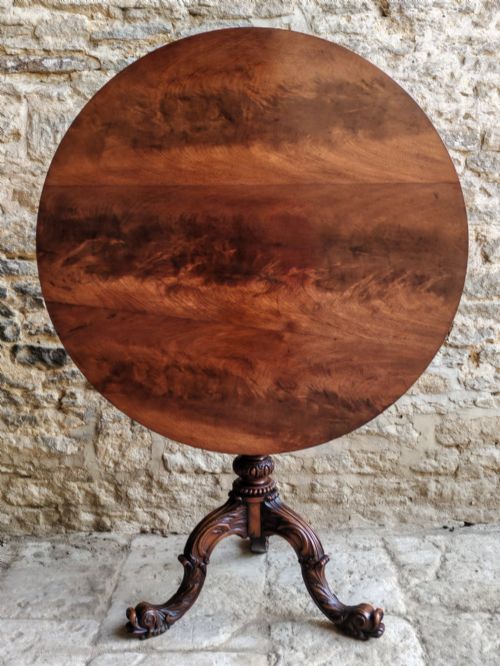
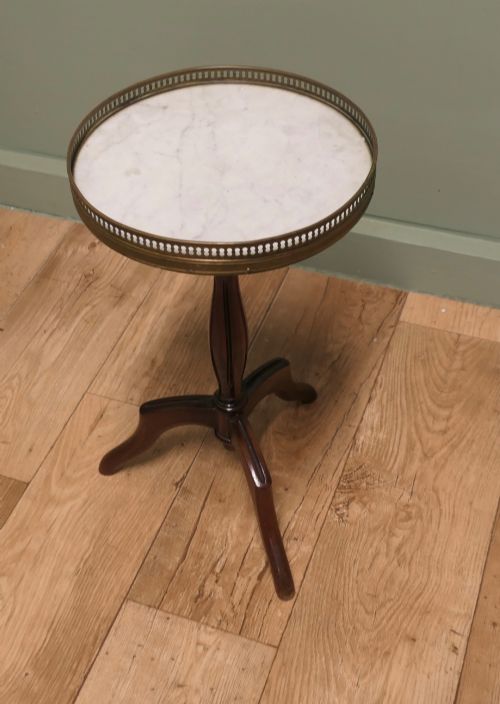
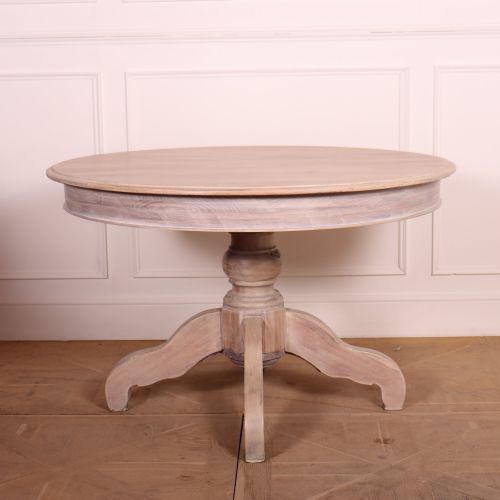
Supports range from single central pedestals resting on platform bases to three-legged tripod bases featuring bobbin-turned or carved ornamentation. Brass inlays, marble inserts, and carved borders add decorative detail to the hardwood structures.
Round Wood Top Table Retail Price Guide 2026
Typical asking prices for round wood top table among the pieces listed under this phrase on Sellingantiques today, from the lower quarter to the upper quarter. They describe what is for sale here now, not the wider market.
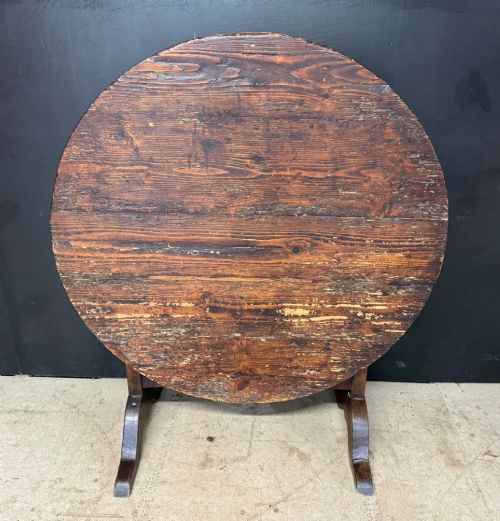
Wine tasting tables from French vineyards bring a rustic, grape-stained charm directly into modern living rooms.
What varies in quality
The refinement of the timber selection distinguishes standard items from superior pieces, particularly where highly figured flame mahogany, burr birch, or dense rosewood display rich grain patterns. Cabinet-making skill appears in the seamless joining of the circular top and the stability of the pedestal mechanism.
Hand-carved detailing on the tripod legs, columns, and aprons demonstrates the artisan's capability. Pieces featuring precise brass inlay or integrated tilt-top and birdcage actions reflect advanced period craftsmanship.
The Round Wood Top Table Glossary
- Tilt top
- A circular table top mounted on a hinge mechanism that allows the surface to rotate vertically for storage against a wall.
- Tripod base
- A supporting structure consisting of three curved legs radiating from a central pillar.
- Birdcage
- A timber framework beneath a table top that permits both rotation and tilting of the surface.
- Gueridon
- A small French occasional table supported by a central column or legs, popular during the nineteenth century.
- Breakfast table
- A large circular pedestal table designed for morning meals or general parlour use during the Regency and Victorian eras.
Round Wood Top Table: Frequently Asked Questions
What is a tilt top table used for?
A tilt top table provides a convenient surface for lamps, drinks, or breakfast while offering a practical mechanism to store the table flat against a wall when floor space is needed.
These pieces transitioned easily between active daily use in reception rooms and compact storage in period homes.
How do I identify a Regency round table?
Regency round tables typically feature dark woods like rosewood and mahogany, often accented with brass inlay or mounted on robust central pedestals with platform bases.
They reflect neoclassical design influences popular during the early nineteenth century.
What is the difference between a wine table and a breakfast table?
Wine tables are smaller, highly portable occasional surfaces designed to hold glasses or small items beside seating.
Breakfast tables are substantially larger pedestal tables built to accommodate morning dining or central room placement.
Where were gueridon tables made?
Gueridon tables originated in France, with examples on this page dating from periods such as the French Empire and the Louis Philippe era.
French cabinet-makers utilised woods like bleached walnut and kingwood to construct these distinctive circular tables.