




Round Upholstered Stool
A round upholstered stool brings character and low seating to a room, offering tactile fabric and solid timber frames that anchor traditional spaces.
Round Upholstered Stool
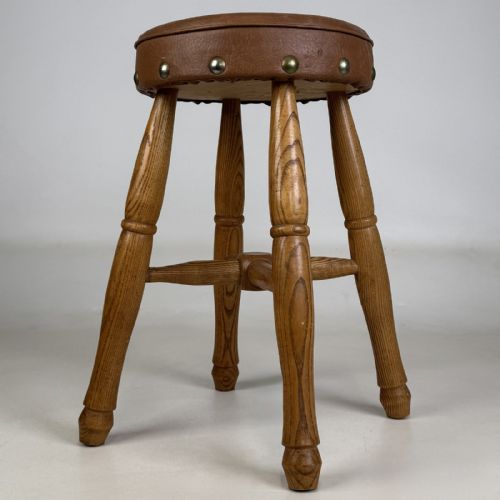
A round upholstered stool serves as a versatile seat or footrest, drawing from periods such as the Victorian era, the nineteenth century, and the Georgian period. These pieces frequently appear in forms like piano stools, footstools, and ottomans, offering compact seating options for various rooms.
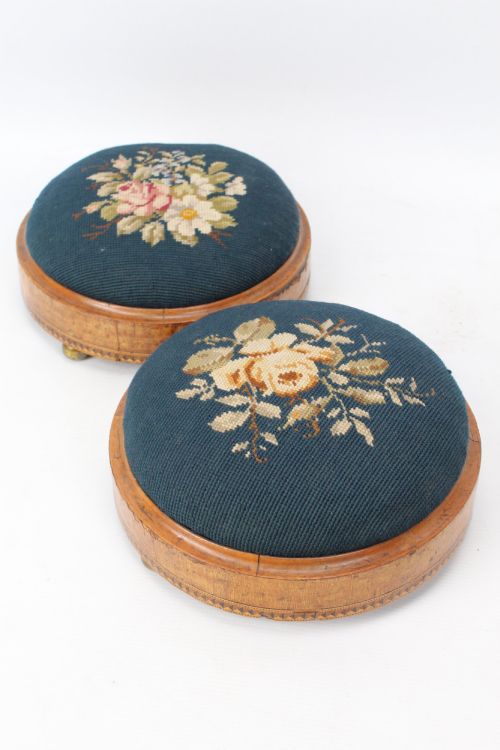
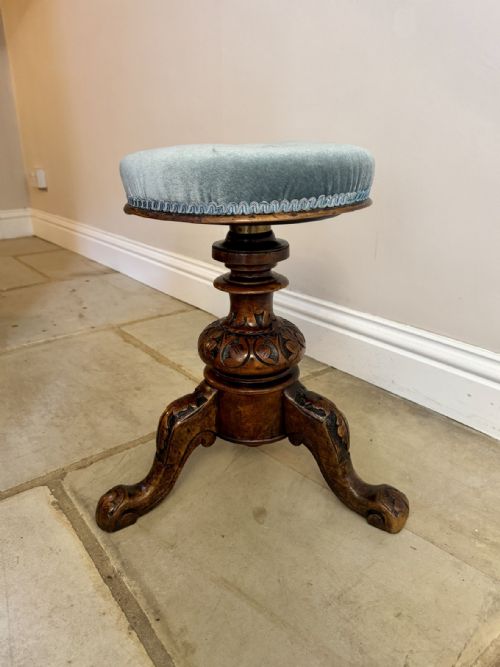
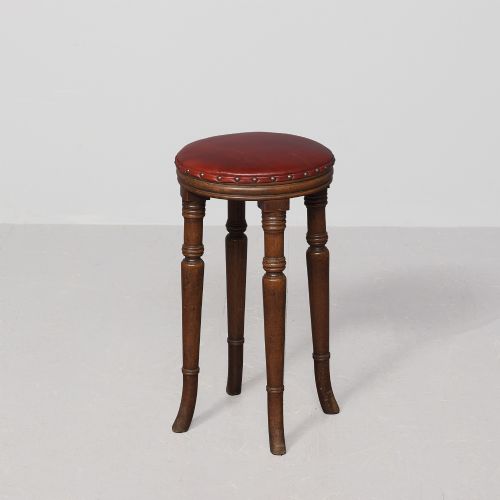
The selection ranges from tall George III circular pieces to Victorian walnut and mahogany examples, alongside French chateau designs and Vienna bentwood sets. Buyers often encounter pieces upholstered in velvet, silk, calico, or tapestry, mounted on timber frames with turned or carved details.
How they were made
Frames rely on dense timbers like mahogany, walnut, rosewood, and beech, shaped through turning, carving, or steam-bending as seen in bentwood production. Joinery methods secure these wooden structures to support everyday weight and movement.
Upholstery techniques involve securing fabrics such as velvet, silk, and tapestry over padded foundations, occasionally incorporating brass studs or deep buttoning. Adjustable mechanisms in piano models utilise steel components to allow height changes through revolving tops.
Listings feature pieces spanning the eighteenth, nineteenth, and early twentieth centuries, constructed from mahogany, walnut, rosewood, and bent beech.
What varies in quality
The refinement of the wooden frame distinguishes finer examples, where crisp hand-carving and well-figured walnut or mahogany indicate superior craftsmanship. Simpler turned legs or plain bentwood represent more utilitarian production.
The choice of covering textile and the precision of the upholstery work also set pieces apart, ranging from simple calico bases to decorative red silk and tapestries. Original mechanical adjustments on piano seats add functional complexity that elevates the piece.
H Brooks and Co
The Round Upholstered Stool Glossary
- Bentwood
- Wood softened by steam and bent into curved shapes. This technique creates lightweight yet strong frames for chairs and stools.
- Revolving
- Able to turn in a circle around a fixed central axis. This mechanism allows a seated person to spin the top freely.
- Deep buttoning
- An upholstery technique where buttons are pulled tight into the padding to form a diamond pattern. It secures the stuffing while adding texture.
- Calico
- A plain-woven cotton fabric used frequently as an initial layer or upholstery covering. It provides a neutral foundation before decorative textiles are applied.
- Tapestry
- A form of textile art woven on a loom, often featuring pictorial scenes. It offers a durable and decorative surface for antique seat covers.
Round Upholstered Stool: Frequently Asked Questions
What were piano stools used for?
These seats provided adjustable or stationary perches for musicians at keyboard instruments. Their height mechanisms allowed players to find a comfortable posture.
Many examples feature revolving tops to let the player turn slightly while seated. Their compact round shapes fitted neatly beside upright and grand instruments.
How do I date a round stool?
Dating relies on timber choices, leg turning styles, and mechanical fittings. Georgian pieces often display tall, slender proportions while Victorian examples favour heavier carved walnut or mahogany.
Nineteenth-century French designs incorporate distinct regional carving styles and silk or tapestry upholstery. Bentwood varieties point towards early twentieth-century mass production techniques.
Where should I place a round stool?
These pieces suit living rooms as movable footrests or dressing rooms as low seats. Their compact footprint allows them to tuck under tables or sit beside armchairs without crowding the floor.
Piano models work well beside desks or in corners as decorative plant stands. Their varied heights accommodate different spatial needs around the home.
What timbers were used?
Mahogany and walnut form the basis of most nineteenth-century and Victorian frames, offering strong dark grain. Rosewood appears on finer piano seats for its rich reddish-brown tone.
Beech serves primarily in bentwood manufacturing due to its flexibility when steamed. Steel and brass parts appear internally or externally on adjustable models.