

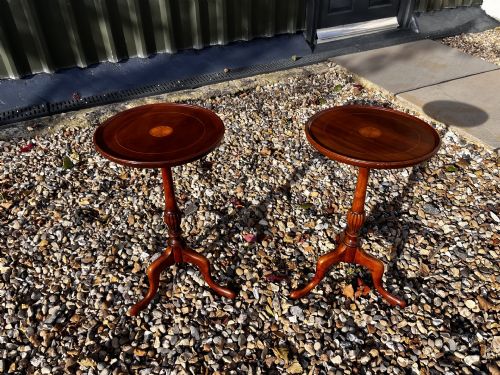
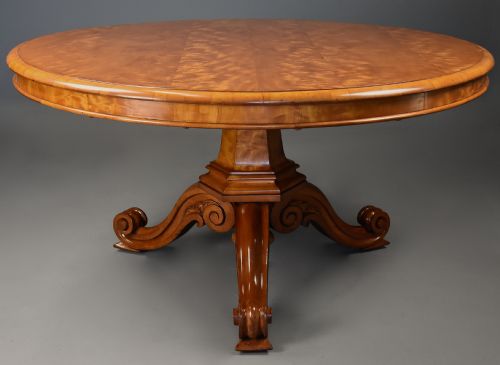
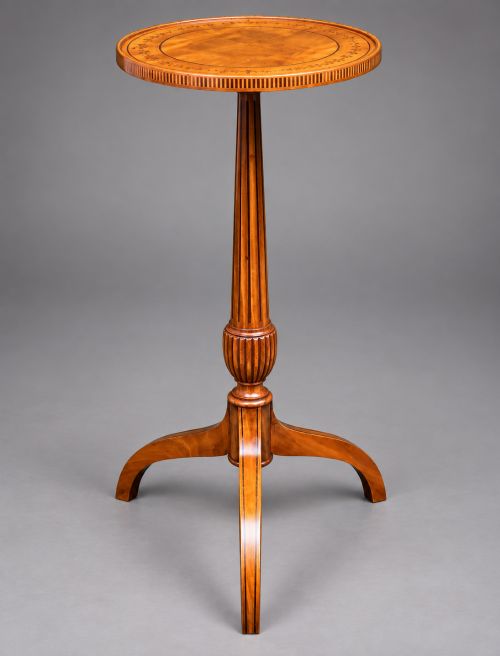


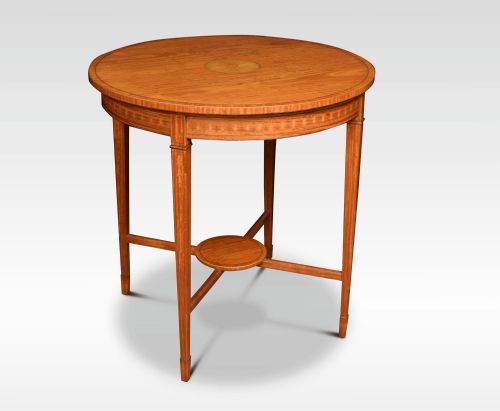


Round Satinwood Table
A round satinwood table brings pale, lustrous grain and refined classical polish to any room, offering versatile elegance.
Round Satinwood Table
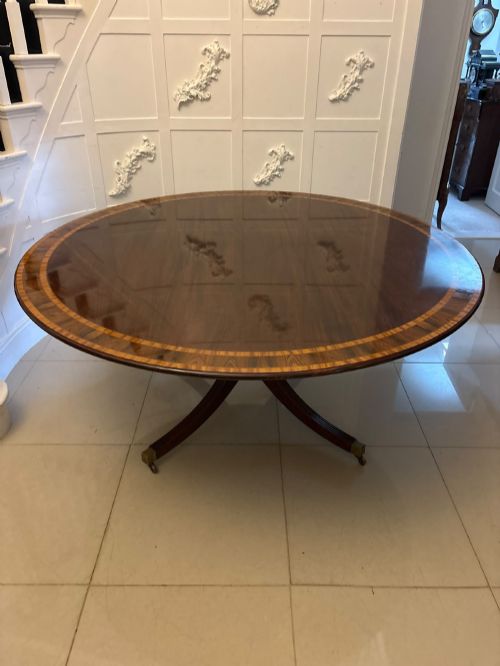
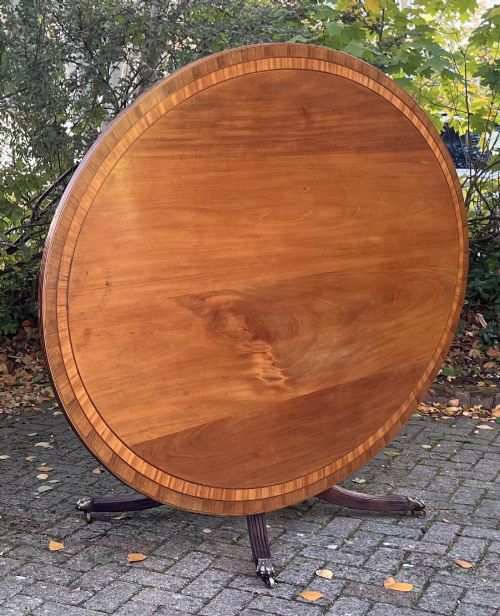
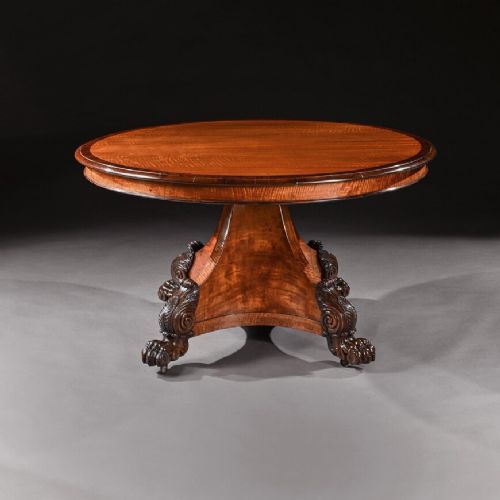
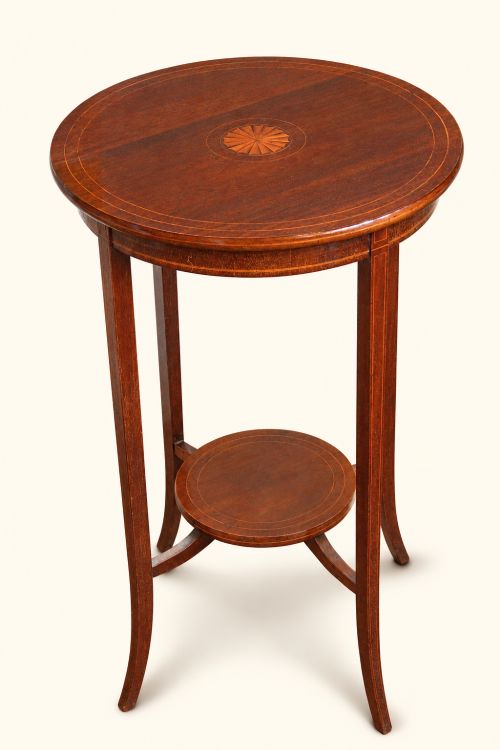
A round satinwood table encompasses forms ranging from compact wine and occasional tables to larger centre and dining pieces. These items appear across periods including the eighteenth century, Regency era, and Edwardian decades, often reflecting Sheraton Revival or neoclassical design influences.
Buyers seeking a round satinwood table will encounter circular surfaces supported by pedestals or slender legs, frequently detailed with marquetry or contrasting timbers. The selection spans distinct eras like the Victorian period and Art Deco, offering varied scales for different domestic spaces.
How they were made
Cabinetmakers utilised figured satinwood veneers and solid timbers, applying radial veneering techniques to create shimmering geometric patterns on circular tabletops. Inlaid woods, rosewood, and brass accents frequently border the primary grain to enhance visual depth.
Structural integrity relied on sturdy secondary woods such as mahogany, birch, and oak, while decorative elements involved meticulous marquetry and neoclassical painted motifs. Surfaces received polished finishes that protected the timber while highlighting its natural golden sheen.
Round Satinwood Table Retail Price Guide 2026
Typical asking prices for round satinwood table among the pieces listed under this phrase on Sellingantiques today, from the lower quarter to the upper quarter. They describe what is for sale here now, not the wider market.
Listings feature satinwood alongside contrasting mahogany, rosewood, and birch veneer across the 19th Century, Regency, and Edwardian periods.
What varies in quality
Quality rests primarily on the choice and figure of the timber veneer, where deeply chatoyant grain and precise radial matching distinguish finer examples. The crispness of marquetry inlay and the subtlety of painted neoclassical details further separate standard pieces from exceptional ones.
Construction methods also dictate worth, visible in the stability of the pedestal joint and the harmonious proportions of the top to its support. Finer specimens display deliberate selection of contrasting timbers like rosewood and mahogany, maintaining integrity across joints and edges.
Peters of Genoa
The Round Satinwood Table Glossary
- Satinwood
- A hard, durable tropical timber known for its yellowish-gold colour and reflective, satin-like sheen. It forms the primary surface veneer on many classical and revival tables.
- Marquetry
- The art of applying small pieces of veneer to a structure to form decorative patterns and pictures. Craftsmen utilise various coloured woods to achieve pictorial depth.
- Occasional table
- A small, light table designed for flexible placement and specific minor uses within a room. These pieces often feature circular tops and slender legs.
- Centre table
- A freestanding table designed to be viewed from all sides, traditionally placed in the middle of a room. These items often anchor larger reception spaces.
- Tilt top
- A tabletop mechanism that allows the surface to pivot vertically for storage when not in use. This clever engineering appears frequently on nineteenth-century tables.
Round Satinwood Table: Frequently Asked Questions
How do I care for satinwood?
Keep the wood away from direct sunlight and excessive heat to prevent the delicate veneers from fading or drying out over time.
Apply a quality microcrystalline wax occasionally to protect the polished surface and maintain its natural golden lustre without building up heavy residue.
Where should I place a centre table?
Position a centre table in the middle of a room where it can be appreciated from every angle as a freestanding focal point.
Ensure there is adequate clearance around the piece for movement, allowing its proportions and inlaid details to command the space effectively.
Are these tables suitable for daily dining?
Smaller occasional and wine tables serve better for drinks or display rather than robust daily family meals.
Larger pedestal and dining formats handle regular use well, provided coasters and protective pads guard the vintage polished timber from moisture and heat.
How do I identify a revival piece?
Revival pieces often display manufacturing traits and secondary woods consistent with later nineteenth or early twentieth-century production methods.
Compare the decorative motifs and hardware against eighteenth-century originals to determine whether the item is a later homage to neoclassical styles.