

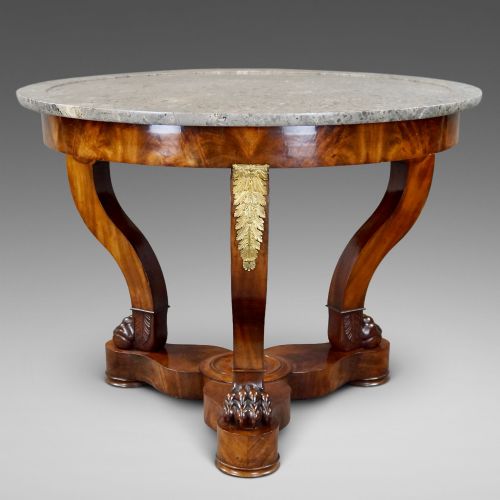


Round Marble Gueridon
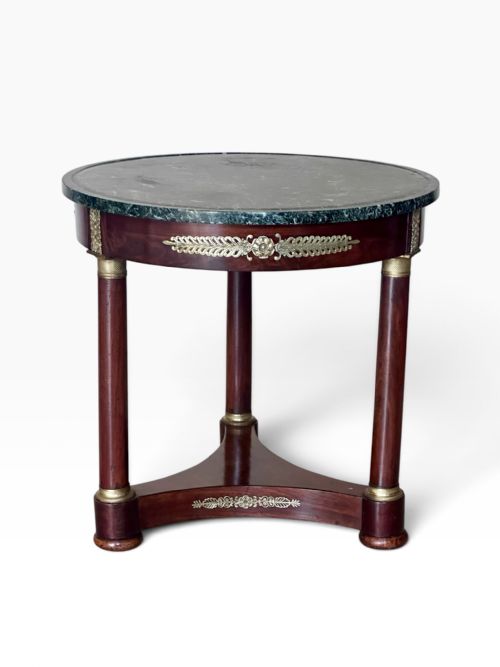
A round marble gueridon brings neoclassical French elegance to a room, offering a sturdy stone surface supported by timber and ormolu.
Round Marble Gueridon
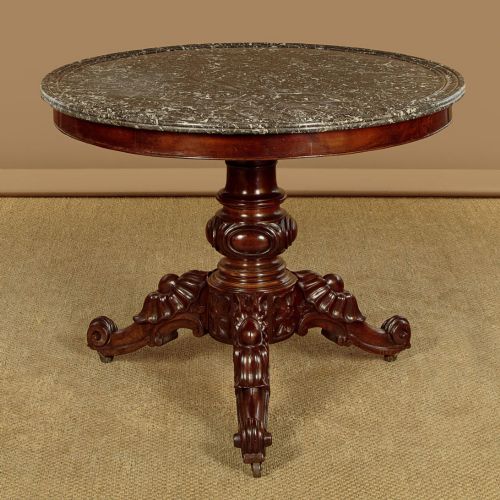
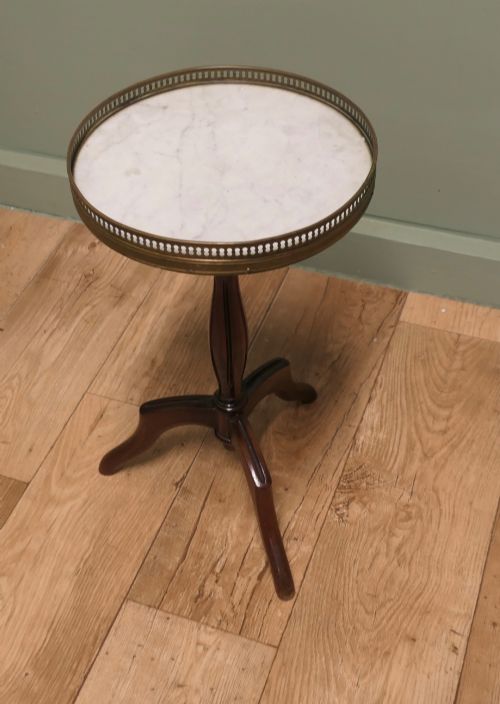
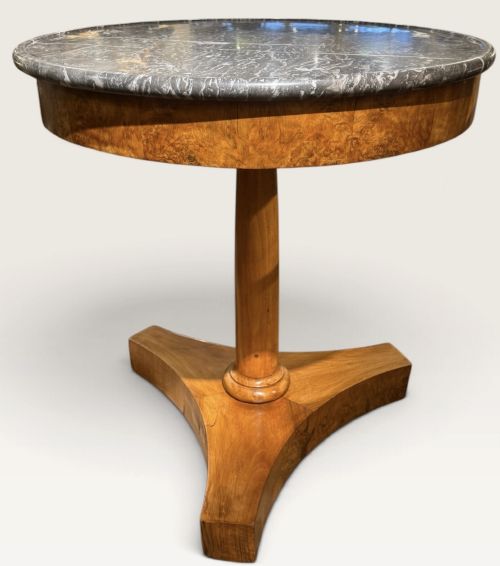
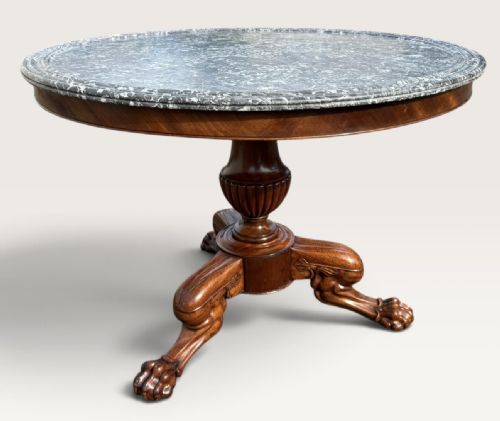
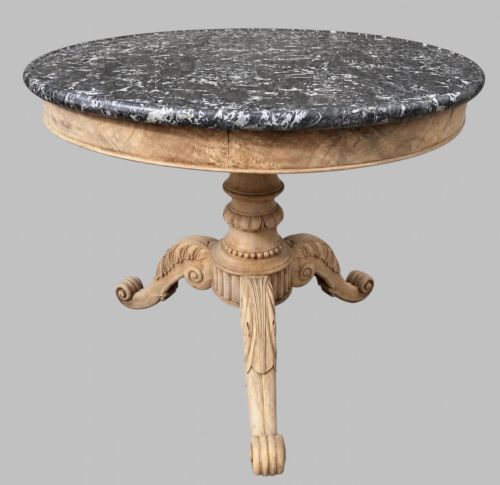
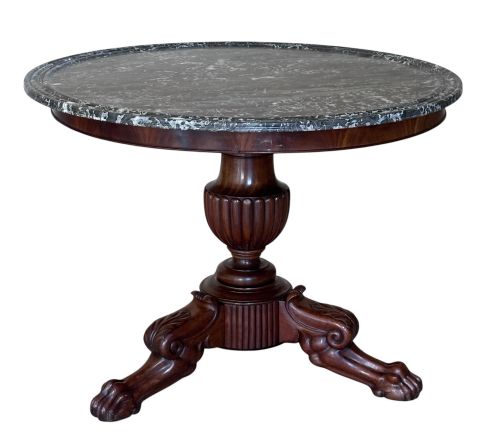
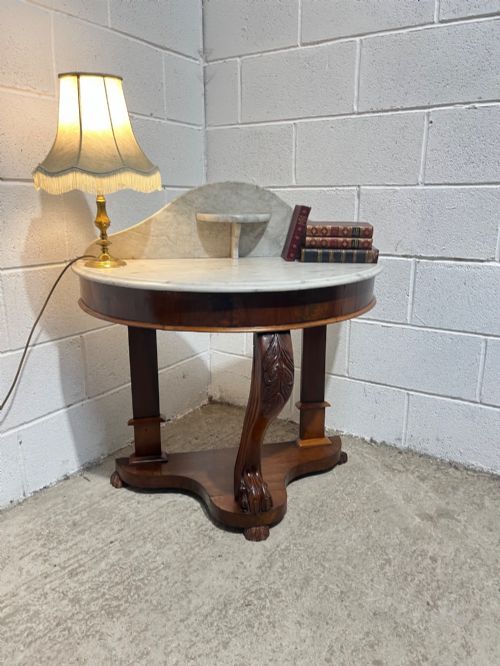
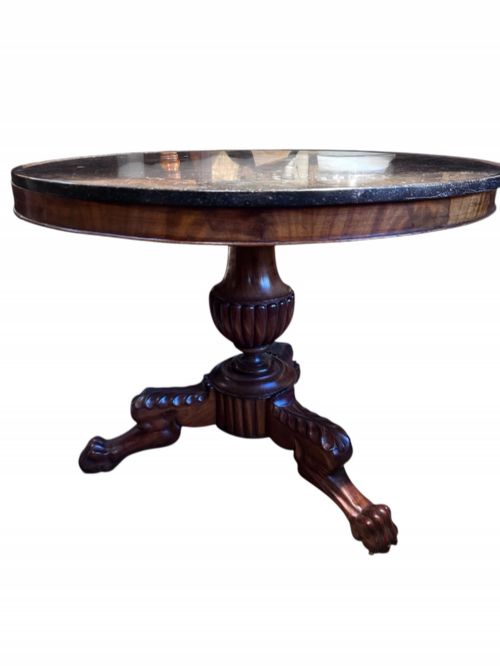
A round marble gueridon is a small pillar table designed for centres, corners or side placement within a room. These tables combine a heavy marble slab top with a circular wooden base, often standing on a single central pillar or tripod support.
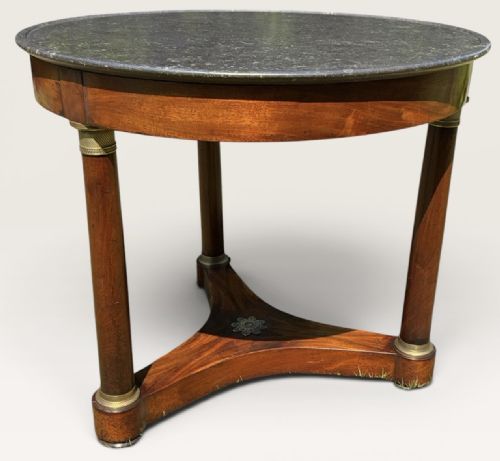
The versions most commonly found on this page hail from the nineteenth century, reflecting French design movements such as Empire, Louis Philippe and Louis XVI Revival. Makers utilised native and exotic timbers to frame the stone tops, creating versatile pieces used for lamps, drinks or display.
Materials and construction methods
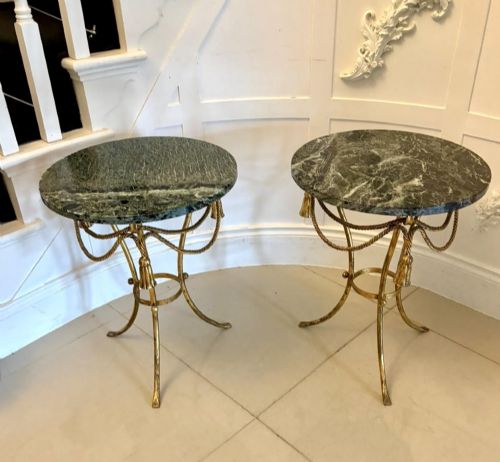
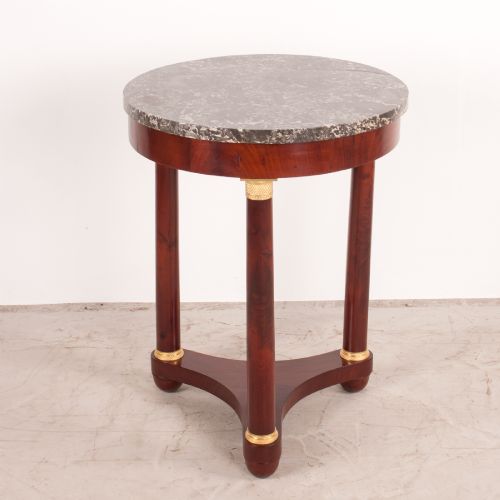
Cabinetmakers constructed the frames using timbers like mahogany, walnut, flame mahogany and kingwood, often shaping the wood around a central column or pedestal base. Giltwood, brass and ormolu mounts were applied as decorative accents to collars, feet and friezes.
Heavy marble tops, frequently white or black in appearance, were selected to fit precisely within the wooden rims. Some examples incorporate additional lower tiers, painted finishes or bronze figural details such as swans and rams' heads.
Round Marble Gueridon Retail Price Guide 2026
Typical asking prices for round marble gueridon among the pieces listed under this phrase on Sellingantiques today, from the lower quarter to the upper quarter. They describe what is for sale here now, not the wider market.
Several tables feature cast bronze swans and rams' heads keeping permanent watch over the parlour floor.
Factors that distinguish quality
Quality rests in the choice of timber figure, such as richly grained flame mahogany or burr elm, paired with the weight and polish of the marble top. Finely cast ormolu mounts and crisp carved details like flower mouldings indicate superior workshop execution.
Structural integrity of the central pillar and pedestal base separates standard examples from finer pieces. Tables with original marble tops and well-preserved gilt or patinated bronze enrichments hold greater distinction.
The Round Marble Gueridon Glossary
- Gueridon
- A small French occasional or centre table, typically supported by a central column or pedestal. The form originated in the seventeenth century and evolved through various revival styles.
- Ormolu
- Gilded bronze used for decorative mounts, furniture hardware and enrichments on nineteenth-century tables. The technique involves applying a gold amalgam to bronze.
- Flame mahogany
- A veneer cut from the fork of the mahogany tree, showing a distinctive flickering flame pattern. Cabinetmakers favoured this grain for prominent tabletops.
- Empire style
- A neoclassical design movement originating in France during the early nineteenth century, characterised by classical motifs, heavy columns and bronze mounts.
- Pedestal table
- A table supported by a single central pillar rising from a base or feet. This configuration allows unrestricted legroom around the circumference.
Round Marble Gueridon: Frequently Asked Questions
What is a gueridon table used for?
These tables served various domestic purposes in nineteenth-century interiors, acting as central stands for decorative objects, lamps or small items. Their round tops made them suitable for placement in the middle of a room or beside seating.
Today, they function well as lamp tables, small side tables or occasional surfaces in living spaces and hallways. The stone top provides a durable area that withstands daily use.
How do I identify French Empire style?
French Empire pieces display heavy architectural lines, dark mahogany timbers and prominent ormolu mounts. Details often include classical motifs, swans or rams' heads.
The aesthetic draws inspiration from ancient Roman and Greek design, favouring symmetry and formal restraint over curved rococo excess.
Are the marble tops original?
Many tables retain their original fitted marble slabs, which match the interior rebates and proportions of the wooden frames. White and black marble varieties are typical for the period.
Inspect the fit of the stone within the wooden rim and check for consistent wear that matches the age of the base. Replacement slabs sometimes lack the exact thickness or edge profile of period tops.
How should I care for a marble top?
Clean the marble surface using a soft cloth and mild, neutral soap with warm water. Avoid acidic cleaners or vinegar, which etch the polished stone finish.
Use coasters under glasses to prevent liquid rings, and treat the wooden base with appropriate furniture wax according to the timber type.