

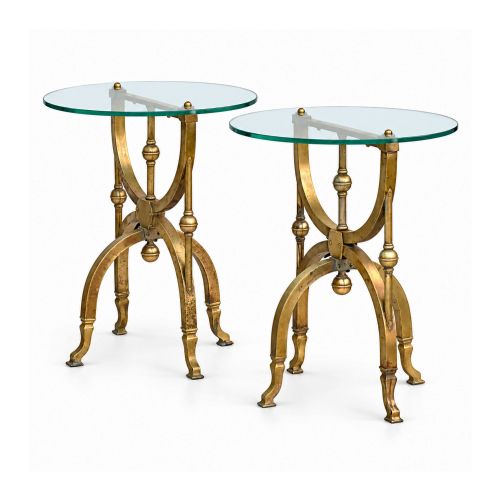
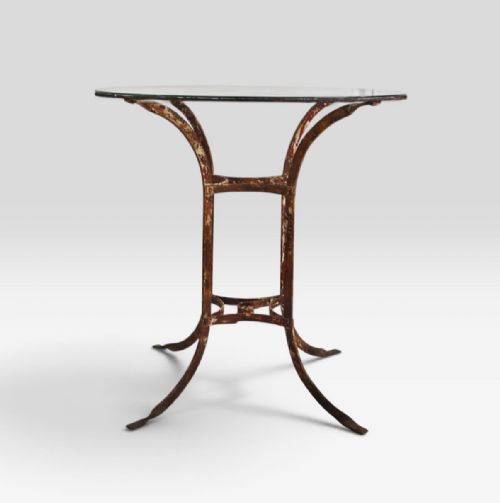


Round Glass Top Table
A round glass top table brings surface reflection and clear structure into a room, spanning Victorian bijouterie to Art Deco modernist designs.
Round Glass Top Table
When you search for a round glass top table, you encounter diverse domestic forms spanning side tables, coffee tables, display tables, garden tables, centre tables, and occasional tables. These pieces combine transparent surfaces with structural frames in materials such as brass, wrought iron, walnut, paint, kingwood, silk, and metal.
You are most likely to meet Victorian and 1930 examples on this page, reflecting periods like Victorian, 1930, 1920, and 1910. Styles range across Art Deco, Victorian, Classical Revival, 19th Century French, French Victorian, and Oriental.
The assortment includes specialised forms like bijouterie tables, folding side tables, and garden tables. Each variation serves a distinct functional role within domestic interior layouts from the nineteenth and early twentieth centuries.
How they were made
Maker construction relies on cabinet woods like walnut and kingwood paired with structural metals such as brass, chrome, and wrought iron. Wood elements often feature carved detail or inlaid surfaces beneath protective glass tops.
Glazing and framing techniques unite transparent panels with robust metal or wooden chassis. Brass mounts, painted finishes, and silk linings inside display compartments show the integration of decorative and structural materials.
Round Glass Top Table Retail Price Guide 2026
Typical asking prices for round glass top table among the pieces listed under this phrase on Sellingantiques today, from the lower quarter to the upper quarter. They describe what is for sale here now, not the wider market.
Object types recorded across the inventory include coffee tables, garden tables, and specialised display vitrines.
What varies in quality
Quality rests in the precision of the woodwork and the weight of the metal framing. Finer examples display deliberate carving in walnut or precise inlay in kingwood alongside substantial brass or chrome structural elements.
Design execution separates standard utility pieces from distinct stylistic expressions like Art Deco modernist items or French Victorian bijouterie vitrines. The integration of glass with specialised furniture forms dictates the overall execution standard.
The Round Glass Top Table Glossary
- Bijouterie table
- A glass-topped display table designed for showing small ornaments and valuables. These pieces often feature hinged glazed lids and silk-lined interiors.
- Occasional table
- A small, movable table intended for specific, intermittent use rather than permanent placement. They appear across various historical periods in diverse forms.
- Centre table
- A freestanding table designed to be viewed from all sides and placed in the middle of a room. They frequently utilise substantial timber framing like walnut.
- Kingwood
- A dense, heavily figured exotic timber prized for cabinetwork and decorative inlay. It appears on French nineteenth-century furniture.
- Vitrine
- A glass-panelled cabinet or table compartment used for display. Glazed surfaces protect the contents while allowing all-round visibility.
Round Glass Top Table: Frequently Asked Questions
What is a bijouterie table?
A bijouterie table is a specialised display furniture piece featuring a glazed top and often a glass-panelled body. These tables were designed for exhibiting small collectables, jewels, and ornaments.
Interior compartments are frequently lined with materials like silk to cushion delicate objects. They appear in Victorian French furniture traditions.
How do I identify Art Deco tables?
Art Deco tables from the 1930 period typically utilise streamlined geometric forms and industrial metals like chrome alongside glass. They reject excessive ornamentation in favour of clean architectural lines.
These pieces reflect modernist design shifts towards functional elegance. The materials often combine metal framing with straightforward wood elements.
Where should I place an occasional table?
An occasional table suits positions beside seating or in corners where a small surface is useful. Their portable nature allows them to move easily around domestic interior spaces.
Historical examples serve both practical utility and decorative display roles. They complement existing room layouts without dominating the floor space.
What distinguishes a centre table?
A centre table stands independently away from walls, finished with decorative detail on all sides. These pieces act as focal points within principal rooms.
Construction often employs heavier timbers such as walnut to ensure stability as a freestanding object. They accommodate glass tops or solid wooden surfaces depending on the specific style.