




Round Elm Table
A round elm table brings organic timber grain and warm rustic character to a room, ranging from simple tripod bases to French provincial models.
Round Elm Table
A round elm table spans several centuries of domestic furniture, covering periods from the Georgian era through the nineteenth century and into the twentieth century. These pieces appear across diverse regional traditions, including English country workshops, French provincial kitchens, and Chinese vernacular cabinet-making.
Buyers encounter multiple forms when searching for a round elm table, most commonly small occasional tables, cricket tables, and larger dining formats. Tripod occasional tables and dropleaf centre tables sit alongside coffee tables and occasional pieces utilising burr veneers.
Makers utilised elm alongside supplementary timbers like oak, birch, and ebony, creating varied surfaces from plain boards to highly figured burr patterns. Some examples incorporate brass fittings or marble inserts to contrast with the warm grain of the primary wood.
How they were made
Cabinet-makers constructed these tables using solid elm or decorative burr elm veneers applied to supporting woods such as birch and oak. Artisans selected elm for its tough, interlocking grain, which resists splitting on heavily used kitchen and dining surfaces.
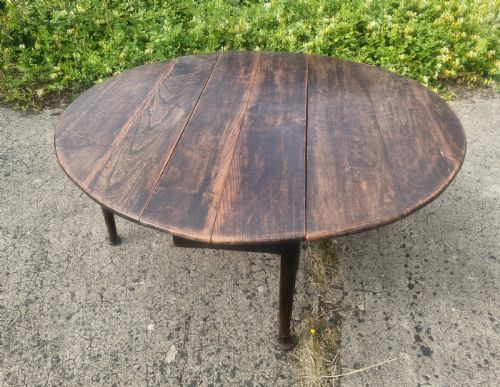
Construction methods vary from traditional pegged tripod bases on cricket tables to tilt mechanisms on Regency dining tables. Joinery reflects regional vernacular techniques, seen in French provincial dropleaf frames and Chinese occasional tables.
Elm timber is notoriously stubborn and resistant to splitting, which explains why centuries-old kitchen tables survive with their original tops intact.
What varies in quality
Quality in a round elm table rests on the selection and figuring of the timber, particularly when burr elm or decorative veneers are involved. Plain country pieces derive distinction from thick, well-pegged tops and honest patination built through generations of domestic use.
Proportion and structural refinement separate standard utility furniture from sophisticated examples like Regency tilt-top tables or French Guéridons. The integrity of the original base, whether tripod, pedestal, or four-legged, dictates the overall architectural success of the piece.
The Round Elm Table Glossary
- Cricket table
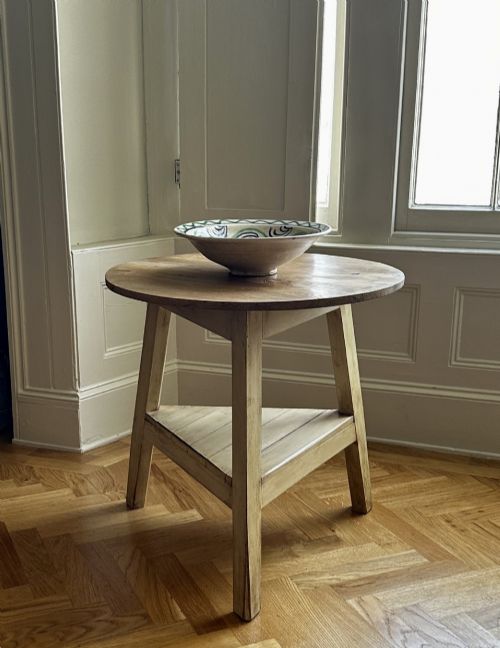
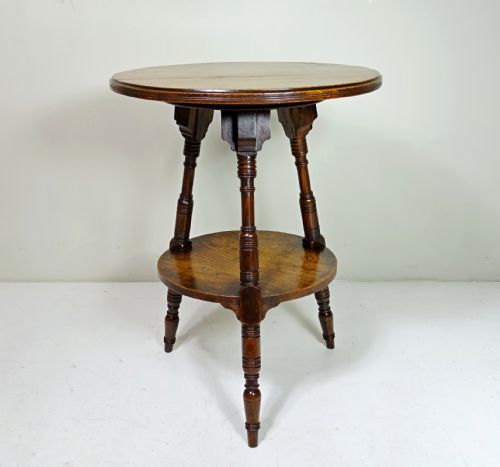
- A small wooden table with three splayed legs designed to stand stably on uneven flagstone floors. These pieces typically feature a round top supported by a triangular underframe.
- Guéridon
- A small French occasional table supported by a central column or pillar. These decorative stands often feature circular tops made from burr veneers or marble.
- Burr elm
- A woody growth on an elm tree that produces highly figured, swirling grain patterns when sliced into veneer. Cabinet-makers prized this material for decorative table tops.
- Tilt-top table
- A table featuring a mechanism that allows the circular top to pivot to a vertical position when not in use. This design saved floor space in smaller period rooms.
- Drop-leaf table
- A table with hinged flaps on the sides that fold down to reduce the surface area. Supporting brackets swing out to hold the leaves level when extended.
Round Elm Table: Frequently Asked Questions
What is a cricket table?
A cricket table is a traditional three-legged round table originating in country houses. The splayed legs provided stability on uneven stone floors.
These compact tables served multiple domestic purposes near firesides and in parlours.
How do I care for elm furniture?
Elm furniture responds well to natural beeswax polishes applied sparingly with a soft cloth. Avoid placing solid wood tables near direct heat sources or strong sunlight.
Using coasters and placemats protects the antique timber surface from moisture and heat marks.
What is burr elm?
Burr elm comes from a tree growth that creates dense, swirling patterns in the wood grain. Artisans sliced this timber into veneers to create decorative table tops.
Tables featuring burr elm often date from the Regency period or later revival styles.
Where were these tables made?
Round elm tables emerged from diverse regions including English country workshops, French provinces, and Chinese vernacular makers. Each region applied distinct joinery methods and regional timber combinations.
English makers often paired elm with oak, while French makers utilised fruitwoods and burr elm.