



Round Drinks Tray
A round drinks tray carries glasses and bottles with geometric clarity, offering a circular stage for hospitality that anchors a sideboard or table.
Round Drinks Tray
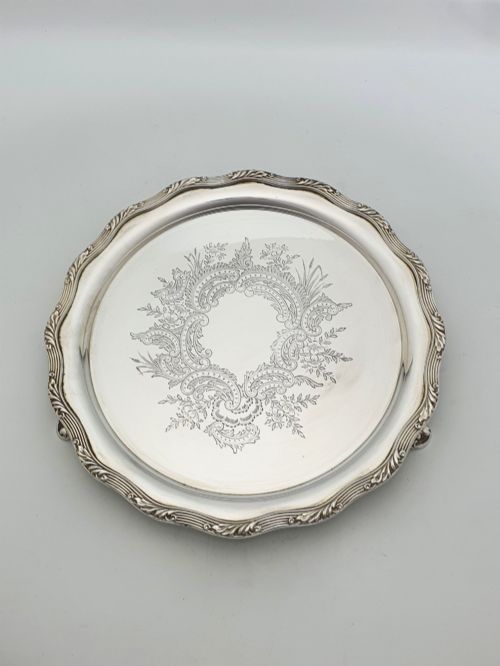
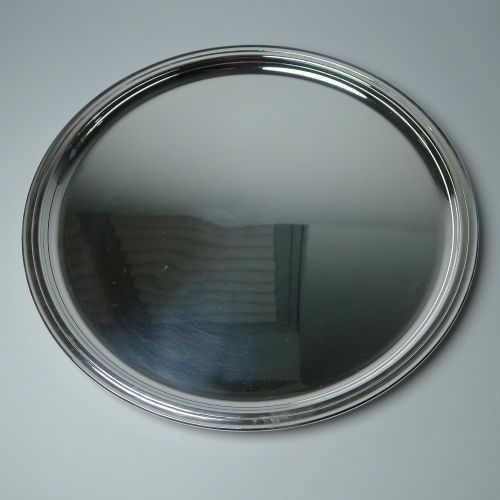
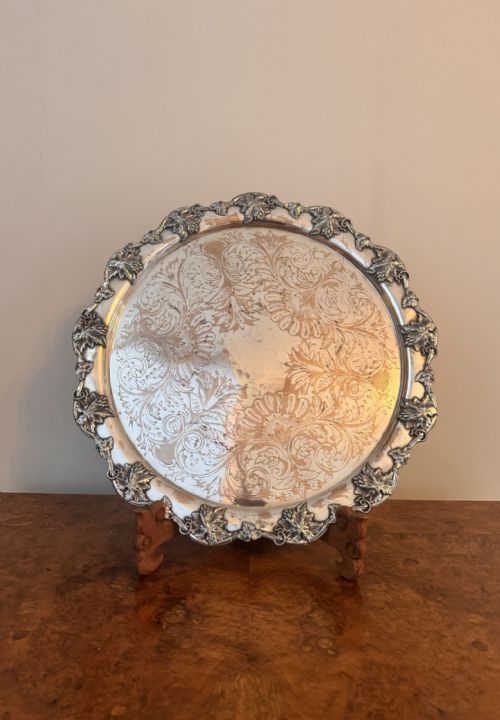
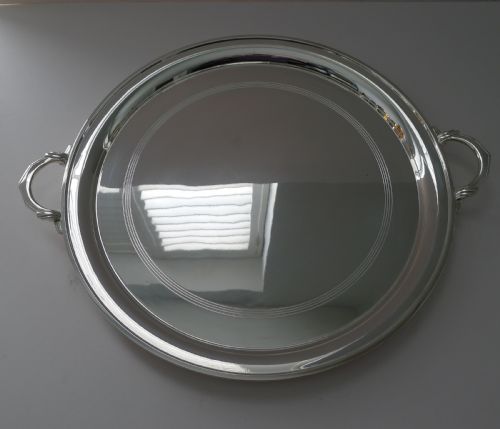
A round drinks tray brings together circular serving platforms and raised edges designed to steady glassware during transit. The most common version met on this page is the silver plated serving piece, appearing across Victorian, Edwardian, and Art Deco periods.
These items span various diameters, from small modernist cocktail trays to large circular salvers and platters. Makers utilise materials such as silver, copper, base metal, and silver plate, frequently incorporating engraved surfaces or detailed rims.
Objects range from simple mid-century forms to ornate French rococo revival designs and arts and crafts interpretations. The forms serve both practical hosting duties and decorative display functions across multiple decades.
Materials and construction methods
Silversmiths and manufacturers built these objects using solid silver, copper, or base metal coated in silver plate and EPNS. Metalworkers shaped circular sheets into flat platforms and raised the circumferences to form secure edges.
Techniques included engine turning to create intricate geometric patterns across the metal surface and hand engraving for floral or crest motifs. Edges often received separate treatment, displaying scalloped profiles, pie crust shaping, or applied decorative borders.
Round Drinks Tray Retail Price Guide 2026
Typical asking prices for round drinks tray among the pieces listed under this phrase on Sellingantiques today, from the lower quarter to the upper quarter. They describe what is for sale here now, not the wider market.
Some trays carry family crests belonging to past owners who likely served port while plotting world domination from a comfortable armchair.
Distinctions in craftsmanship and design
Quality separates through the weight of the metal blank and the crispness of applied borders or engraved decoration. Thicker plating and substantial base metals endure repeated polishing and daily use without showing wear to the underlying alloy.
Design integration marks superior workshops, where handles, feet, and rims harmonize with the central field rather than appearing as an afterthought. Maker attribution to known firms like Mappin and Webb, Walker and Hall, or Elkington indicates higher workshop standards.
Keith Murray For Mappin And Webb·John Harrison·Walker And Hall·Elkington·Victor Saglier
The Round Drinks Tray Glossary
- EPNS
- Electroplated Nickel Silver, a process where a thin layer of silver is deposited onto a base metal core of copper, nickel, and zinc. This method became standard for producing durable domestic tableware during the nineteenth century.
- Engine turned
- A mechanical decoration technique that cuts precise geometric patterns into metal surfaces using a specialised lathe. This finish catches the light and provides a tactile texture to the tray bed.
- Salver
- A flat tray traditionally used for presenting letters, calling cards, or drinks, typically supported on small feet. In antique terminology, circular versions often carry this designation.
- Pie crust edge
- A decorative raised rim shaped with undulating curves that resembles the fluted pastry edge of a pie. This style appears frequently on Victorian and Edwardian serving pieces.
- Silver plate
- A coating of pure silver bonded to a base metal substrate to give the appearance and lustre of solid silver at a lower cost. Most antique serving trays utilise this method for everyday utility.
Round Drinks Tray: Frequently Asked Questions
How do I clean an antique tray?
Use a soft cloth and a gentle silver cream formulated specifically for plated or solid metal wares. Avoid harsh dips that strip the remaining plate and ruin engraved details.
Work in circular motions following any existing grain or engine turned lines. Rinse thoroughly with warm water and dry immediately with a clean microfiber cloth to prevent spotting.
Can I use these for actual serving?
Most antique and vintage trays function well for carrying glasses, decanters, and cocktail shakers during gatherings. The solid construction and raised rims provide adequate security for glassware.
Protect the surface from prolonged moisture exposure by using coasters or drying spills promptly. Acidic liquids left standing can tarnish or pit silver plate over time.
How do I date an unmarked piece?
Examine the style of the handles, feet, and edge decoration to narrow down the decade of manufacture. Art Deco pieces show geometric styling from the nineteen twenties and thirties, while Victorian examples often feature elaborate floral engraving.
Look closely at any makers marks, stamps, or registry numbers stamped on the underside. Reference books and hallmarking guides help match these symbols to specific production eras.
What is the difference between a tray and a salver?
Salvers generally feature short bracket feet elevating the circular plate above the tabletop, whereas standard trays sit flat or include integrated handles. Historically, salvers held ceremonial or formal presentation duties.
Over time, the terms became interchangeable in retail descriptions. Collectors still look for footed salvers when seeking formal nineteenth century dining accessories.