

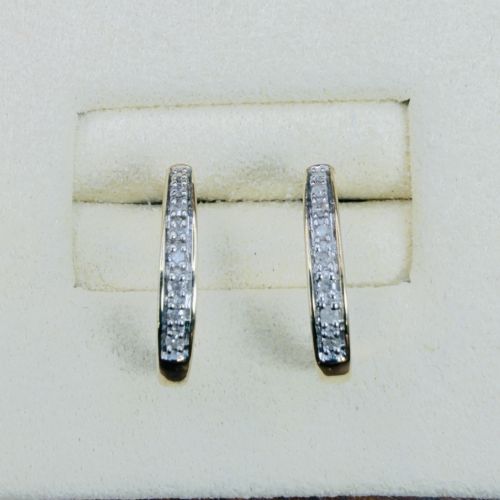
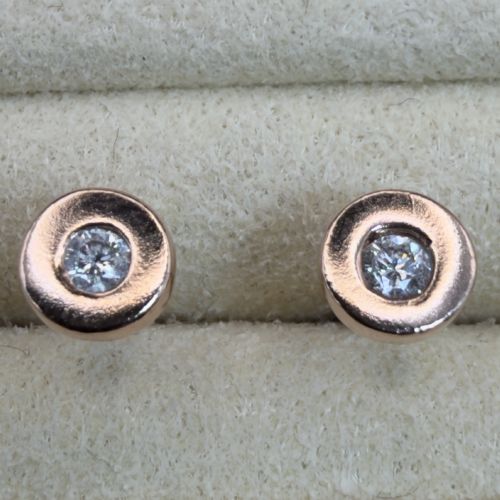
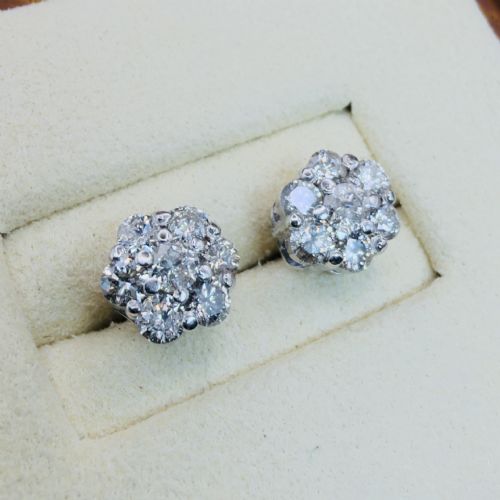
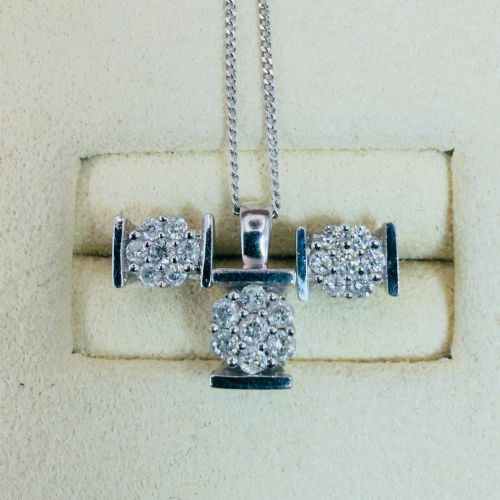
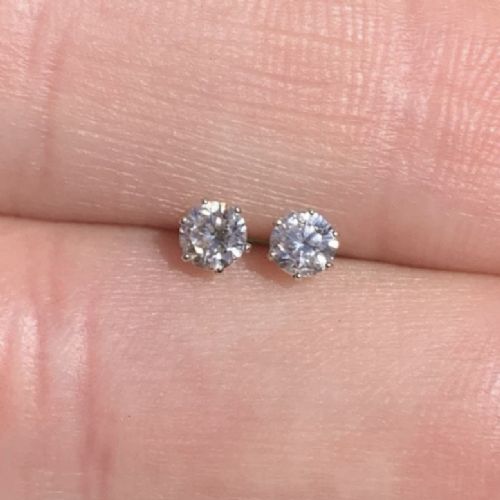


Round Diamond Studs
Round diamond studs are timeless everyday jewels that deliver direct brilliance to the earlobe.
Round Diamond Studs
Round diamond studs sit directly on the earlobe, secured by simple posts and backs, or screw backs for heavier pairs. The search phrase covers solitaire stones, cluster arrangements, and gemstone combinations framed in precious metals.
Earrings and jewellery sets dominate the selection, often pairing the central diamonds with sapphires, blue zircons, or amethysts. Simpler solitaires share space with elaborate clusters from various decades.
Pieces span from the Edwardian era through the nineteen-twenties, thirties, forties, fifties, and sixties. Mid-century and art deco aesthetics appear frequently alongside modern classic designs.
Materials and construction
Goldsmiths utilise platinum, eighteen-carat white gold, fourteen-carat white gold, nine-carat white gold, and nine-carat rose gold to mount the stones securely. Metal choice dictates both the weight and the tone of the setting.
Stones are held using traditional bezel settings, claw mounts, or cluster arrangements that group smaller diamonds around a central focal point. Screw backs provide additional security for heavier drop or cluster pairs from the mid-twentieth century.
Round Diamond Studs Retail Price Guide 2026
Typical asking prices for round diamond studs among the pieces listed under this phrase on Sellingantiques today, from the lower quarter to the upper quarter. They describe what is for sale here now, not the wider market.
One exceptional mid-century pairing manages to combine over fifteen carats of high zircon with more than a carat of diamonds.
Distinguishing quality
The precision of stone cutting and the clarity grades, such as VS2 or SI1, determine how light moves through each diamond. Heavier total carat weights combined with balanced metalwork elevate the presence of the earrings.
The integration of secondary gems, whether blue zircon, sapphire, or amethyst, alongside the primary diamonds shows the ambition of the original maker.
The Round Diamond Studs Glossary
- Solitaire
- A single gemstone set on its own in a mounting. This term usually describes standalone diamond studs.
- Cluster
- An arrangement where multiple smaller stones surround a larger central gem. This style increases visual spread on the earlobe.
- Bezel setting
- A metal collar that wraps around the outer edge of the stone to hold it in place. It offers a smooth profile compared to traditional prongs.
- Screw back
- A threaded post paired with a matching backing that twists down securely. This mechanism supports heavier earring designs.
- Platinum
- A dense, durable white metal used for fine jewellery mounts. It holds stones firmly without adding yellow tones to the gems.
Round Diamond Studs: Frequently Asked Questions
How do I secure screw back earrings?
Align the threaded post straight through the piercing and twist the backing clockwise until it rests gently against the lobe. Do not over-tighten the mechanism, as this can strip the delicate threads.
Check the fitting periodically throughout the day to ensure the backing remains snug and secure on the post.
What is the difference between platinum and white gold?
Platinum is a naturally white, dense metal that maintains its colour without plating. White gold is an alloy mixed with other metals to achieve a pale hue.
Over time, white gold often receives rhodium plating to brighten its appearance, whereas platinum develops a soft patina through wear.
How do cluster earrings differ from solitaires?
Solitaires feature one isolated diamond per ear, focusing entirely on the quality and cut of that single stone. Cluster earrings combine a central gem with smaller surrounding stones to create a larger patterned face.
Clusters offer a wider spread of sparkle for a given budget by distributing the visual weight across multiple smaller facets.
Can I wear antique studs every day?
Most sturdy settings from the twentieth century handle regular wear well, provided the mountings and prongs receive routine checks by a jeweller. Heavier cluster designs benefit from careful handling during insertion and removal.
Store each pair separately in a lined box to prevent the diamonds from scratching softer metals or adjacent jewellery.