



Round Cut Ring
A round cut ring brings together bright gemstones and enduring metals in designs spanning the Victorian era to the mid-twentieth century.
Round Cut Ring
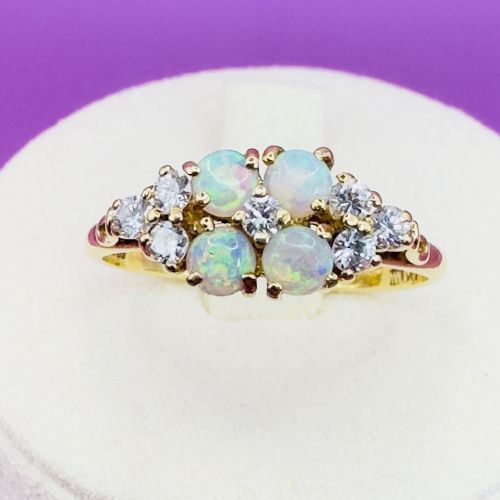
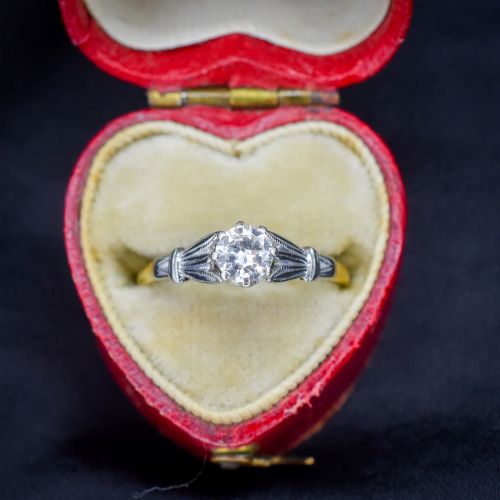
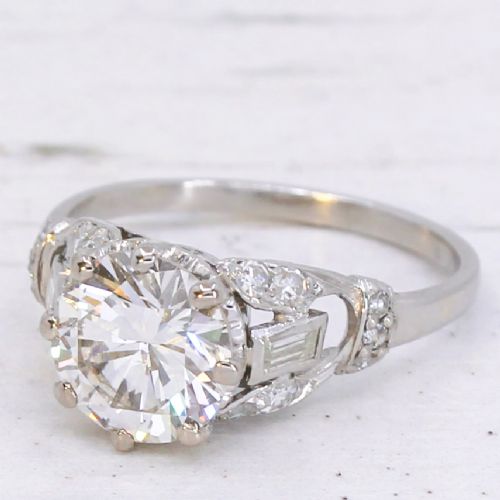
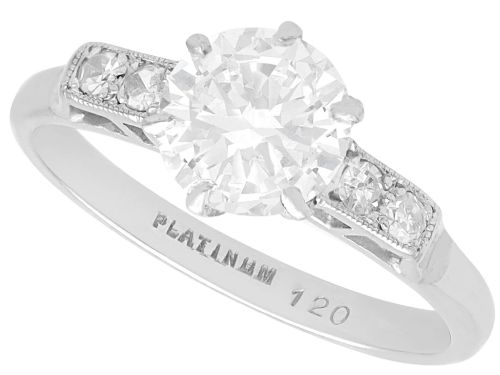
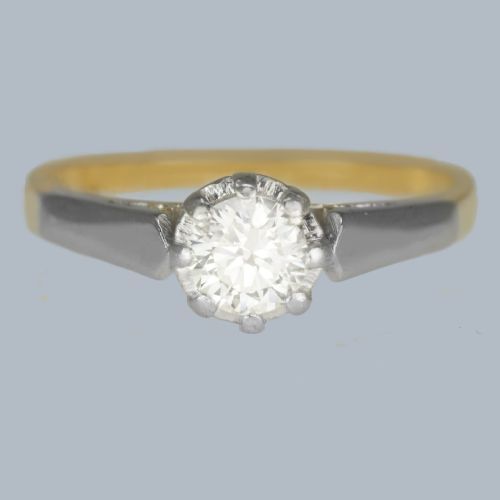
A round cut ring encompasses various historical periods, featuring items from the Victorian, Edwardian, Art Deco, and Mid-Century eras. Buyers searching for a round cut ring will encounter numerous configurations, from simple solitaires to elaborate multi-stone clusters.
The selection on this page relies heavily on engagement rings, dress rings, and cocktail rings. Platinum and various carats of gold serve as the primary foundations for these circular gemstone designs.
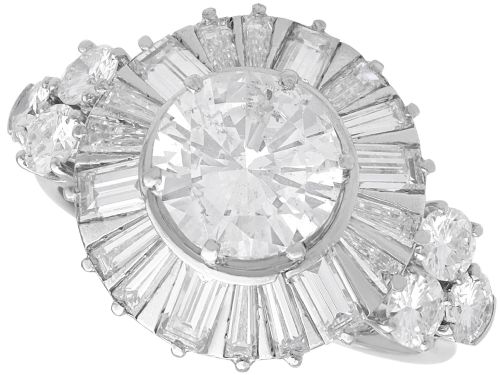
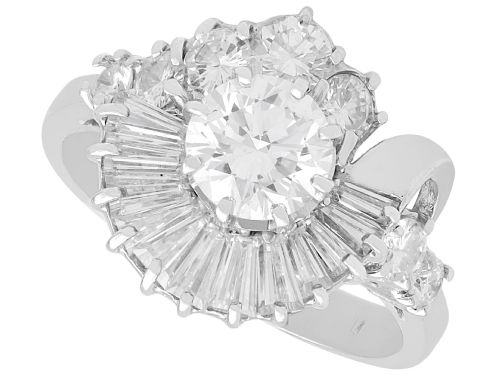
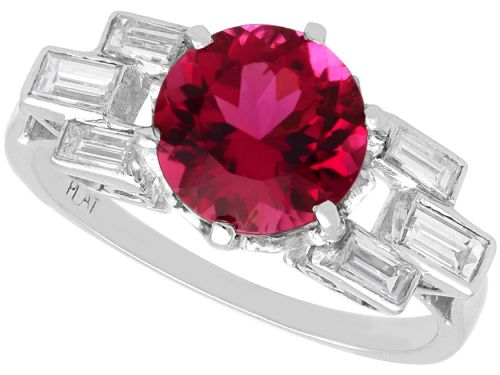
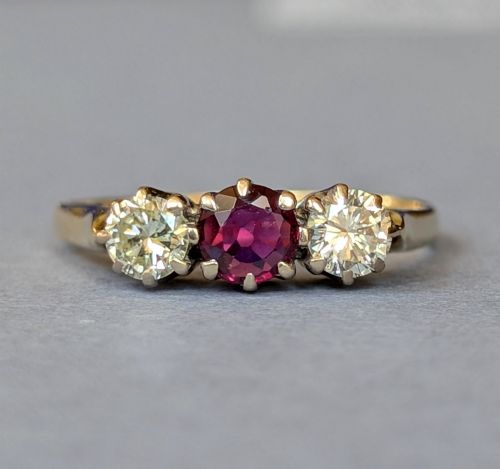
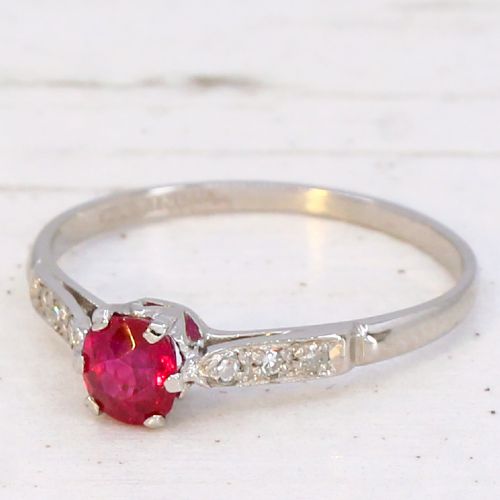
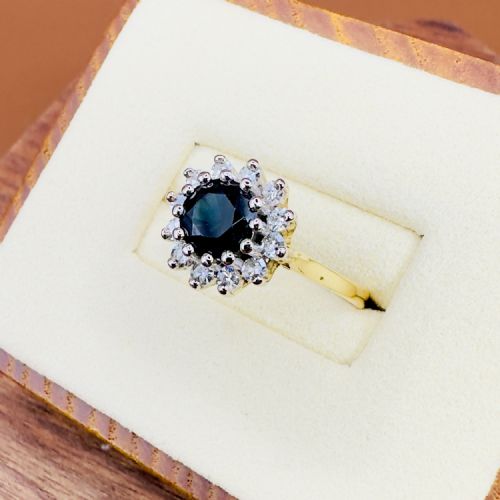
Art Deco and vintage pieces dominate the selection, often pairing central round diamonds with calibré-cut rubies, sapphires, or pink tourmalines. Examples range from delicate Edwardian daisy rings to substantial mid-century ballerina settings.
Materials and construction methods
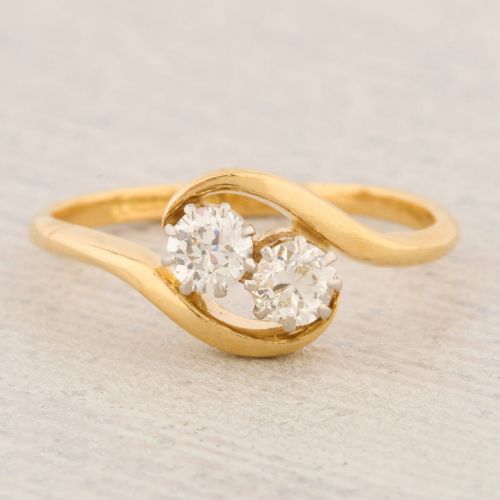
Metals such as platinum, 18ct yellow gold, 18ct white gold, and 9ct gold provide the structural backbone for these rings. Platinum offers a strong, bright setting favoured during the Art Deco period, while yellow and white gold appear across multiple decades.
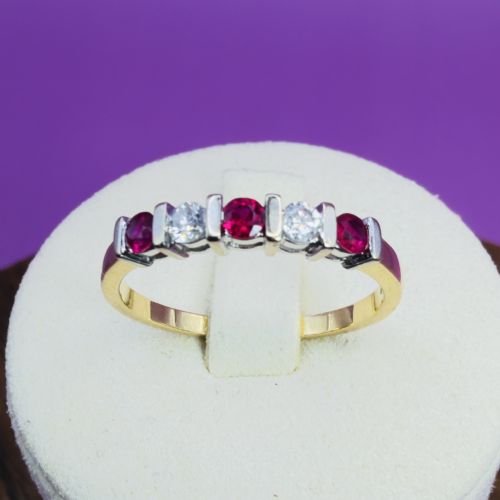
Gemstones including diamond, ruby, sapphire, blue zircon, alexandrite, and opal are shaped using traditional facets such as brilliant cuts, old mine cuts, transitional cuts, and cabochons. These stones are secured in claw settings, bezels, or cluster arrangements alongside smaller accent diamonds.
Round Cut Ring Retail Price Guide 2026
Typical asking prices for round cut ring among the pieces listed under this phrase on Sellingantiques today, from the lower quarter to the upper quarter. They describe what is for sale here now, not the wider market.
Several rings utilise high-carat zircons and unheated Burmese rubies, proving that nature loves a vibrant flash of colour.
Distinctions in craftsmanship and materials
The quality of a round cut ring rests on the brilliance of the central gemstone and the precision of its setting. Fine examples display well-matched accent stones, secure claw work, and minimal wear to the underlying metal structure.
The proportion between the central stone and its surrounding elements dictates the visual balance of cluster and ballerina designs. Superior pieces maintain crisp geometric lines in Art Deco mountings and retain the integrity of their original hand-finished details.
The Round Cut Ring Glossary
- Solitaire
- A ring featuring a single prominent gemstone set into the band. This classic form highlights the individual characteristics of the central stone.
- Cluster ring
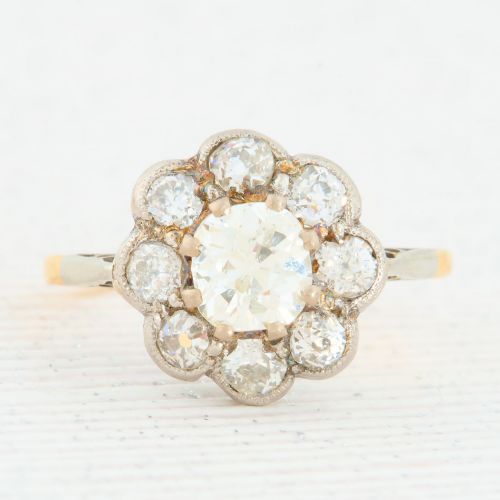
- A design where a central gemstone is surrounded by a group of smaller stones, typically diamonds. This arrangement maximises overall sparkle and visual presence.
- Old mine cut
- An early form of diamond cutting with a cushion-like outline, high crown, and small table facet. These stones appear frequently in antique and Edwardian pieces.
- Trilogy ring
- A three-stone ring symbolising the past, present, and future. The stones are usually graduated in size or matched evenly across the band.
- Ballerina ring
- A complex cocktail ring featuring a central stone encircled by tapered baguettes or radiating rows of diamonds that mimic a dancer's tutu.
Round Cut Ring: Frequently Asked Questions
What periods do these rings come from?
The pieces span several distinct historical eras, including the Victorian, Edwardian, and Art Deco periods, alongside mid-century and later vintage designs.
Manufacturing dates stretch from the late nineteenth century through to the middle of the twentieth century, reflecting shifting aesthetic preferences.
Which metals are most common?
Platinum and various carats of gold form the primary structural materials for these rings. Platinum appears frequently in Art Deco settings for its strength and bright finish.
Gold variations include 18ct yellow gold, 18ct white gold, 9ct yellow gold, and occasional 14ct and 15ct examples.
Are these rings suitable for daily wear?
Many of these pieces were originally created as engagement or dress rings designed for regular use. Sturdier settings in platinum or 18ct gold generally withstand everyday wear better than lighter 9ct mounts.
Checking the security of the claws and the condition of the band helps ensure longevity for older pieces.
How do I identify an Art Deco ring?
Art Deco rings typically display geometric symmetry, strong lines, and the use of platinum alongside contrasting gemstones like rubies or sapphires. Solitaire and ballerina settings from this era often incorporate precise millegrain detailing and angular shoulders.
Construction from this period usually dates between the 1920s and the 1930s.