


Round Center Coffee Table
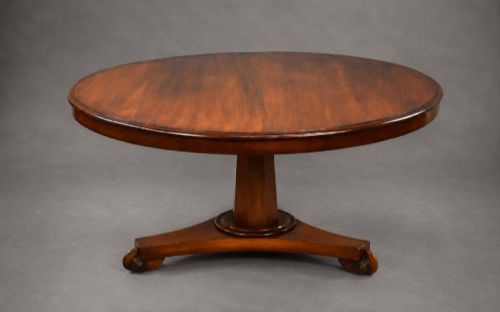
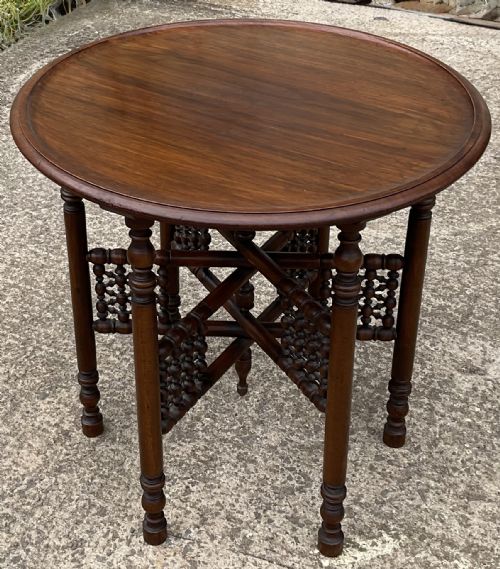
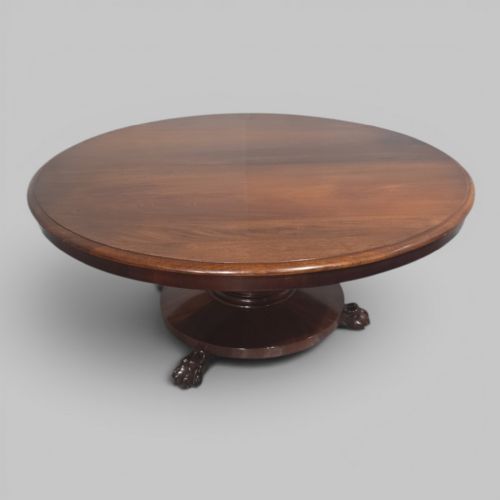
A round centre coffee table anchors a room with balanced proportions and provides a practical surface for daily life.
Round Center Coffee Table
A round centre coffee table brings circular symmetry to a seating arrangement, offering generous surface space without sharp corners. When searching for this form, buyers encounter pieces designed for central placement in a room rather than against a wall.
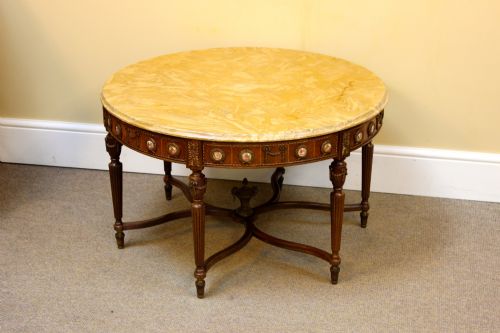
The selection ranges from Victorian and Edwardian examples to 1920s and 1930s Art Deco designs. Walnut, burr walnut, and mahogany dominate the offerings, often complemented by marble tops or marquetry details.
Lower occasional tables and low centre tables appear frequently alongside traditional coffee tables. These versatile pieces adapt easily to various interior layouts while maintaining a grounded, circular footprint.
Materials and Construction
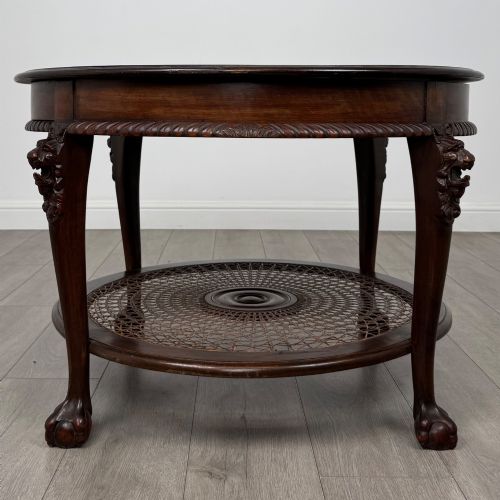
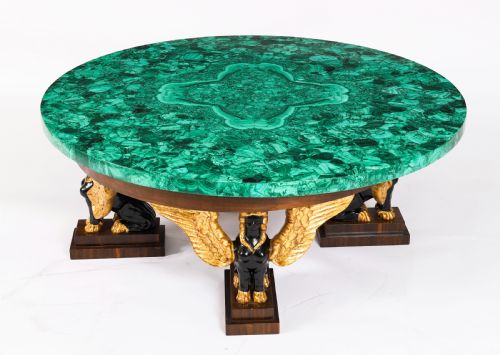
Cabinetmakers utilised rich timber veneers such as burr walnut, mahogany, and birch to create patterned table tops. Solid woods like ebonised wood and giltwood provide contrasting structural frames and decorative carving.
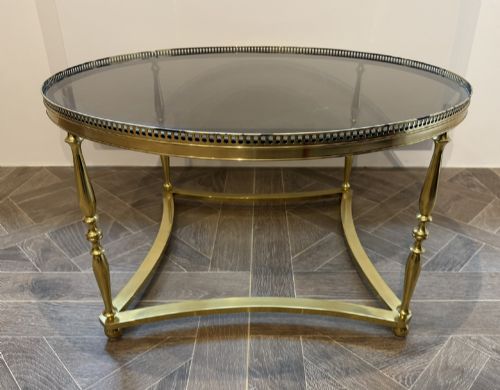
Inlay work, including intricate marquetry, decorates the surfaces of select tables. Marble inserts and brass fittings are integrated to add durable utility and visual contrast to the wooden structures.
Listings feature pieces spanning the Victorian and Edwardian eras alongside 1920s and 1930s designs, constructed from walnut, mahogany, and marble.
Assessing Quality and Craftsmanship
Quality rests upon the selection of timber veneers and the precision of the joinery. Tables featuring figured walnut or detailed marquetry demonstrate a higher level of artisan skill than plain surfaces.
The integration of materials like marble and cast brass determines the overall finish. Superior examples maintain stability and balanced proportions across the circular top and supporting base.
B Battioli, Varese
The Round Center Coffee Table Glossary
- Marquetry
- Decorative patterns created by fitting together small pieces of wood veneer. This technique adds pictorial detail to table tops.
- Pie Crust
- A raised, scalloped edge carved around the perimeter of a circular table top. It is frequently seen on walnut and mahogany pieces.
- Biedermeier Revival
- A style drawing on the clean lines of early nineteenth-century Germanic design. It emphasises warm wood grains and minimal ornamentation.
- Giltwood
- Timber that has been coated with gold leaf or a gold-coloured finish. This material highlights carved details on revival and decorative tables.
Round Center Coffee Table: Frequently Asked Questions
Where does a round centre coffee table work best?
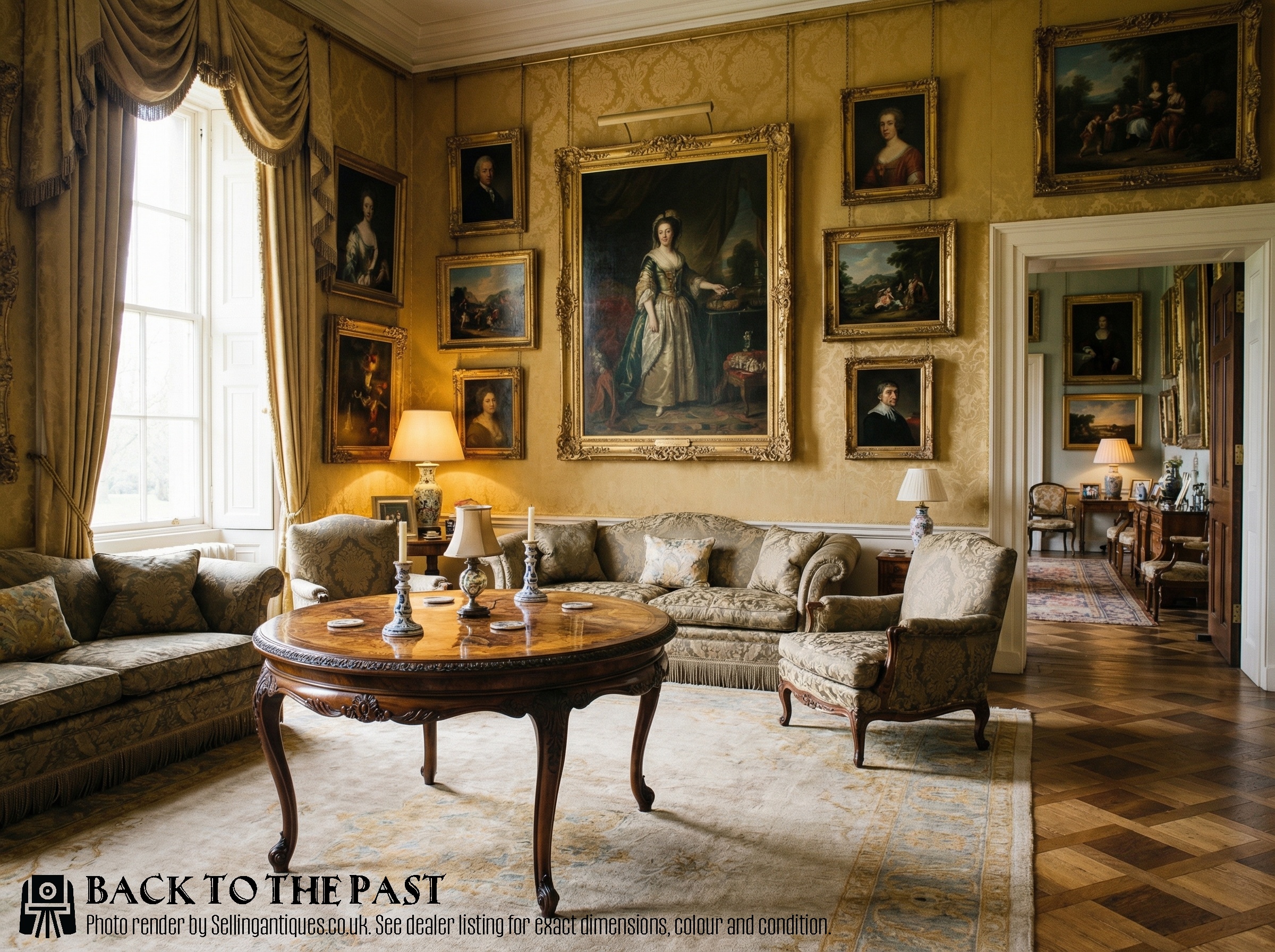
These tables fit naturally in the middle of a seating group where access from all sides is required. The circular shape softens the geometric lines of surrounding sofas and armchairs.
They create an open flow in a room, allowing people to move freely around the central surface.
How do I care for a wooden table top?
Wood surfaces respond best to regular dusting with a soft, dry cloth to prevent grit accumulation. Avoiding direct sunlight preserves the natural colour and finish of walnut and mahogany veneers.
Using coasters and mats protects the polished timber from moisture rings and heat damage.
What is the difference between an occasional table and a coffee table?
Occasional tables were traditionally designed for specific, intermittent uses around a home. Coffee tables are specifically built lower to the ground to sit comfortably in front of seating.
Many pieces serve both functions interchangeably depending on their height and top dimensions.
How do I identify an Art Deco piece?
Art Deco pieces from the 1920s and 1930s often feature streamlined geometric forms and striking wood grains. They rely on the natural pattern of burr walnut or birch rather than heavy carving.
These designs project a modern aesthetic while retaining traditional cabinetmaking skills.