





Round Bullseye Mirror
A round bullseye mirror brings theatrical depth and distorted light to a room, concentrating space in a convex glass globe.
Round Bullseye Mirror
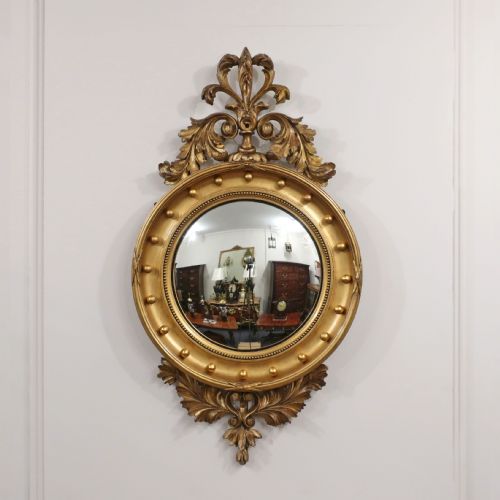
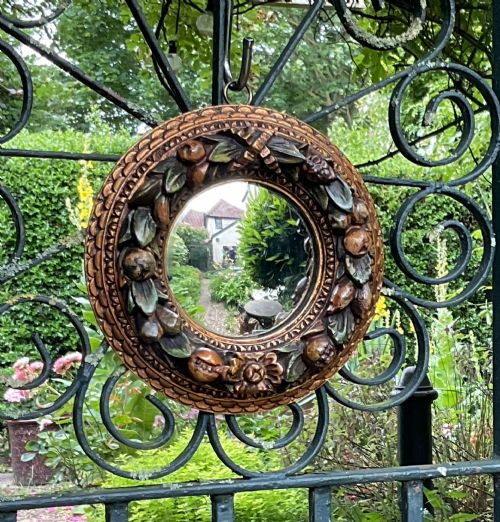
A round bullseye mirror is a convex wall mirror designed to reflect a wide, curved view of an interior. You will most frequently encounter Regency giltwood examples alongside later 19th-century and 20th-century revivals.
These pieces function primarily as optical accents rather than practical looking glasses, historically placed in dining rooms and halls to monitor company or spread light. The form spans several eras from the Georgian period through to the Edwardian era and the 1920s.
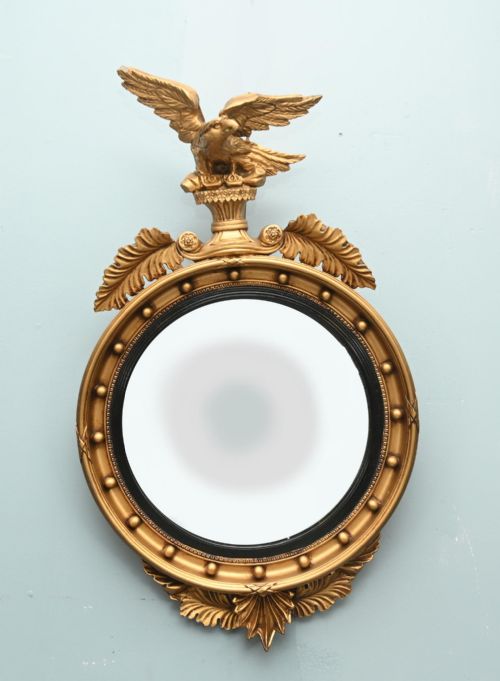
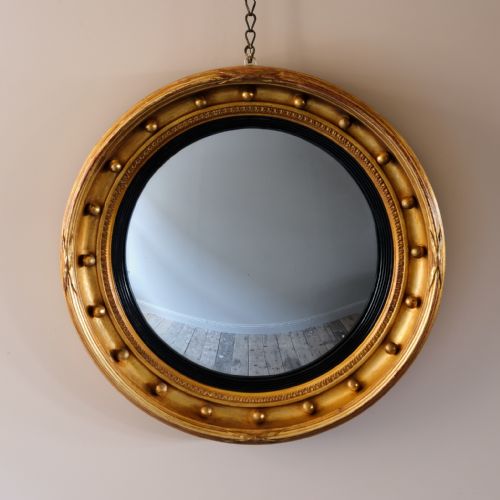
The dominant style on this page is Regency, characterised by circular frames and gilded surfaces. Surviving examples range from small hall mirrors to substantial wall pieces carved from wood or gesso.
How they were made
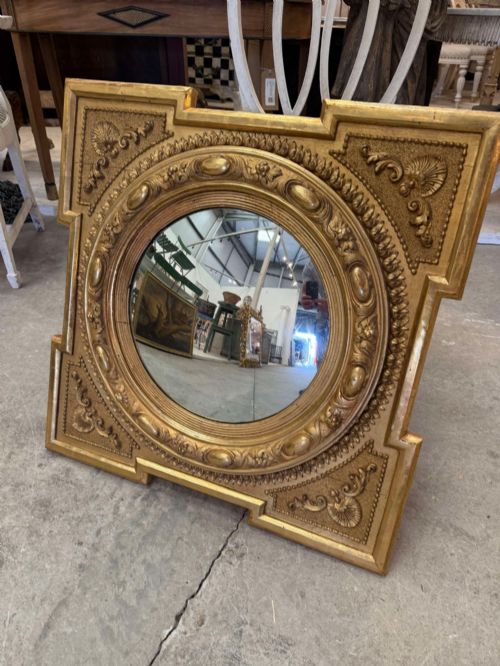
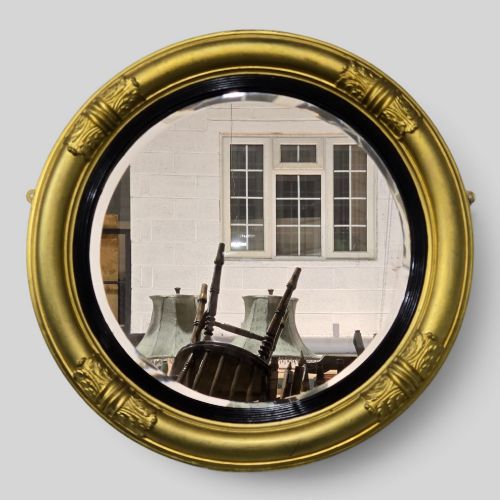
Makers constructed the circular frames of round bullseye mirrors using carved wood, gesso, and ebonised wood. Giltwood finishes were applied over plaster layers to create a brilliant metallic sheen.
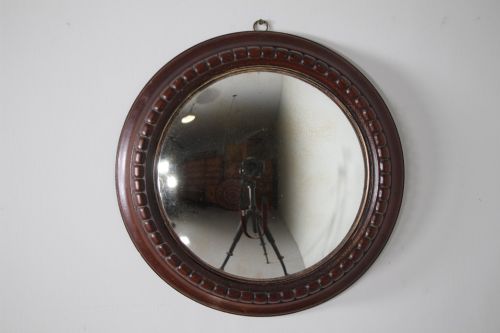
The distinctive convex mirror glass was blown or shaped to bulge outward, producing the signature wide-angle reflection. Brass and mahogany also appear in alternative constructions from later periods like the 1920s.
Round Bullseye Mirror Retail Price Guide 2026
Typical asking prices for round bullseye mirror among the pieces listed under this phrase on Sellingantiques today, from the lower quarter to the upper quarter. They describe what is for sale here now, not the wider market.
Listings feature periods spanning from the Georgian and Regency eras through to Victorian, Edwardian, and the 1920s.
What varies in quality
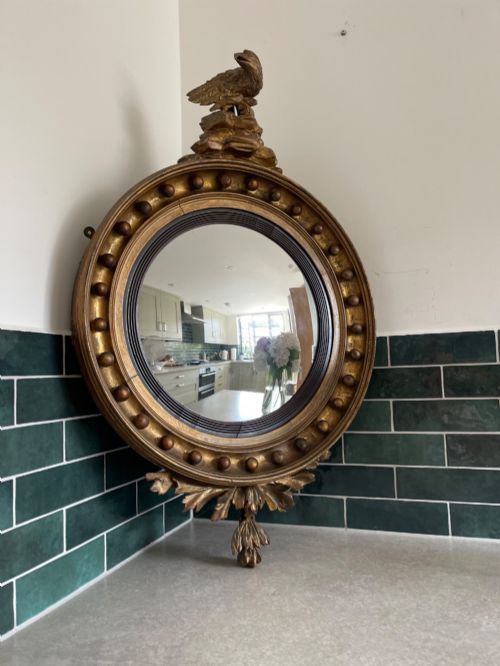
The fineness of the carved decoration on the frame distinguishes standard production from superior work. Carved eagles, ebonised reeded slips, and intact original gilding indicate higher craftsmanship.
The clarity and depth of the convex mirror glass itself determine the visual impact of the piece. Period glass with gentle distortion and minimal foxing holds greater appeal than modern replacement plates.
The Round Bullseye Mirror Glossary
- Convex glass
- Curved outward like the exterior of a sphere, this glass creates a wide-angle, miniaturised reflection of the entire room.
- Giltwood
- Wood that has been coated with a thin layer of gold leaf, often applied over a prepared gesso ground on Regency frames.
- Gesso
- A plaster mixture applied to wooden frames to provide a smooth surface for carving and gilding.
- Ebonised wood
- Timber stained or treated to imitate dense, black ebony, frequently used for interior mouldings on these mirrors.
- Reeded slip
- A narrow inner moulding carved with parallel convex ridges, often found framing the glass edge.
Round Bullseye Mirror: Frequently Asked Questions
Where should I hang a round bullseye mirror?
These mirrors suit rooms where you want to bounce natural light from windows or create an engaging focal point. Hallways and dining spaces work particularly well because the wide-angle reflection animates the area.
Hang the glass at eye level so the curved perspective captures the room comfortably. Avoid placing them in direct, harsh sunlight that might degrade older gilded surfaces.
How do I tell a Regency mirror from a revival?
Examine the construction of the wooden frame and the composition of the gesso beneath the gilding. Regency pieces often show hand-carved details and period timber shrinkage beneath the gold leaf.
Revivals from the Victorian era or the 1920s tend to use machine-cut elements or different plaster formulations. Look closely at the fixings and the backboards for clues to the age.
Why does the glass bulge outward?
The curved plate is designed to gather light from across an entire interior and project it back into the space. Historically, this optical trick allowed a single wall piece to illuminate dim corners before electric lighting.
It produces a fish-eye effect that makes compact rooms feel surprisingly expansive. This distortion is the defining characteristic of the form.
How do I clean a vintage convex mirror?
Dust the gilded frame gently with a soft, dry brush to protect the delicate metallic leaf. Avoid using standard household sprays on the antique gilt surface.
Clean the glass sparingly with a soft cloth dampened slightly with water or a mild solution. Ensure moisture does not seep behind the glass plate to damage the silvering.