





Round Bronze Table
A round bronze table brings structural weight and classical elegance to a room, uniting patinated metalwork with inset marble or rich timber tops.
Round Bronze Table
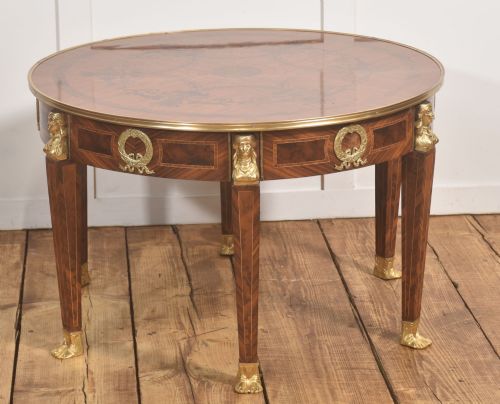
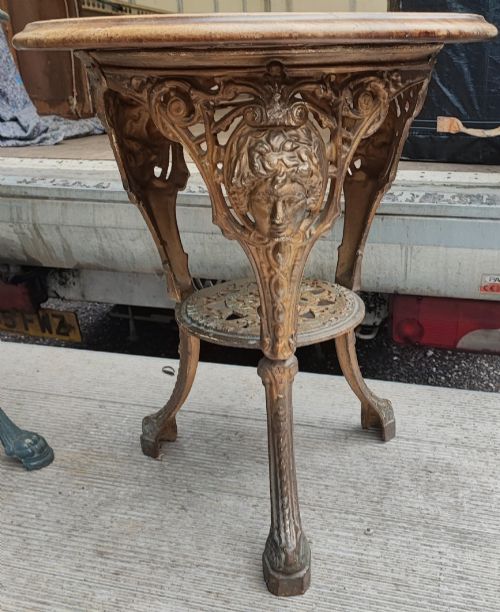
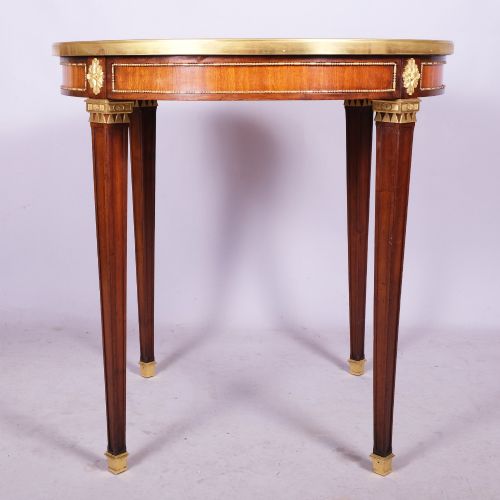
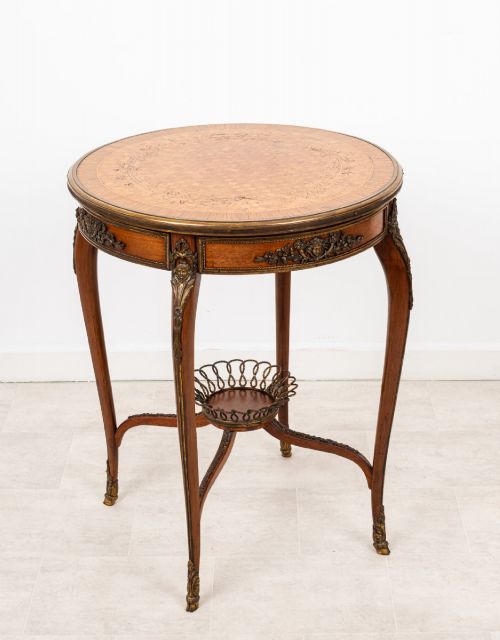
A round bronze table encompasses forms like the French gueridon, the bouillotte table, and low coffee tables produced from the nineteenth century into the twentieth century. These pieces frequently integrate materials such as gilt bronze, ormolu, brass, and silvered bronze alongside marble tops and veneered timber bodies.
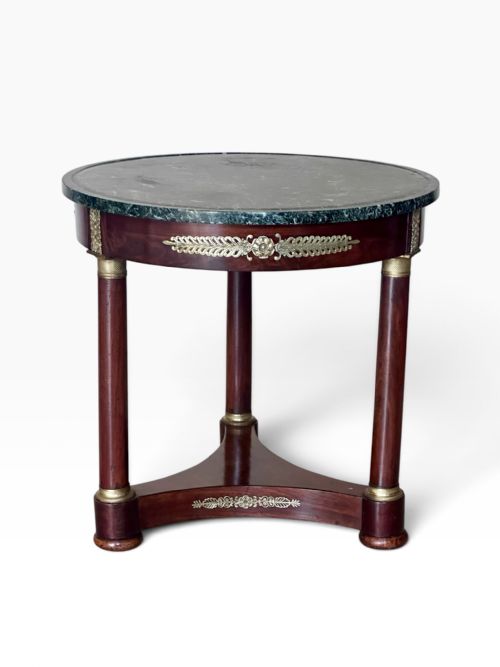
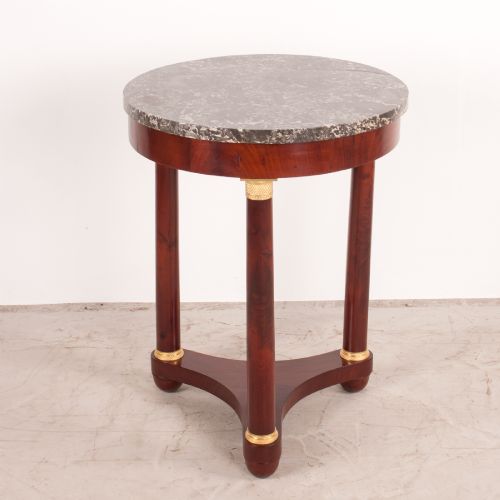
Buyers encountering this selection most commonly find nineteenth-century French designs influenced by the Empire, Louis XVI, and Rococo revival styles. Centre tables and occasional tables dominate the available forms, often standing upon tripod supports or circular pedestals adorned with classical metal mounts.
The lineage of these tables stretches from strict neoclassical interpretations through to opulent Edwardian and mid-century variations. Craftsmanship ranges from monumental centrepieces intended for formal reception rooms to smaller occasional items designed for domestic sitting spaces.
Evaluating quality and finish
The distinction between standard production and exceptional execution lies in the crispness of the bronze chasing and the depth of the fire-gilding. Superior examples display sharply rendered mounts where every acanthus leaf and classical motif retains individual definition rather than a softened, cast-over appearance.
The selection of secondary materials further differentiates the range, particularly the quality of the veined marble and the grain alignment of the underlying mahogany or kingwood veneers. Integration between the metal ornaments and the wooden structure demonstrates the maker's precision, with mounts fitting flush to the contours of the table.
Round Bronze Table Retail Price Guide 2026
Typical asking prices for round bronze table among the pieces listed under this phrase on Sellingantiques today, from the lower quarter to the upper quarter. They describe what is for sale here now, not the wider market.
Tables featuring carved bronze dolphins and malachite accents remind us that historical cabinetmakers possessed a wonderful imagination.
François Linke
The Round Bronze Table Glossary
- Gueridon
- A small French table supported by a central column or tripod base, typically round in configuration. These versatile pieces served various domestic functions from the seventeenth century onwards.
- Ormolu
- Gilt bronze produced by applying a finely ground mercury and gold amalgam to a bronze casting before heating. This historical technique yields a distinctive, durable golden lustre.
- Bouillotte table
- A small French occasional table featuring a raised gallery rim around the marble top to prevent items from sliding. They frequently incorporate candle arms or drawers.
- Marquetry veneer
- Decorative patterns formed by applying thin slices of various woods to a structural carcase. Master craftsmen used contrasting grains to create pictorial or geometric designs.
- Restauration period
- A French stylistic era spanning the early nineteenth century bridging the fall of the Empire and the July Monarchy. Designs of this time favoured clean architectural lines and rich native timbers.
Round Bronze Table: Frequently Asked Questions
What is a gueridon table?
A gueridon is a traditional French round table supported by a central pedestal or three legs. Originating in the seventeenth century, these tables evolved through various revival styles.
They function as versatile accent pieces, centre tables, or small dining surfaces depending on their height and diameter.
How do I identify French Empire style?
French Empire furniture draws inspiration from classical antiquity, featuring strong architectural proportions and dark mahogany timbers. Ormolu mounts frequently depict military trophies, swans, sphinxes, and classical foliage.
Tables from this period maintain a severe yet majestic symmetry that distinguishes them from later, more ornate revivals.
Where should I place an occasional table?
These round tables suit entryways as centrepieces beneath a chandelier, or living rooms positioned beside seating arrangements. Their circular footprint softens rectilinear room layouts and allows easy circulation.
Marble-topped variants require consideration of weight and moisture protection during daily use.
What is the difference between ormolu and brass?
Ormolu consists of cast bronze finished with a true gold amalgam, producing a deep, luminous golden tone that resists tarnishing. Brass is an alloy of copper and zinc with a brighter, yellower metallic composition.
Antique makers reserved ormolu for high-status decorative mounts on luxury furniture.