

Rotating Library Book Stand
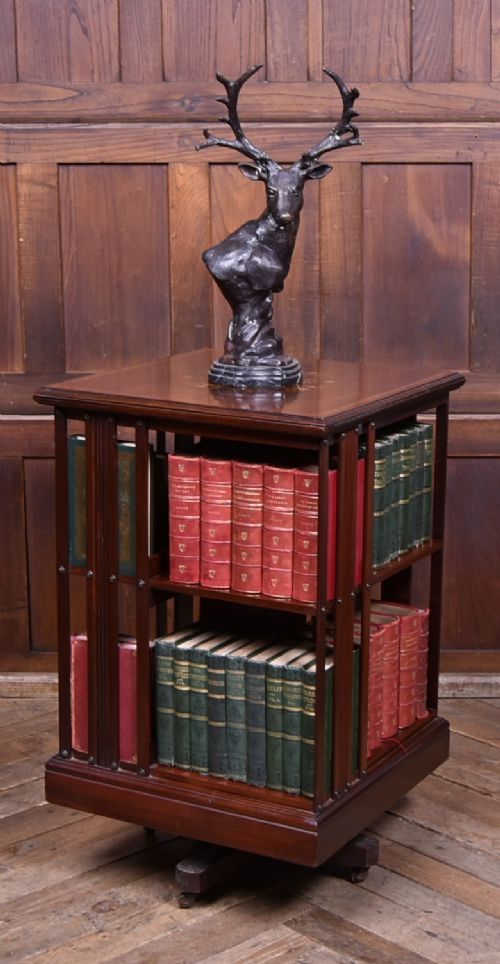
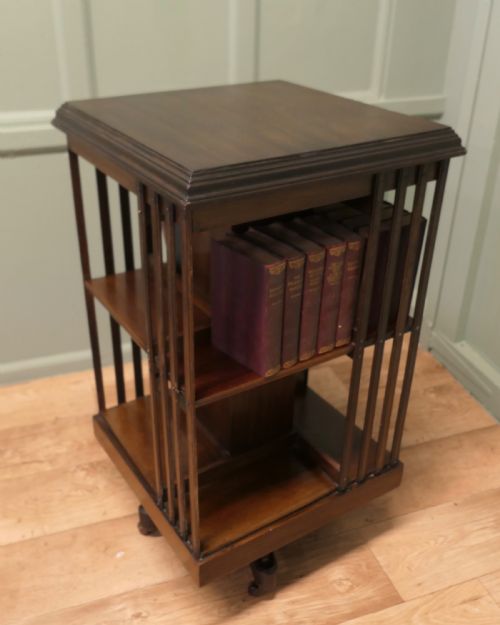
A rotating library book stand brings functional desktop or floor storage to heavy volumes, turning smoothly on a concealed mechanism to keep multiple texts within arm's reach.
Rotating Library Book Stand
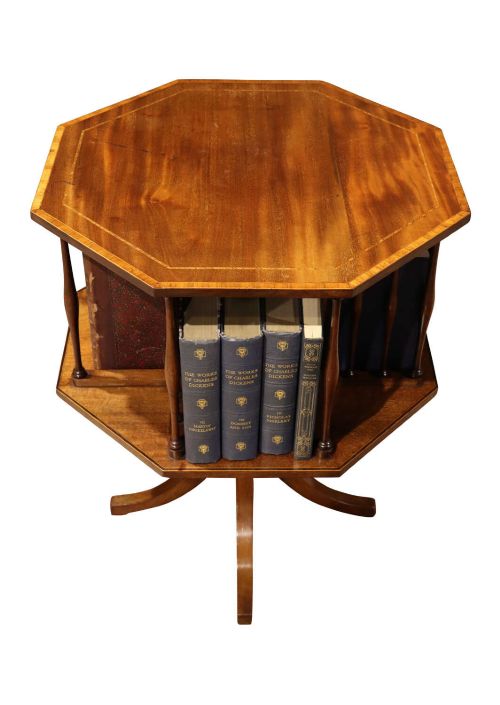
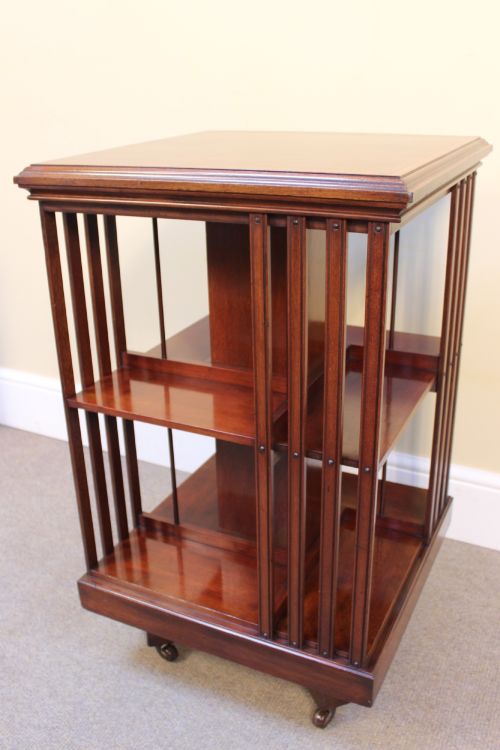
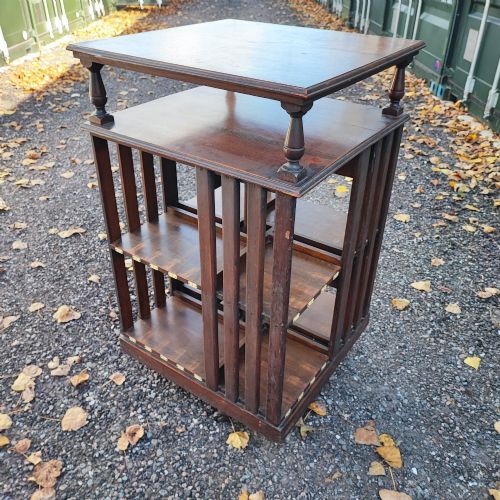
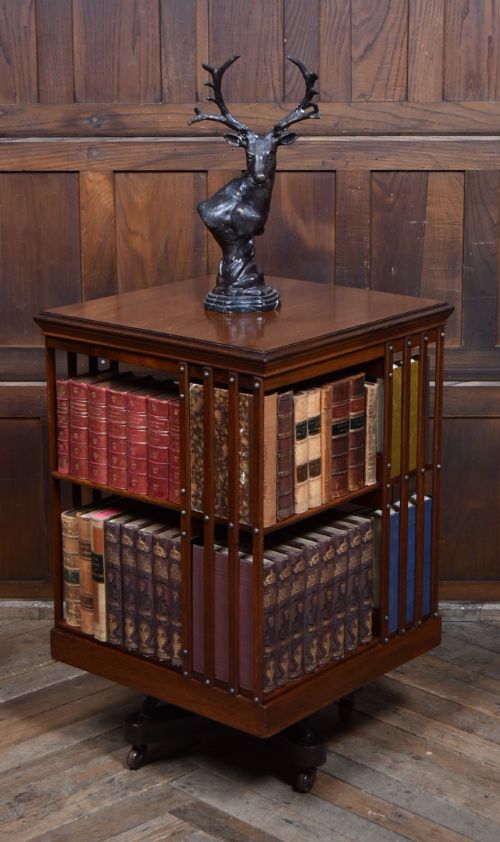
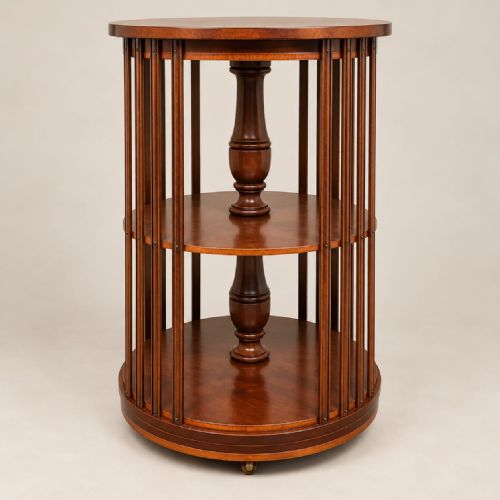
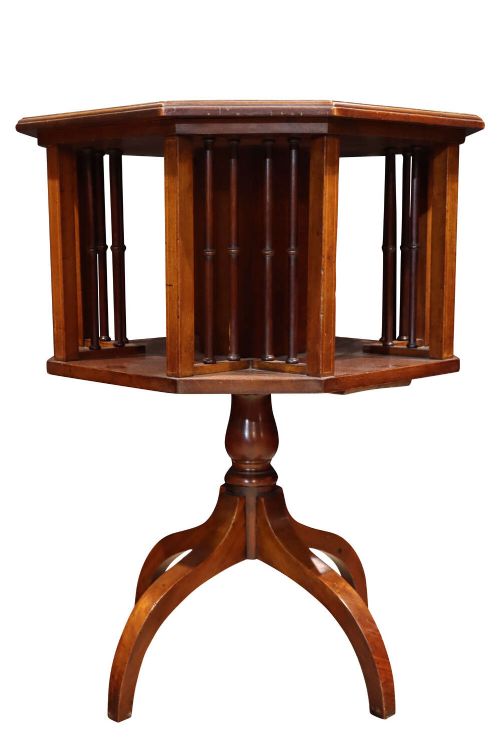
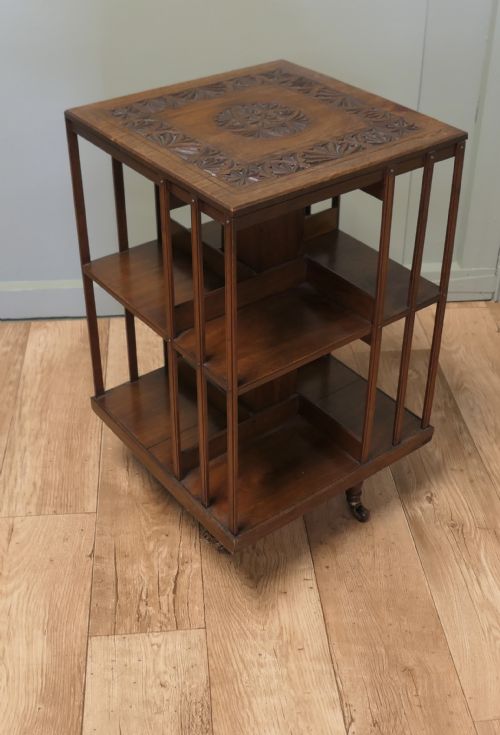
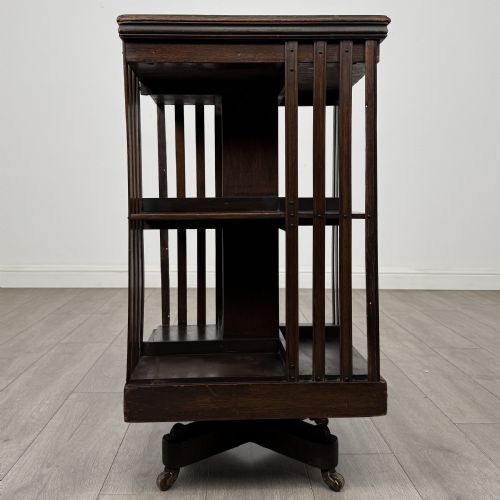
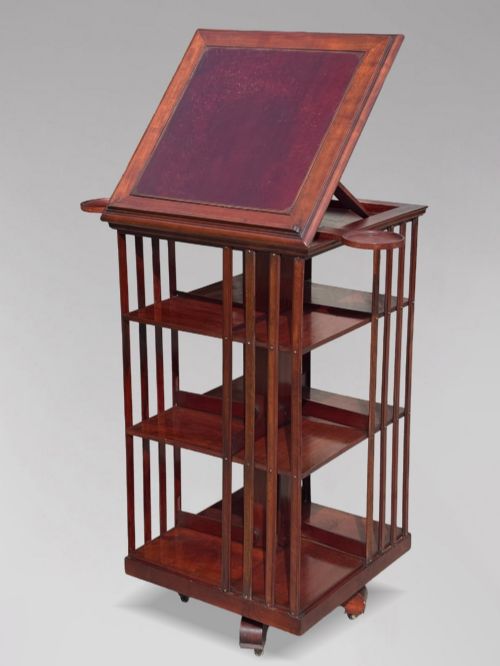
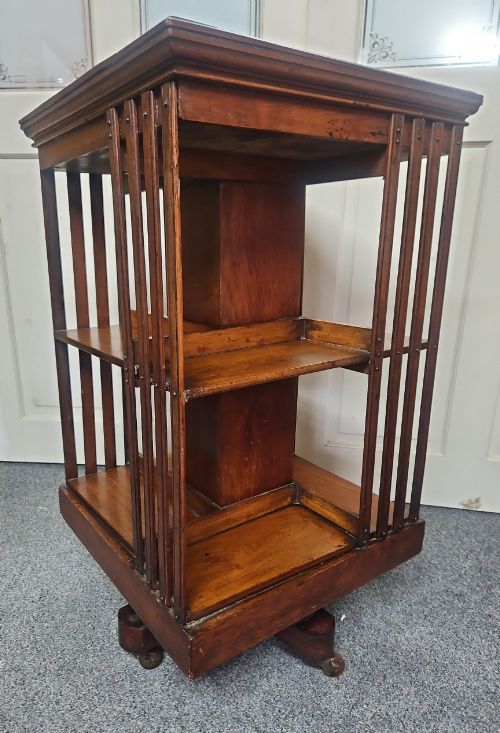
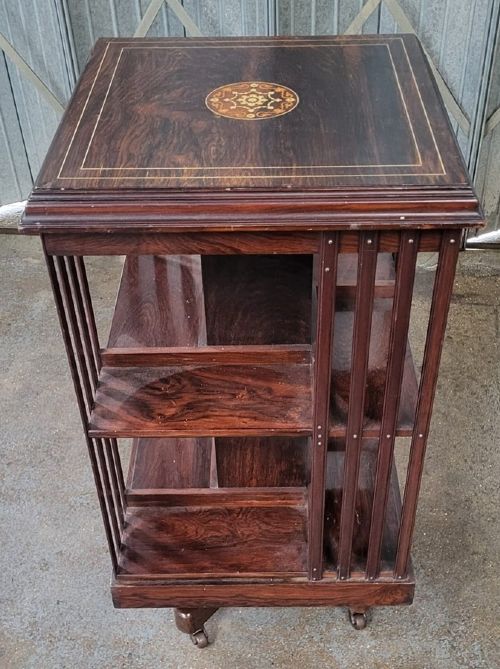
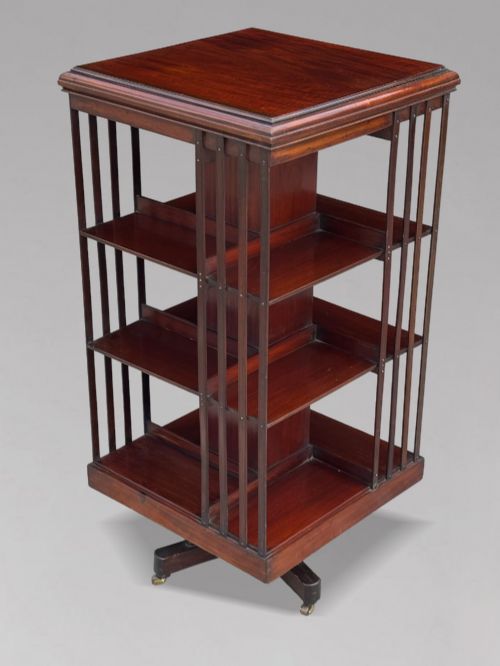
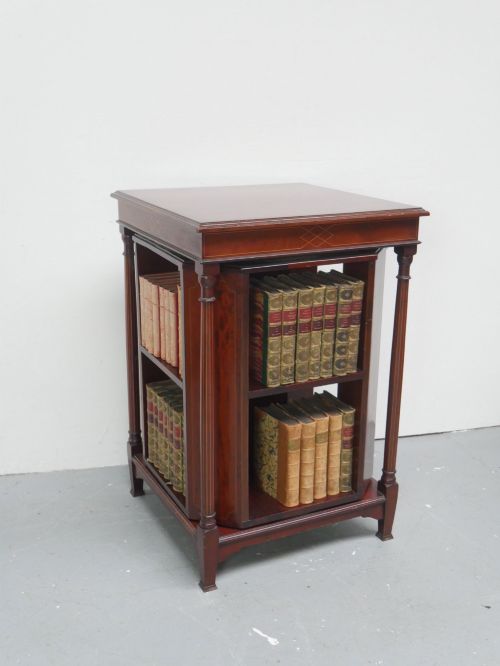
The standard form seen across these listings is the floor-standing revolving bookcase, typically built with two or three tiers of slatted or panelled shelving. Alongside these, taller multi-shelf iterations and smaller table-standing bookstands appear, offering versatile storage for compact spaces.
Originating largely from the nineteenth and early twentieth centuries, these pieces utilise traditional timber construction tailored for heavy daily use. The prevalence of Edwardian mahogany and oak versions reflects the period's demand for accessible, revolving storage beside reading desks and armchairs.
Materials and construction methods
Makers relied heavily on solid and veneered timbers, predominantly rich mahogany and sturdy oak, supplemented by decorative accents of satinwood, walnut, and rosewood. Selected woods were chosen both for structural rigidity and grain figure, often enhanced with marquetry or delicate string inlay.
The defining mechanical feature relies on a concealed iron or cast iron revolving mechanism fitted beneath the tiers to ensure smooth rotation. Joinery incorporates firm framing and secure shelving supports to bear the substantial weight of stacked books without sagging.
Rotating Library Book Stand Retail Price Guide 2026
Typical asking prices for rotating library book stand among the pieces listed under this phrase on Sellingantiques today, from the lower quarter to the upper quarter. They describe what is for sale here now, not the wider market.
Listings feature woods spanning mahogany, oak, walnut, satinwood, and rosewood, paired with iron and cast iron revolving mechanisms.
Factors of distinction
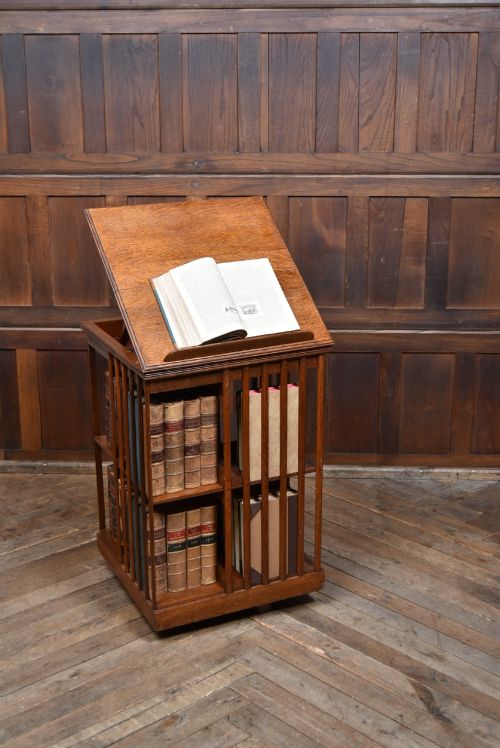
Distinction across these pieces rests on the choice of timber and the complexity of surface decoration, ranging from plain functional oak to figured flame mahogany with intricate marquetry. The presence of specialised additions, such as integrated reading stands or tailored proportions, elevates certain examples above standard utilitarian models.
The underlying engineering of the revolving mechanism dictates daily performance, with heavier iron internal structures providing a more stable and fluid motion than lighter assemblies. Precision in joinery and the retention of original brass and metal fittings also separate standard workshop output from exceptional cabinet work.
Maple & Co
The Rotating Library Book Stand Glossary
- Revolving mechanism
- The internal pivot system, often utilising iron or cast iron components concealed beneath the base, allowing the bookcase to turn smoothly 360 degrees.
- Marquetry
- Decorative veneer work arranged in pictorial or geometric patterns using various coloured woods, frequently seen on Dutch and Edwardian pieces.
- Flame mahogany
- A veneer cut from the branch junction of a mahogany tree, producing a distinctive rippled, flame-like grain pattern prized in cabinetmaking.
- Slatted sides
- Vertical wooden bars forming the outer walls of the bookcase tiers, keeping volumes visible while securing them in place during rotation.
- Tier
- An individual level of shelving within a multi-level revolving bookcase or bookstand structure.
Rotating Library Book Stand: Frequently Asked Questions
How do I maintain the revolving mechanism?
Keep the internal pivot clean and periodically check the iron components to ensure smooth rotation without binding.
Avoid applying heavy industrial oils which can attract dust and damage surrounding timber over time.
Can these stands hold heavy hardback books?
Solid mahogany and oak versions were specifically engineered to support substantial reference volumes and heavy library books.
Distributing weight evenly across the tiers ensures the internal pivot remains balanced during rotation.
How do I distinguish Edwardian models from Victorian ones?
Edwardian examples often feature lighter timbers, satinwood inlay, and a generally brighter finish compared to earlier periods.
Victorian models tend toward denser, darker mahogany and oak with heavier proportions and simpler architectural lines.
Where should I place a revolving bookcase in a room?
These pieces excel beside an armchair or desk where 360-degree access allows multiple reference books to remain within arm's reach.
Ensure adequate clearance around the perimeter of the stand so the tiers can rotate freely without striking walls or furniture.