

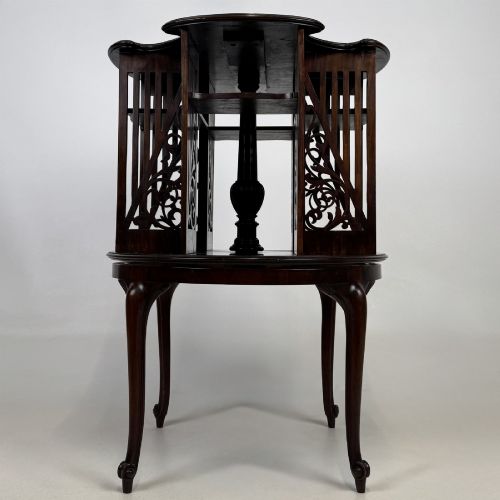
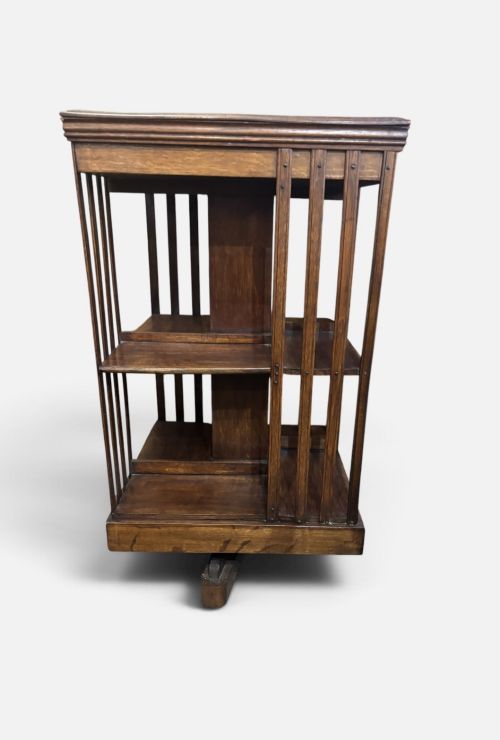
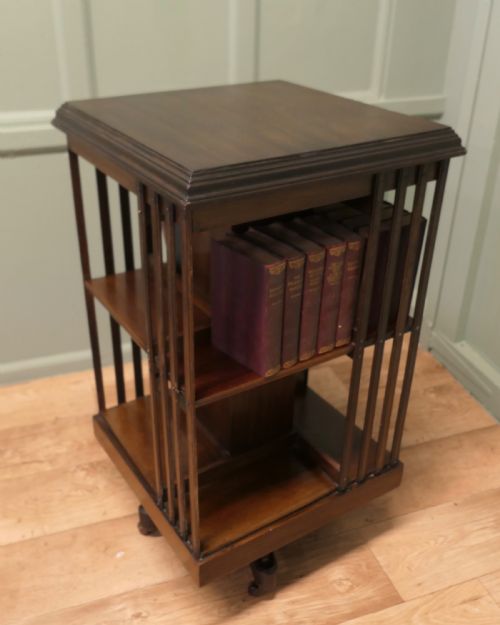
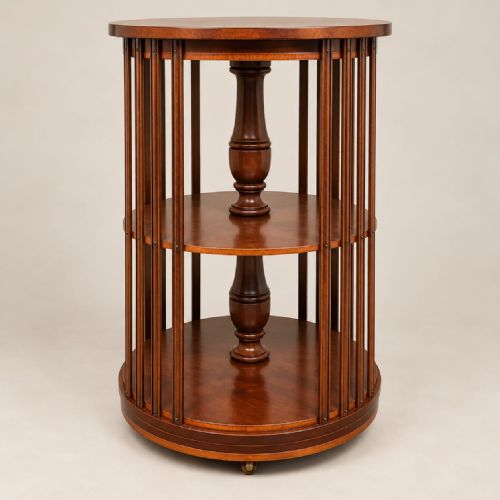
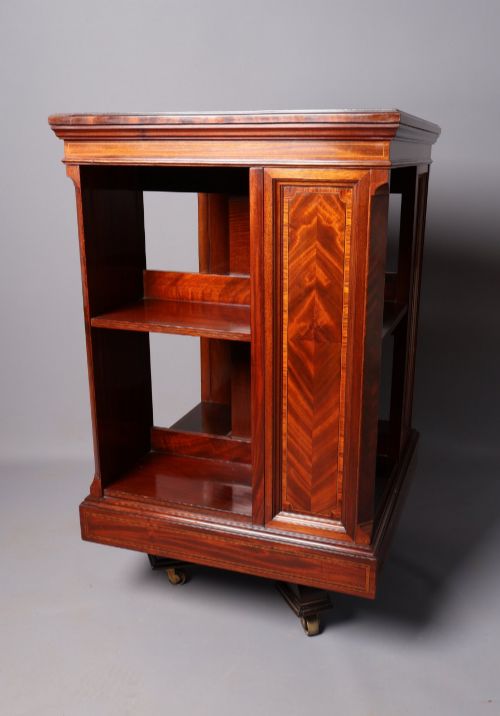

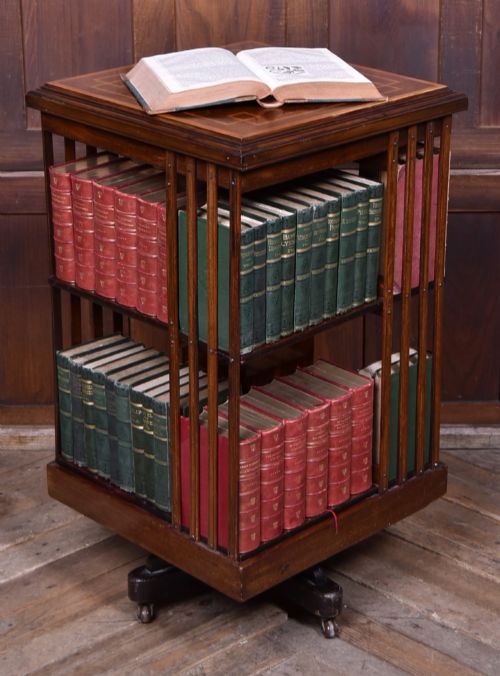

Rotating Bookshelf Stand
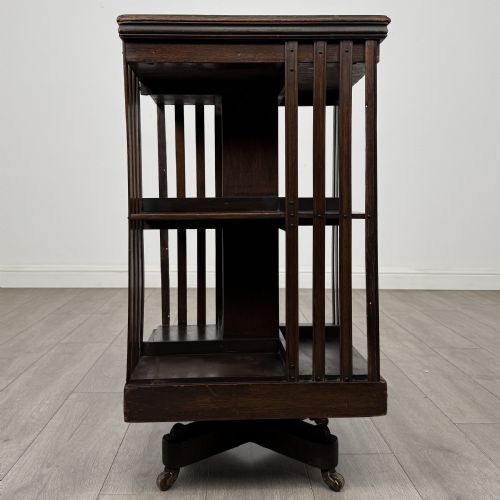
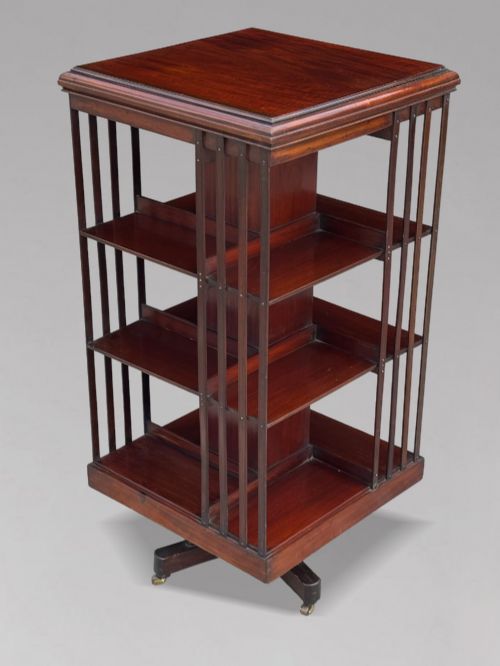
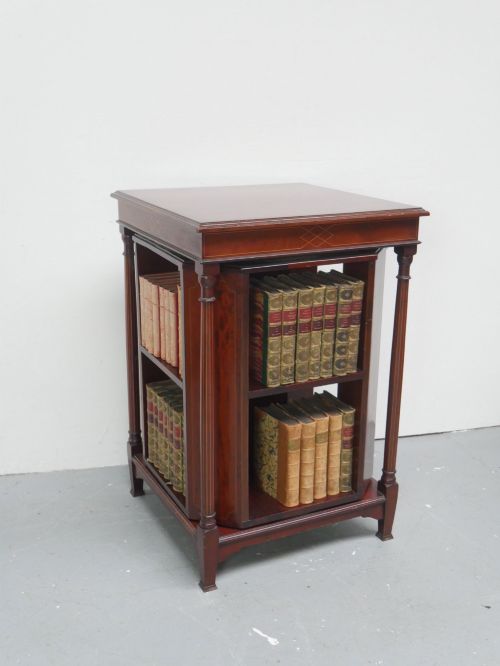
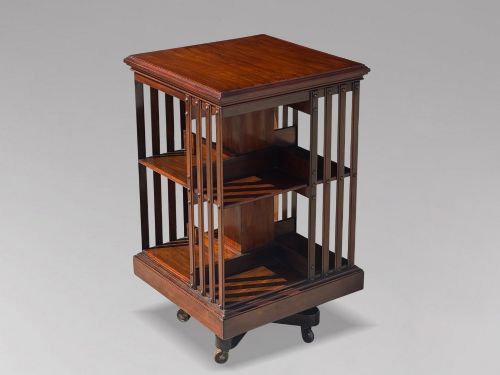
A rotating bookshelf stand is a clever turning desktop or floor unit that keeps volumes within arm's reach.
Rotating Bookshelf Stand
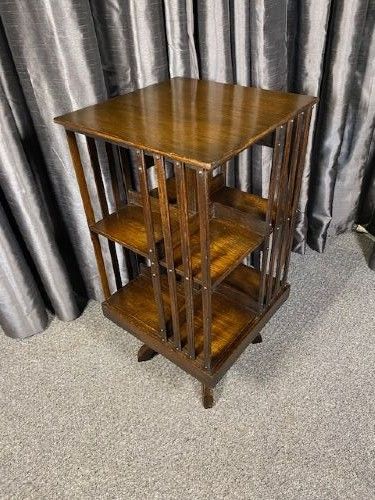
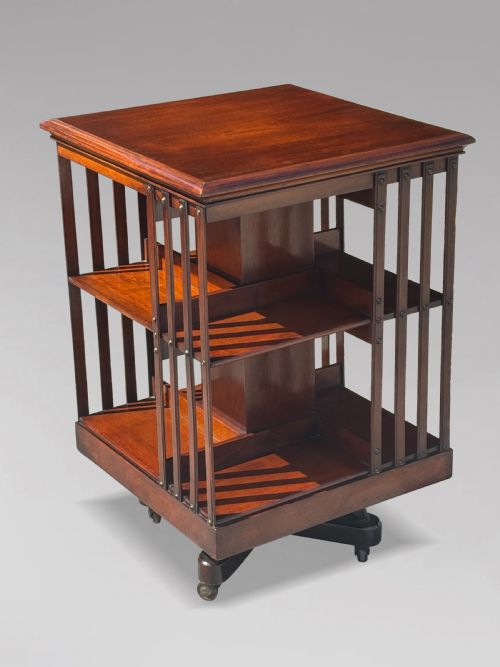
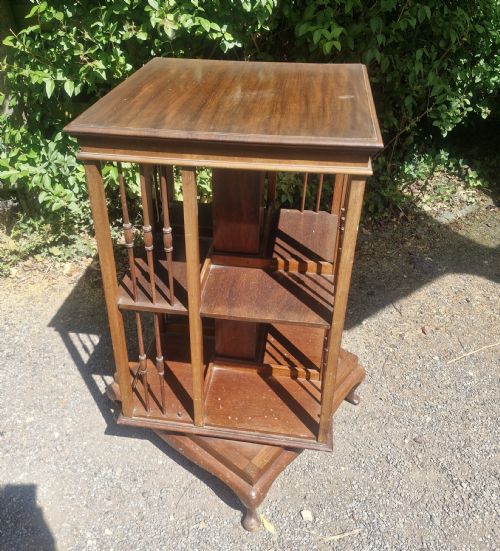
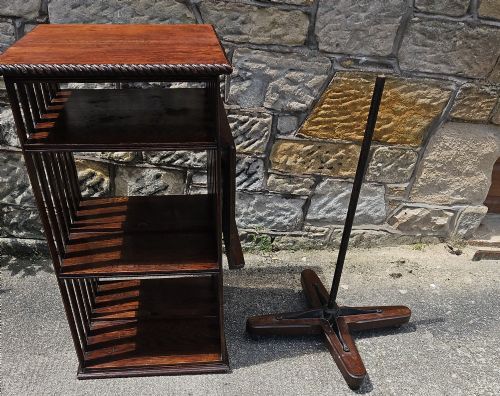
A rotating bookshelf stand brings convenient access to a collection of volumes by turning smoothly on a central pivot mechanism. When searching for a rotating bookshelf stand, a buyer encounters pieces primarily from the Victorian and Edwardian eras, spanning the late nineteenth century into the early twentieth century.
Materials and construction methods
Makers utilised solid timbers and selected veneers, with mahogany and oak appearing most frequently across the pieces. Satinwood inlay often decorates the surfaces of Edwardian examples, adding subtle contrast to the primary wood.
Metal components, including brass and cast iron, form the internal turning mechanisms and supportive hardware that allow the tiers to rotate smoothly. Structural joinery and turning techniques ensure the frames bear the weight of stacked books without binding.
Rotating Bookshelf Stand Retail Price Guide 2026
Typical asking prices for rotating bookshelf stand among the pieces listed under this phrase on Sellingantiques today, from the lower quarter to the upper quarter. They describe what is for sale here now, not the wider market.
Some models feature clever small drawers fitted beneath the revolving tiers for storing bookmarks and reading spectacles.
Markers of quality and craftsmanship
The refinement of the rotating mechanism determines how quietly and effortlessly the tiers spin under a full load of books. Smooth movement relies on sound internal engineering rather than surface appearance alone.
The choice of timber and the precision of decorative details, such as satinwood inlay or carved elements, distinguish standard production pieces from finer workshop outputs. Superior examples maintain structural integrity and alignment through decades of daily use.
Heals
The Rotating Bookshelf Stand Glossary
- Revolving bookcase
- A freestanding or desktop shelving unit engineered to turn on a central axis for easy book selection.
- Satinwood inlay
- Decorative woodwork where contrasting light satinwood is fitted flush into the primary timber surface to create patterns.
- Edwardian
- The period of British history spanning the reign of King Edward VII, noted in furniture for lighter proportions and refined classical details.
- Victorian
- The era corresponding to the reign of Queen Victoria, characterised by robust construction and diverse revival styles in cabinetmaking.
- Table top
- A smaller scale version of a piece designed to sit directly on a desk or table rather than stand on the floor.
Rotating Bookshelf Stand: Frequently Asked Questions
How do I care for a revolving bookcase?
Dust the timber regularly with a dry cloth and occasionally feed the wood with a suitable wax to maintain the finish.
Keep the turning mechanism clean and free from obstruction so the tiers continue to rotate smoothly without strain.
Can these hold heavy volumes?
Most floor-standing editions handle standard hardbacks easily, though smaller desktop versions suit lighter collections or reference books.
Distributing weight evenly across the shelves prevents uneven wear on the central pivot over time.
How do I identify an Edwardian model?
Edwardian pieces often feature lighter mahogany or oak timbers combined with delicate satinwood inlay work and slender proportions.
Construction from around this era prioritises domestic convenience and cleaner lines compared to heavier Victorian predecessors.
Where should I place a rotating stand?
Position the unit near a desk, armchair, or reading nook where you need quick access to a frequently used selection of books.
Ensure there is enough clearance around the entire circumference for the shelves to turn freely without hitting walls.