


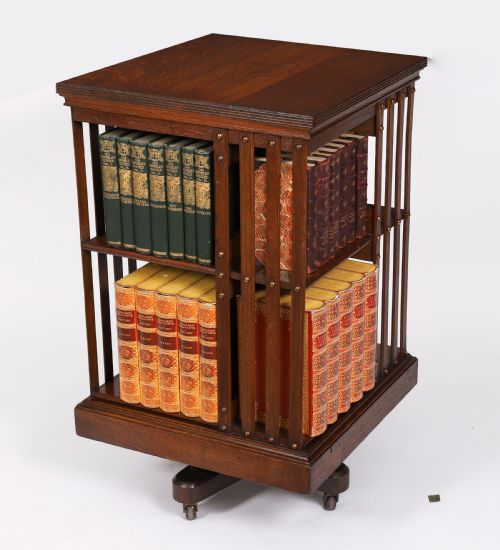


Rotating Book Carousel
A rotating book carousel brings desk-side volumes within easy reach, combining neat tier construction with smooth movement.
Rotating Book Carousel
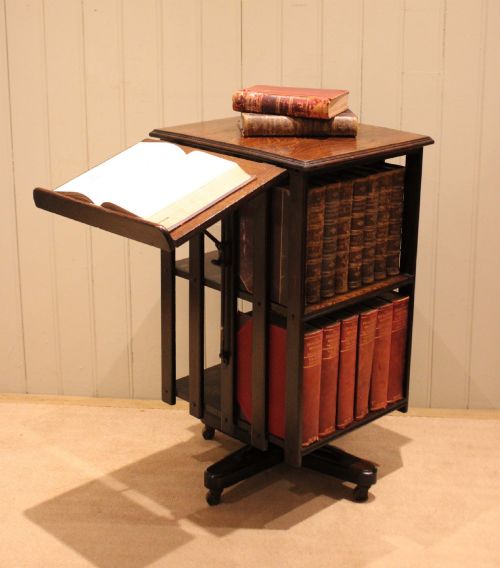
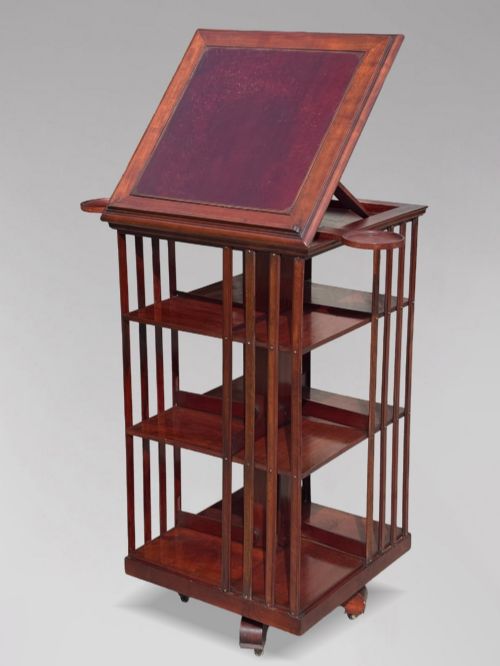
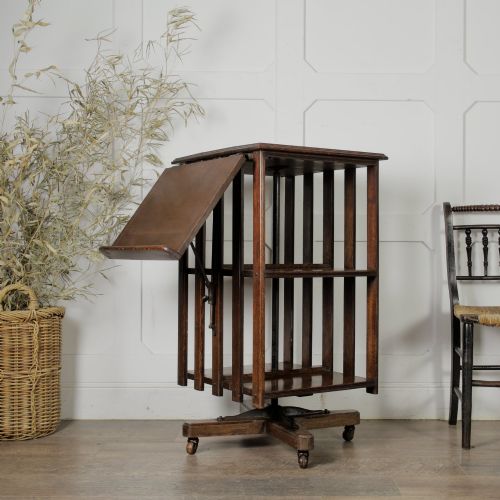
A rotating book carousel turns easily on a central pivot to display volumes on multiple tiers without occupying much floor space. When you search for a rotating book carousel, you encounter pieces intended for studies, libraries, and drawing rooms where quick access to reference books or novels matters.
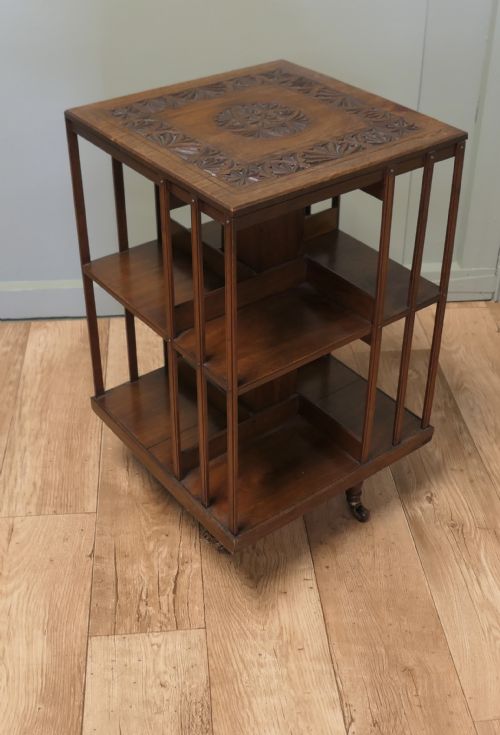
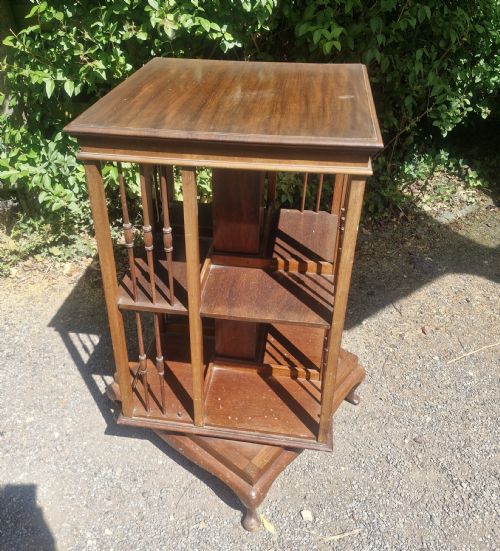
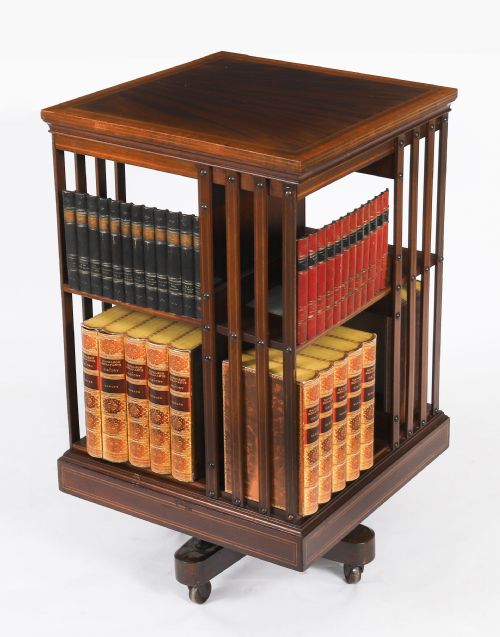
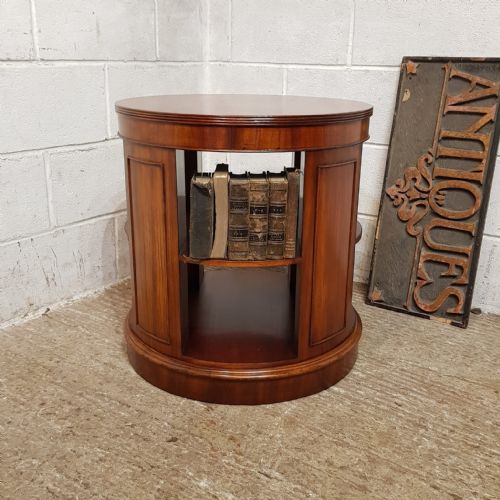
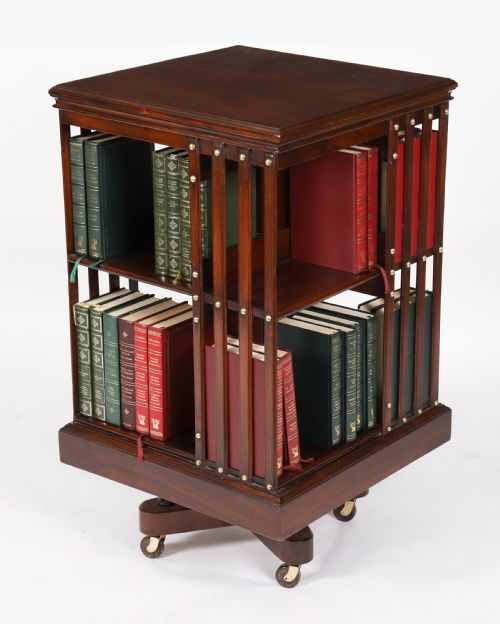
The versions most commonly met on this page belong to the Edwardian and Victorian periods, constructed as compact table-top units or taller freestanding bookcases. These specimens take round or square forms, housing tiers of open shelving designed to hold octavos and folios upright.
Origins span English workshops and French cabinet-makers, with stylistic touches ranging from plain Arts and Crafts utility to refined Edwardian marquetry. Each piece reflects the domestic reading habits of the late nineteenth and early twentieth centuries, scaled for daily use beside an armchair or desk.
Quality factors in rotating book carousels
The action of the revolving mechanism sets apart superior examples, running silently and true without lateral wobble or friction. High-grade pieces maintain smooth rotation even when fully loaded with dense volumes on every tier.
Cabinetwork precision dictates the overall merit of a piece, visible in tight corner joints, crisp inlaid satinwood banding, and substantial brass hardware. Finer models use well-figured flame mahogany or quarter-sawn oak selected for visual depth rather than plain utility.
Rotating Book Carousel Retail Price Guide 2026
Typical asking prices for rotating book carousel among the pieces listed under this phrase on Sellingantiques today, from the lower quarter to the upper quarter. They describe what is for sale here now, not the wider market.
Many an Edwardian reader avoided getting up from their armchair entirely by giving the bookcase a gentle spin.
Maple & Co·Heals
The Rotating Book Carousel Glossary
- Flame mahogany
- A timber cut from the fork of the mahogany tree, producing a distinctive rippled, flame-like grain pattern. Cabinet-makers reserved this decorative veneer for prominent exterior surfaces.
- Satinwood
- A pale, hard wood sourced from the tropics, utilised for delicate stringing and contrasting inlay work on Edwardian furniture. Its luminous quality brightens dark mahogany carousels.
- Ormolu
- Gilded bronze mountings applied to furniture for decorative enrichment, frequently seen on French pieces. This technique adds metallic contrast to timber surfaces.
- Marquetry
- The art of applying pieces of veneer to a structure to form decorative patterns or pictures. Craftsmen employed this method to ornament the tops and sides of bookcases.
- Quarter-sawn
- A method of timber cutting that produces a stable board with prominent medullary rays, common in quality oak furniture. This cut reduces warping in daily use.
Rotating Book Carousel: Frequently Asked Questions
How do I care for the revolving mechanism?
Keep the pivot clean and occasionally apply a light lubricant if rotation stiffens over time.
Avoid overloading individual tiers beyond their balanced capacity to prevent strain on the internal spindle.
Are these carousels sturdy enough for heavy books?
Most models handle standard octavo volumes and reference books comfortably across their wooden shelves.
Distribute heavier encyclopaedias on the lower tiers to maintain a stable centre of gravity during rotation.
Where should I place a table top model?
Table top versions sit securely on large desks, side tables, or sturdy cabinets where books need frequent consultation.
Ensure the surrounding clearance allows the tiers to spin fully without striking nearby objects or walls.
How do I distinguish Edwardian from Victorian carousels?
Victorian examples tend to feature heavier oak construction with simpler mouldings and robust internal ironwork.
Edwardian pieces frequently incorporate lighter mahogany frames, satinwood inlay, and refined French polishing.