




Rosewood Tiered Display Shelves
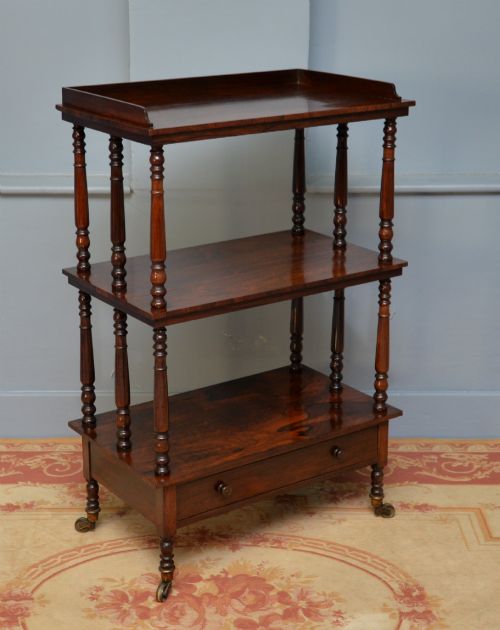
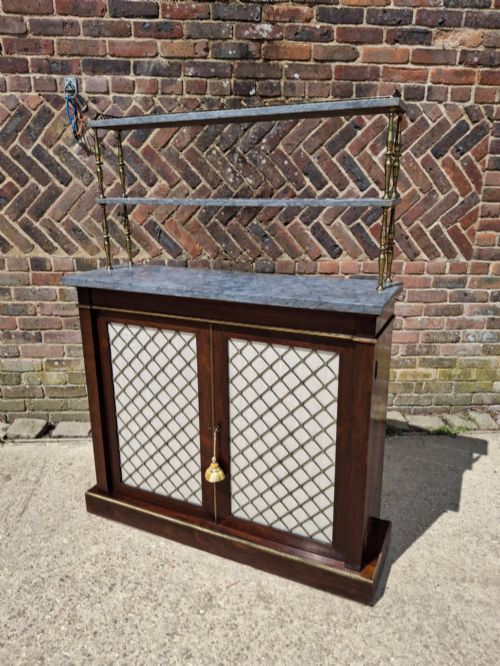
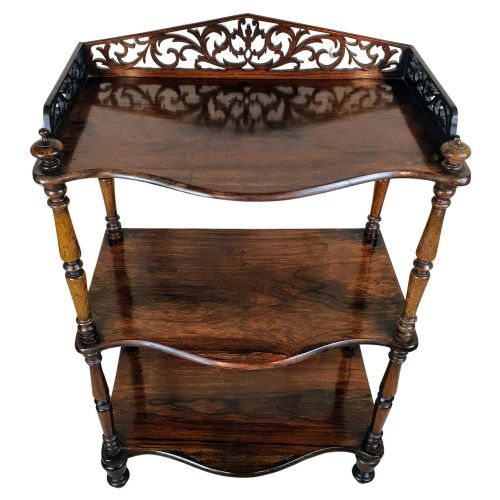
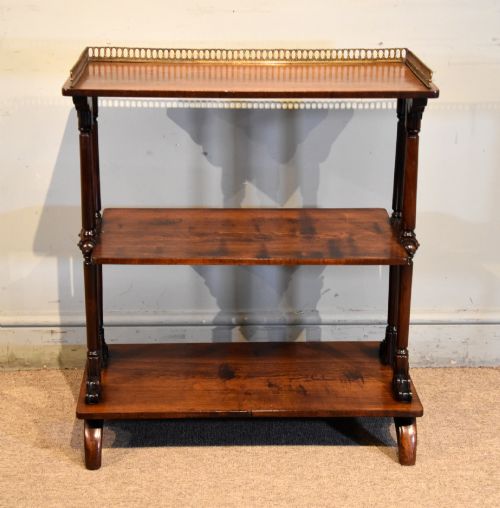
Rosewood tiered display shelves bring open multi-level storage to a room, spanning forms from compact corner units to tall multi-tier étagères.
Rosewood Tiered Display Shelves
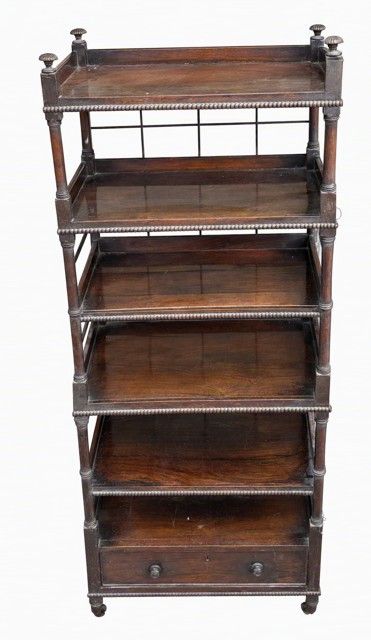
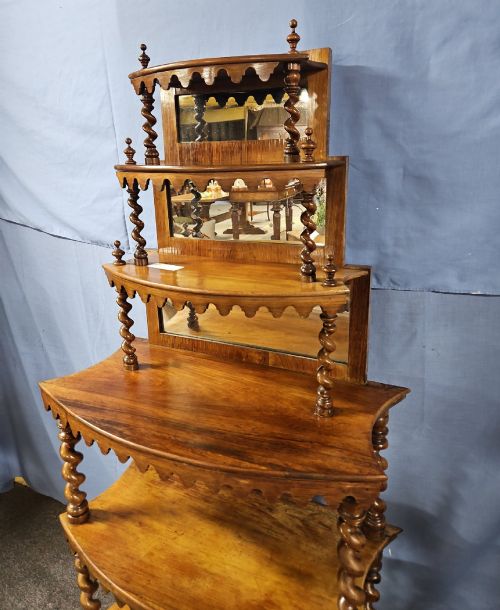
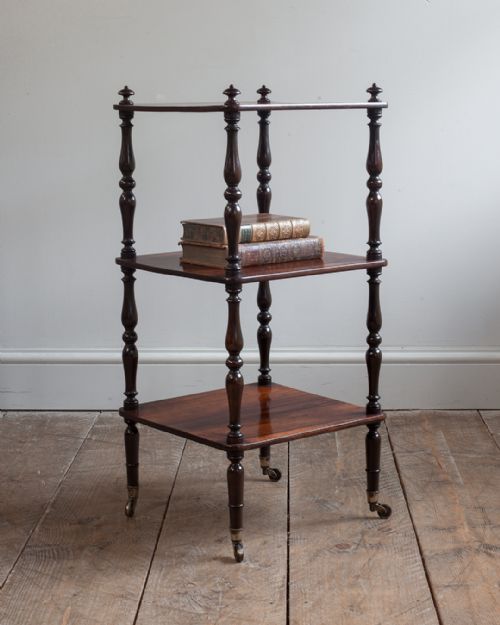
When searching for rosewood tiered display shelves, a buyer encounters a lineage of open-tiered furniture designed to hold books, ceramics, and ornaments. These pieces appear predominantly as whatnots and étagères spanning the Regency, Victorian, and Edwardian periods.
The selection here ranges from small tabletop units and corner stands to tall multi-tier shelving units and waterfall bookcases. Makers from the nineteenth century favoured rosewood for its dense grain to construct these open display tiers.
Most examples rely on slender turned supports or brass columns separating each shelf level. Buyers frequently meet Victorian and Regency variations featuring three to six graduated tiers.
What varies in quality
Construction density and timber selection divide standard production items from workshop pieces attributed to known cabinet makers. The crispness of turned columns and the precision of inlaid fruitwood determine visual distinction.
Structural rigidity across multiple tiers indicates sound joinery, whereas loose joints suggest past damp or heavy loading. Original brass fittings and castors elevate an example above one with replaced hardware.
Rosewood Tiered Display Shelves Retail Price Guide 2026
Typical asking prices for rosewood tiered display shelves among the pieces listed under this phrase on Sellingantiques today, from the lower quarter to the upper quarter. They describe what is for sale here now, not the wider market.
Victorian households relied on these multi-tiered shelves to keep their endless porcelain knick-knacks safely off the piano.
Gillows·Samson & Son
The Rosewood Tiered Display Shelves Glossary
- Étagère
- A piece of furniture consisting of a set of open shelves for displaying small ornaments. Originating in France, these tiered stands became popular in British drawing rooms during the nineteenth century.
- Whatnot
- A multi-shelved stand used for storing or displaying ornaments, books, or bric-a-brac. This form developed in the Regency period and remained a staple of Victorian domestic interiors.
- Waterfall bookcase
- A set of open shelves where each successive tier is set back from the one below, following a stepped incline. This style gained favour during the Regency and Edwardian eras.
- Ormolu
- Gilded bronze or brass mounted onto furniture surfaces for decoration. French Napoleon III pieces frequently employed these metal mounts to accent rosewood frames.
Rosewood Tiered Display Shelves: Frequently Asked Questions
What is the difference between a whatnot and an étagère?
A whatnot is a British term for a multi-tiered open shelving unit used for general display and storage in nineteenth-century interiors. An étagère is often of French influence, serving a similar decorative function with lighter proportions.
Both forms utilise rosewood shelves held up by turned columns or upright supports. The terms often overlap in period descriptions depending on origin.
How do I care for rosewood tiered shelves?
Rosewood benefits from regular dusting with a dry, soft cloth to prevent grit accumulation on the polished surfaces. Avoid placing the tiered unit in direct sunlight or near heat sources to protect the wood grain and veneer.
Apply a traditional wax polish sparingly when the timber appears dry. Lift objects rather than dragging them across the shelf tiers to preserve the finish.
Were these shelves used for books?
Many tiered units accommodated small collections of books alongside decorative ceramics and ornaments. Stronger constructions with deeper shelves handled heavy volumes, while lighter waterfall bookcases held reading materials.
Height spacing between tiers determined whether a shelf took books or cabinet ornaments. Slender corner units were generally intended for display rather than heavy libraries.
How do I date a rosewood whatnot?
Regency and William IV examples display heavier architectural proportions, often with bold turned pillars and brass details. Victorian pieces introduce more elaborate fretwork, multi-tier configurations, and occasionally inlaid fruitwood.
Edwardian items tend toward lighter forms with delicate stringing and symmetrical display layouts. Construction methods, such as screw types and joint hand-cutting, offer further clues to age.