

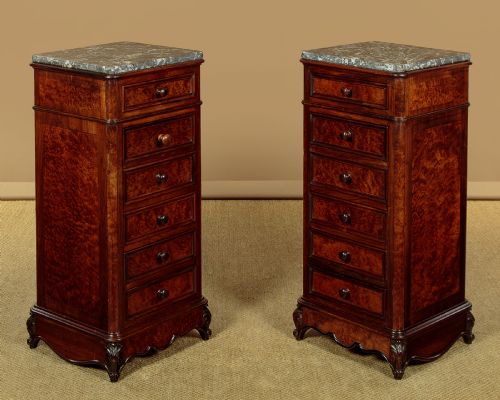


Rosewood Tall Chest
A rosewood tall chest offers deep timber grain and vertical storage, bringing warmth and presence to a bedroom or study.
Rosewood Tall Chest
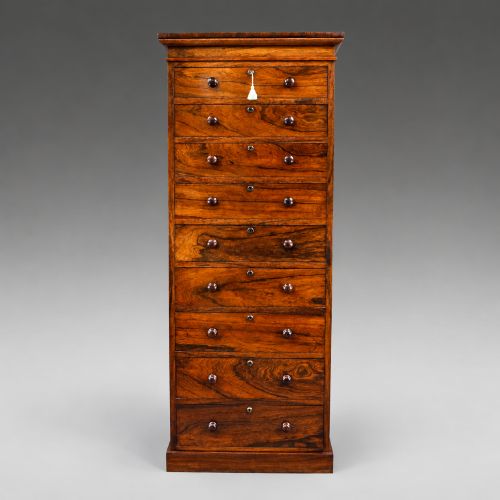
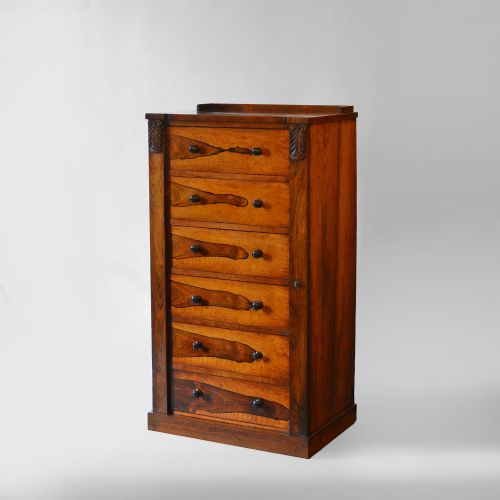
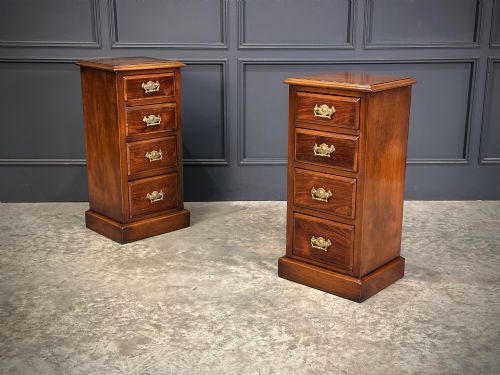
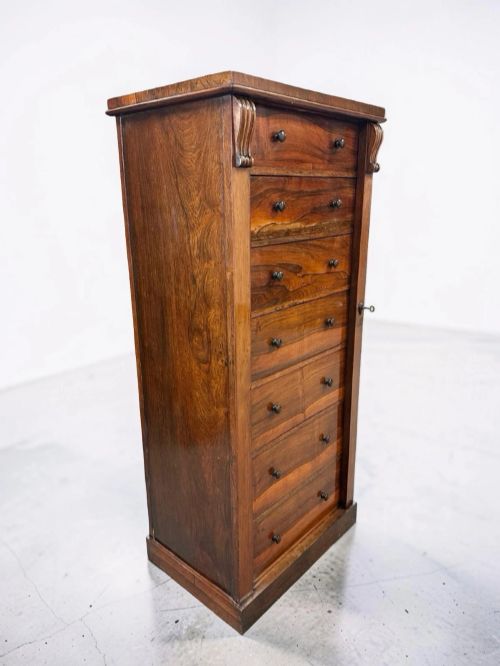
A rosewood tall chest is a vertical storage piece designed to hold garments or papers while occupying a compact floor footprint. These examples span the nineteenth and early twentieth centuries, taking the form of Wellington chests, semainiers, and tall bedside cabinets.
The materials recorded in these listings show rosewood frequently paired with mahogany, pine, amboyna, and kingwood, alongside marble tops and brass hardware. Styles range from Victorian and Edwardian to French Louis XV Revival, French Transitional, and Regency.
Buyers will most frequently encounter nineteenth century Wellington chests and Edwardian or later bedside chests of drawers on this page. Each piece showcases the deep, figured grain characteristic of rosewood, often enhanced by parquetry or inlay.
How they were made
Cabinet makers constructed these pieces using solid timbers and rich veneers applied over secondary woods like pine and mahogany. Techniques such as parquetry and precise inlay work decorated the exterior surfaces of chests and semainiers.
Internal construction involved hand-dovetailed drawer boxes and locking mechanisms characteristic of nineteenth-century Wellington chests, which secured all drawers with a single hinged side locking bar. Fine brass handles and escutcheons completed the hardware assembly.
Rosewood Tall Chest Retail Price Guide 2026
Typical asking prices for rosewood tall chest among the pieces listed under this phrase on Sellingantiques today, from the lower quarter to the upper quarter. They describe what is for sale here now, not the wider market.
Current listings feature pieces spanning the nineteenth century, Victorian era, Edwardian period, and early twentieth century up to nineteen twenty.
What varies in quality
The standard of a rosewood tall chest rests on the selection and matching of timber veneers across the drawer fronts and sides. Richly figured grain patterns and careful parquetry distinguish finer examples from simpler constructions.
Execution of detail in the hardware, internal drawer dovetailing, and the crispness of revival styling further separate standard production from superior cabinet making.
The Rosewood Tall Chest Glossary
- Wellington chest
- A tall, narrow chest of drawers featuring a hinged locking stile on one side that secures all drawers simultaneously. It typically includes seven drawers and dates from the nineteenth century.
- Semainier
- A tall seven-drawer chest designed for weekly organisation, often finished with delicate inlay or parquetry. The term originates from the French word for week.
- Parquetry
- A geometric mosaic of wood veneers used to decorate furniture surfaces. It creates patterned motifs across drawer fronts and tops.
- Amboyna
- A highly prized burl wood yielding rich, dotted grain patterns. Cabinet makers utilised it for decorative panels and small-scale furniture detailing.
- Gonçalo-Alvez
- A dense exotic hardwood with striking dark figuring, sometimes called zebrawood. It appears in Regency cabinetry for its dramatic natural pattern.
Rosewood Tall Chest: Frequently Asked Questions
What is a Wellington chest?
A Wellington chest is a tall, narrow set of drawers secured by a locking side pilaster. This design originated in the nineteenth century to safely store papers or personal items.
The locking bar swings open only when the top drawer is unlocked, engaging pins that release the remaining drawers below.
How do I use a semainier?
A semainier provides tall, vertical storage suitable for bedrooms or dressing rooms. Its name implies seven drawers for daily organisation.
The compact footprint allows these chests to fit into smaller spaces while offering substantial vertical capacity.
How do I date a rosewood chest?
Dating relies on construction methods, timber choices, and stylistic markers recorded across the nineteenth and early twentieth centuries. Victorian and Edwardian examples show distinct hardware and veneer trends.
Examining drawer dovetails and internal secondary woods like pine helps confirm the period of manufacture.
How do I care for rosewood furniture?
Rosewood benefits from placement away from direct sunlight and sudden temperature changes to protect the timber and veneer. Gentle dusting with a dry cloth preserves the polished surface.
Avoid liquid polishes and silicone sprays, which can build up on historic finishes over time.