






Rosewood Scroll Foot Table
A rosewood scroll foot table brings rich grain and sculptural timber bases into a room, offering both formal presence and practical surface space.
Rosewood Scroll Foot Table
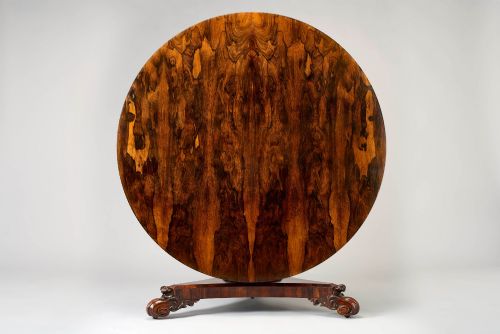
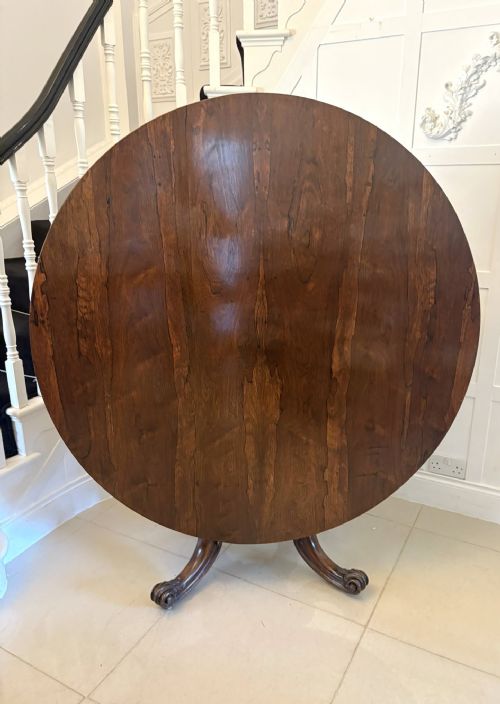
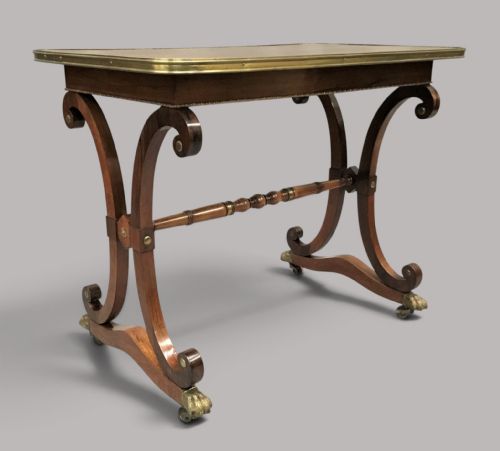
A rosewood scroll foot table is primarily defined by dense, dark timber and curved pedestal supports or feet that anchor the piece to the floor. These items appear across the nineteenth century, stretching from the Regency era through William IV and into Victorian periods, alongside Chinese Qing Dynasty huali examples.
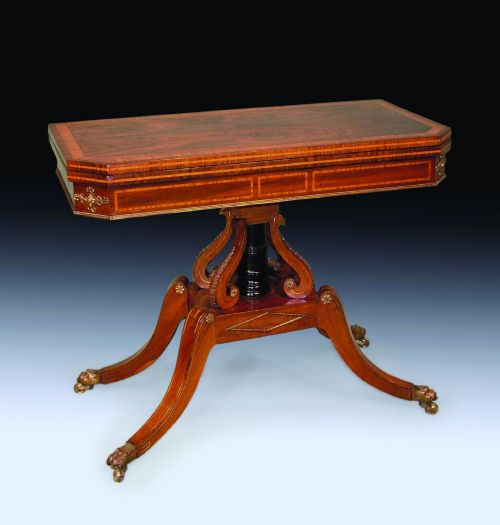
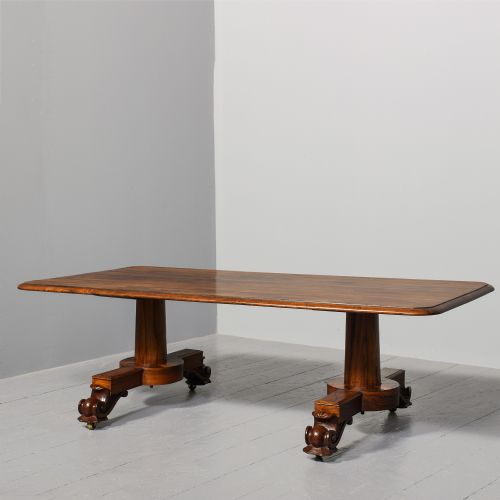
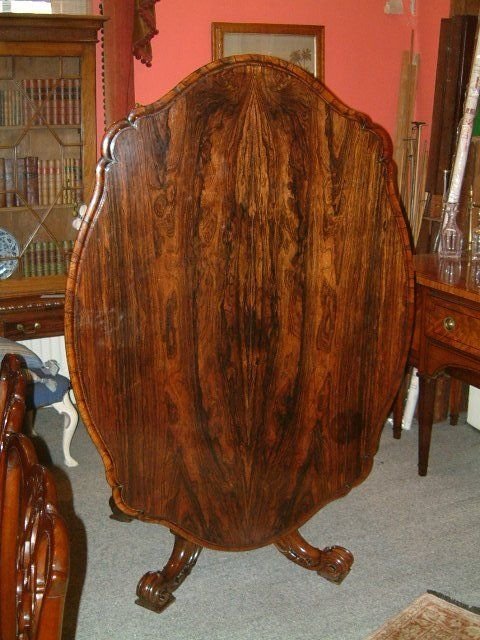
The forms vary widely in function, covering large round dining tables, tilt-top breakfast pieces, card tables with satinwood inlay, and low occasional or coffee tables. Most pieces rely on a central pillar or pedestal base rather than simple four-legged frames, terminating in distinctive scroll work.
Buyers encounter everything from grand centre tables designed for the middle of a room to compact wine tables and opium tables. This variety reflects the adaptability of the timber and the heavy demand for sculptural wooden furniture throughout the 1800s.
How they were made
Cabinet makers utilised dense exotic timbers, primarily rosewood, often complemented by contrasting veneers like satinwood or calamander. Some specific Asian examples employ huali wood, demonstrating different regional traditions in handling hard timbers.
The construction of the pedestal and feet often involved heavy carving, turning, and brass mounts to secure the weight of the circular or oval tops. Tilt-top mechanisms also required robust pivoting blocks beneath the surface to support daily use.
Rosewood Scroll Foot Table Retail Price Guide 2026
Typical asking prices for rosewood scroll foot table among the pieces listed under this phrase on Sellingantiques today, from the lower quarter to the upper quarter. They describe what is for sale here now, not the wider market.
Materials recorded across these tables include solid rosewood, calamander, satinwood, brass mounts, and huali wood.
What varies in quality
The refinement of the carving on the scroll feet and pedestal determines much of the visual success of the piece. Crisp, deep relief work distinguishes finer workshop output from simpler, flatter execution.
The choice and matching of the rosewood veneers across large table tops also set different tiers of craftsmanship apart, alongside the integration of secondary woods and brass mounts.
The Rosewood Scroll Foot Table Glossary
- Rosewood
- A heavy, dense tropical timber with deep brown and black grain patterns that polishes to a high natural sheen. It was widely favoured for formal nineteenth-century tables.
- Tilt-top
- A hinged tabletop mechanism allowing the surface to fold vertical when not in use, saving space in smaller rooms. This construction is common on dining and breakfast tables.
- Pedestal base
- A single central support column rising from a weighted platform or foot arrangement rather than traditional corner legs. Scroll feet frequently anchor these pillars.
- Calamander
- An exotic hardwood known for its striking dark brown stripes and contrasting pale yellow or grey background. It appears on select Victorian pieces alongside rosewood.
- Huali wood
- A traditional Chinese hardwood prized for its rich figure and durability, utilised in low kang or opium tables.
Rosewood Scroll Foot Table: Frequently Asked Questions
What is a rosewood scroll foot table used for?
These tables serve multiple domestic functions depending on their height and top configuration. Larger examples act as central dining or breakfast surfaces, while smaller versions function as wine or occasional tables.
Low scroll-end tables provide specialised low surfaces for display or seating arrangements. Their solid timber construction allows them to withstand regular daily use in principal rooms.
How do I date a rosewood scroll foot table?
Dating relies on observing stylistic shifts in the pedestal base and the overall proportions of the piece. Regency and William IV pieces often display bold classical carving, whilst Victorian items introduce serpentine edges or calamander accents.
Chinese Qing Dynasty examples utilise distinct huali wood construction and low kang proportions. Examining the timber preparation and jointing methods helps confirm the nineteenth-century context.
How do I care for rosewood furniture?
Rosewood requires stable indoor humidity to prevent timber movement and veneer splitting. Keeping the surface away from direct heat sources protects the polish and natural oils in the wood.
Regular dusting with a soft, dry cloth maintains the finish without building up heavy wax layers. Gentle polishing should happen infrequently using appropriate specialist timber treatments.
Are these tables solid rosewood?
Most nineteenth-century tables utilise rosewood veneers applied over stable secondary wood carcases, particularly for wide table tops. This technique prevented the large timber surfaces from warping.
Solid rosewood was more commonly reserved for turned columns, carved pedestals, and scroll feet where structural strength and three-dimensional shaping were required.