
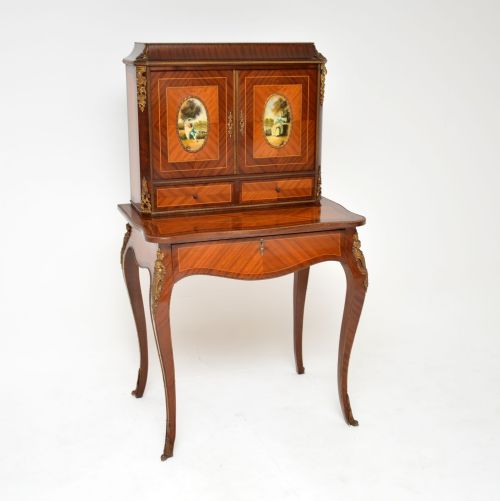
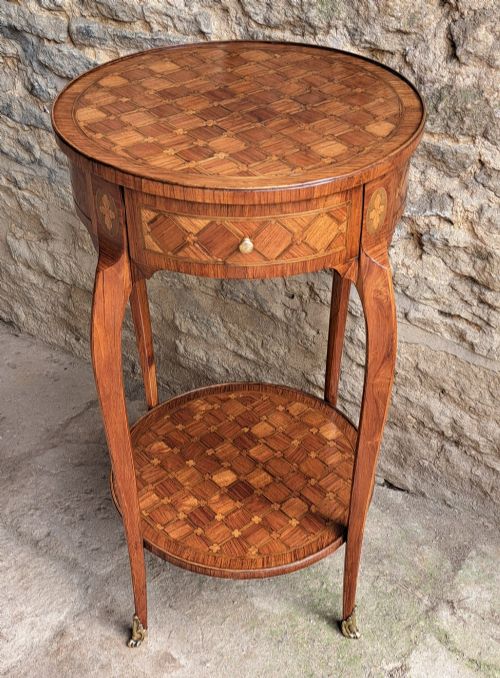
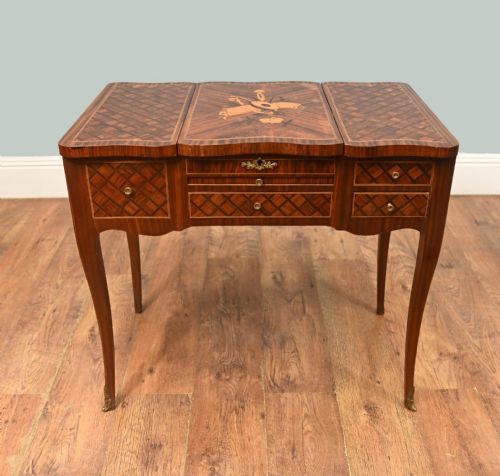


Rosewood Parquetry Table
A rosewood parquetry table brings geometric precision and rich tropical timber into a room, offering both a functional surface and a focal point.
Rosewood Parquetry Table
When you search for a rosewood parquetry table, you enter a field dominated by nineteenth-century occasional, centre, and writing tables. The pieces combine dense, figured rosewood with precise geometric wood mosaic work across the top.
Most examples originate from French and British workshops, spanning periods from the Regency and William IV eras through the height of the Victorian epoch. Forms range from freestanding centre tables to compact lamp tables and games surfaces.
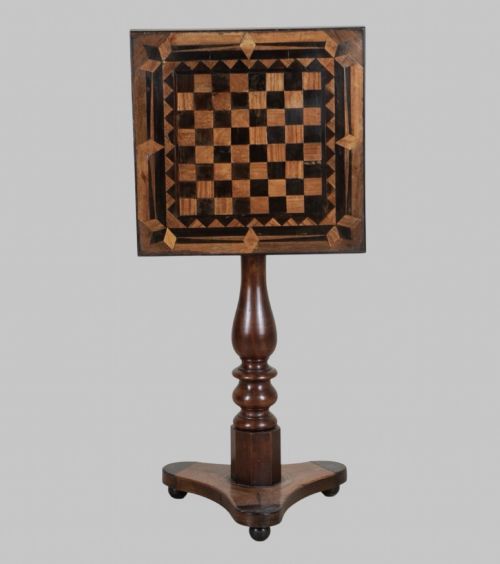
The surface patterns rely on contrasting timbers arranged in cubes, stars, or diagonal bands to create an illusion of three-dimensional depth. Buyers encounter these primarily as principal drawing room accents or functional writing surfaces.
How they were made
Cabinetmakers constructed these pieces by applying thin veneers of rosewood, kingwood, and tulipwood over stable secondary foundations of mahogany or oak. The geometric parquetry top required meticulous hand-cutting of individual timber blocks before assembly into complex geometric arrays.
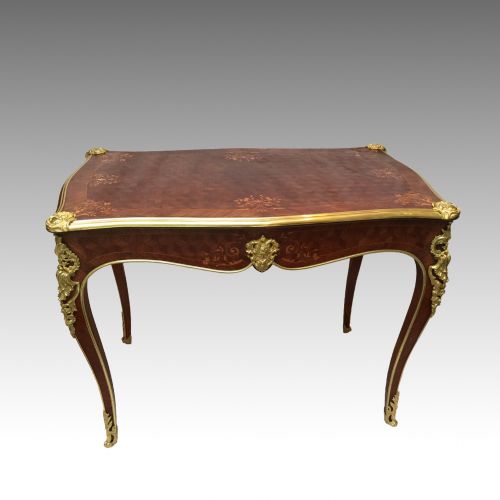
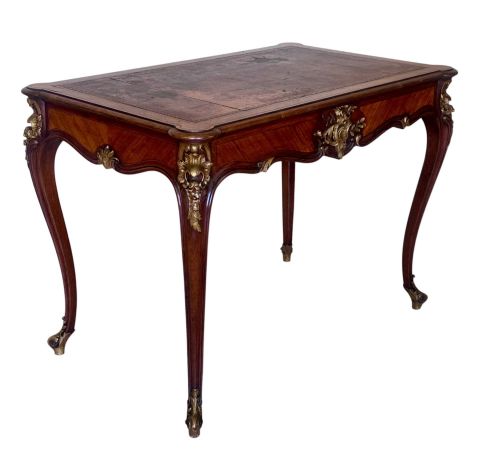
Metal ornamentation played a crucial structural and decorative role, with cast ormolu, brass mounts, and gilt bronze framing the aprons and corners. Many surfaces incorporated inlaid brass lines or contrasting satinwood and coromandel details to accentuate the main parquetry design.
Several tables include hidden compartments designed for sewing cottons or secret love letters.
What varies in quality
The distinction between ordinary and exceptional work rests on the precision of the veneer joints and the selection of the timber. Top-tier examples display flawless alignment in the parquetry blocks, where individual pieces meet without visible filler or gaps.
Makers who supplied the luxury market employed heavier gauge ormolu mounts that were chased by hand rather than cast simply from moulds. The density of the rosewood grain and the subtlety of the contrasting specimen woods further separate standard production items from exhibition-grade commissions.
CH. Jeanselme and Co·Collingson and Lock·Donald Ross·Francois Linke·Gillows·Maurice Dufrêne·Zwiener
The Rosewood Parquetry Table Glossary
- Parquetry
- A geometric mosaic of wood veneer arranged in repeating patterns such as cubes or chequers. This technique provides the primary decorative surface for the top of the table.
- Ormolu
- Gilded bronze applied as mounts, feet, and edge banding. This material frames the wooden panels and protects vulnerable corners.
- Bonheur du jour
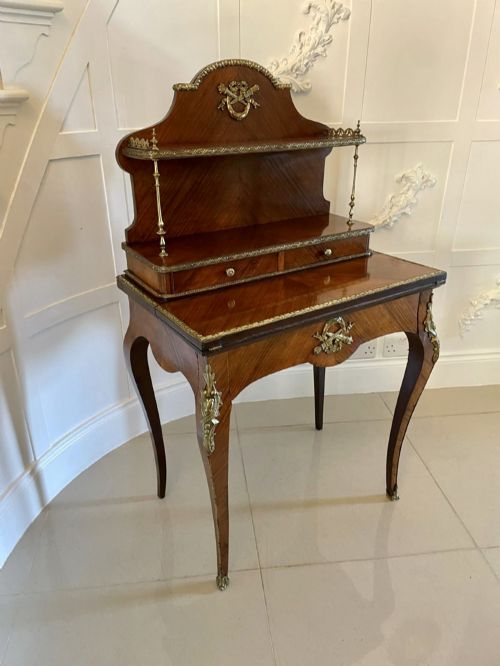
- A small lady's writing desk featuring a raised superstructure with drawers and pigeonholes. These portable desks often incorporate elaborate parquetry lids.
- Centre table
- A freestanding piece designed to be viewed from all sides rather than pushed against a wall. Such tables typically feature elaborate parquetry decoration across the entire top surface.
- Specimen wood
- Timbers chosen for their distinct natural colours and grain patterns, including kingwood, tulipwood, and satinwood. Cabinetmakers grouped these together within parquetry and marquetry panels.
Rosewood Parquetry Table: Frequently Asked Questions
How do I care for a rosewood parquetry table?
Keep the timber away from direct sunlight and extreme humidity changes to prevent the veneer from lifting or cracking. Dust regularly with a dry cloth and apply occasional wax feeds formulated for antique hardwoods.
Avoid using modern liquid polishes or silicone sprays, which penetrate open grain and discolour historical finishes over time.
Can I use these tables for daily writing?
Many nineteenth-century examples served specifically as writing desks or work tables and handle light daily tasks comfortably. Protect fragile veneer surfaces from ink spills and heavy writing pressure by using a blotter or leather pad.
Ensure that drop-fronts or hinged flaps are supported properly when open to avoid stressing ancient pivot joints.
How do I distinguish Regency from Victorian examples?
Regency and William IV pieces lean towards architectural restraint, featuring simpler geometric brass inlay, heavier pedestal bases, and darker column supports. Victorian variations introduce denser parquetry arrays, lighter woods like satinwood, and elaborate gilt bronze mounts.
Examine the secondary woods beneath the top, as mahogany backing typically indicates earlier British work while oak or pine suggests mid-century continental production.
What is the difference between parquetry and marquetry?
Parquetry uses geometric blocks of timber to create repeating abstract patterns like cubes, lozenges, and zig-zags. Marquetry employs curving pictorial veneers to form naturalistic scenes of flowers, urns, or landscapes.
Many tables combine both techniques, using rigid parquetry across the main field and flowing marquetry around the borders.