





Rosewood Parlor Settee
These rosewood parlor settee pieces offer rich timber frames and period upholstery designed to anchor a formal nineteenth-century interior.
Rosewood Parlor Settee
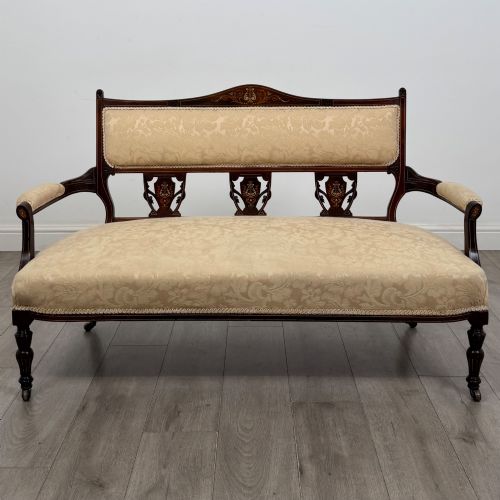
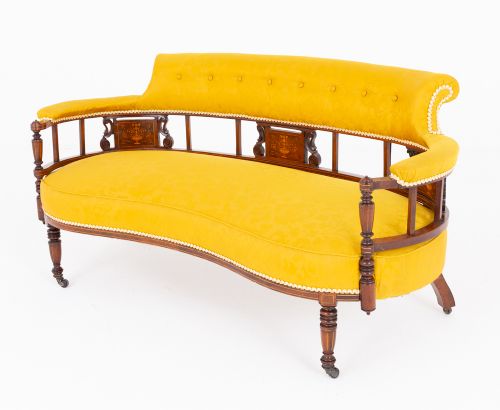
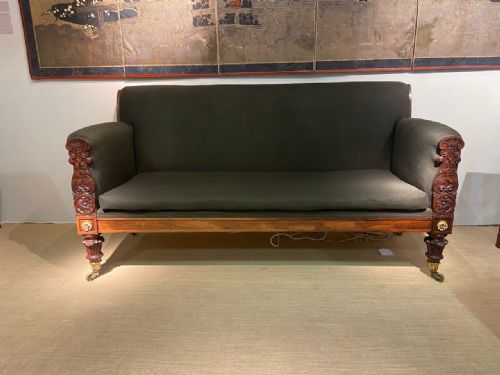
A rosewood parlor settee brings formal seating into the Victorian interior through carved hardwood frames and upholstered cushions. The examples encountered here span the nineteenth century, including Early Victorian, Mid-Victorian, and Late Victorian periods.
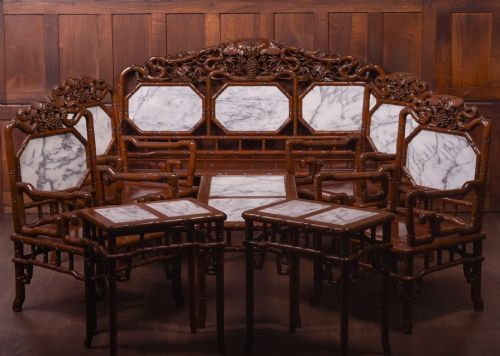
Makers shaped these settees into various forms such as double spoon back frames, window seats, and inlaid sofas. Alongside English Victorian pieces, related Chinese export hardwood suites and Edwardian salon groupings appear in the selection.
Buyers select these settees to anchor a period room with dark timber and patterned upholstery. The overarching style reflects nineteenth-century craftsmanship, moving from deep wood carvings to later inlaid decoration.
How they were made
The primary material is rosewood or hardwood, shaped into curved frames and structural supports. Cabinetmakers employed carving techniques to create intricate details on the timber surfaces.
Inlaid decoration incorporates contrasting woods and mother of pearl into the rosewood panels. Brass elements also appear in specific design configurations.
Upholstery uses materials such as velvet, damask upholstery, and standard fabric to cover the sprung or padded seats. These textiles complete the construction of the seating.
Rosewood Parlor Settee Retail Price Guide 2026
Typical asking prices for rosewood parlor settee among the pieces listed under this phrase on Sellingantiques today, from the lower quarter to the upper quarter. They describe what is for sale here now, not the wider market.
Listings feature Victorian, Edwardian, and nineteenth-century eras alongside Chinese export variations.
What varies in quality
The refinement of the wood carving determines the visual depth of the frame. Skilled artisans produced crisper floral motifs and more balanced proportions than lesser workshops.
The complexity of the inlay work marks a distinction in overall execution. Pieces featuring detailed mother of pearl and varied timber marquetry demonstrate higher labour input.
The integrity of the structural joinery and the selection of dense rosewood establish the physical durability of each settee. Heavier, well-seasoned timber frames maintain their shape better over decades.
James Shoolbred
The Rosewood Parlor Settee Glossary
- Rosewood
- A dense, dark timber prized for its rich grain and suitability for fine furniture carving. It forms the primary structural and visual element in these settees.
- Inlay
- The technique of embedding contrasting materials such as lighter woods or mother of pearl flush into the rosewood surface. This creates decorative patterns across the frame.
- Spoon Back
- An upholstered chair or settee back shaped in the concave form of a spoon. This ergonomic Victorian design supports the sitter.
- Damask Upholstery
- A reversible figured fabric traditionally used for formal seating upholstery. It provides a textured pattern that complements carved wooden frames.
- Hardwood
- Timber derived from broad-leaved trees, used in both English Victorian and Chinese export framing. It offers the strength required for complex structural forms.
Rosewood Parlor Settee: Frequently Asked Questions
Where did a parlor settee go?
These settees stood in formal reception rooms and parlors to accommodate visitors and family members during social calls.
Their decorative frames ensured they remained visible focal points within the main entertaining spaces of the home.
How do I date a settee?
Dating relies on stylistic shifts from the curved carvings of the early nineteenth century to the inlaid decoration of the later decades.
Examining the wood species and construction methods helps align a piece with specific Victorian or Edwardian periods.
Are Chinese export pieces different?
Chinese export suites utilise native hardwoods and feature distinct decorative motifs like mother of pearl inlay rather than traditional English floral carving.
They share the same formal parlor function while displaying different regional woodworking traditions.
How do I care for rosewood?
Protect the timber from direct sunlight and sudden humidity changes to prevent the rosewood frame from drying out.
Gentle dusting maintains the polished surface without stripping the natural patina of the wood.