




Rosewood Paper Stand
A rosewood paper stand is a practical nineteenth-century desk or salon accessory designed to keep sheets and periodicals orderly.
Rosewood Paper Stand
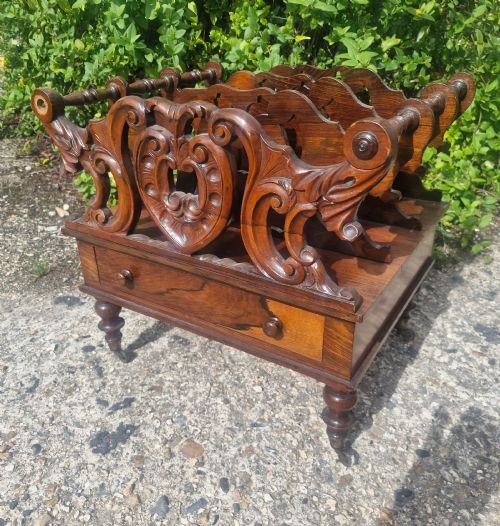
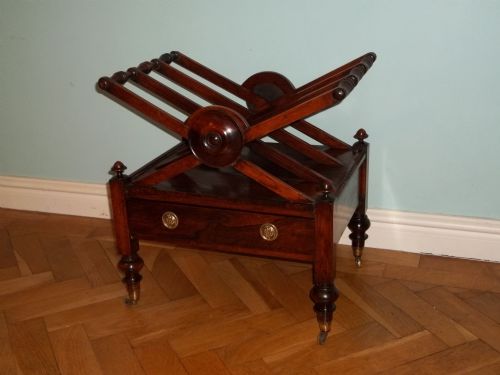
A rosewood paper stand encompasses nineteenth-century furnishings designed to hold periodicals, sheets, and documents in domestic interiors. The most common form met on this page is the canterbury, an upright rack with slatted divisions for papers or music sheets.
These pieces emerge across the Georgian, Regency, William IV, and Victorian periods, often functioning as magazine racks, newspaper holders, or music stands. Makers built them as freestanding furniture or multi-functional side cabinets to suit studies, drawing rooms, and libraries.
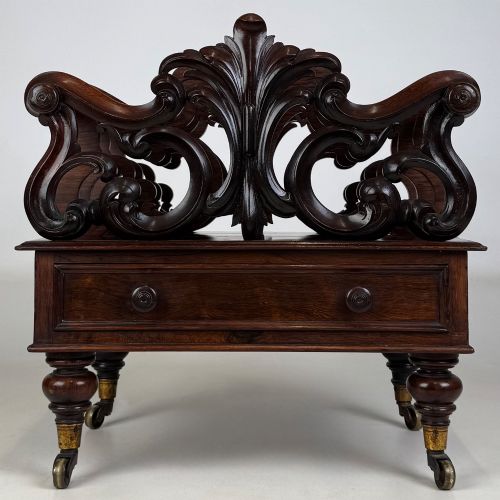
Many examples incorporate lower drawers, multiple tiers, or wheeled supports, shifting the form from a simple desktop tidy to a substantial floor-standing piece. The evidence shows styles spanning French nineteenth-century designs alongside English country house pieces.
Qualities that separate examples
The sophistication of the timber figure and the crispness of the carved details dictate the standing of an individual piece. Finer examples display carefully selected grain patterns on the rosewood surfaces alongside deeply cut foliate motifs rather than flat, mechanical mouldings.
Structural complexity also divides the range, distinguishing simple open racks from double-size variants, pieces featuring lower drawers, or multi-tier whatnots with integrated storage. The integration of robust brass fittings and original turning elevates the execution of the design.
Some nineteenth-century readers needed a double-size rack simply to survive Sunday morning news.
The Rosewood Paper Stand Glossary
- Whatnot
- A piece of open shelving with multiple tiers used for displaying or storing small household objects and papers. Mid-Victorian versions in rosewood sometimes combine shelf space with enclosed rack storage.
- Regency
- An English design style spanning the early nineteenth century defined by classical restraint and rich cabinet timbers. Pieces from this era often utilise figured rosewood and brass detailing.
- William IV
- A transitional British design period dating to the 1830s characterised by heavier proportions and bold carved ornamentation. Canterbuds from this time frequently display substantial turning and leaf carving.
- Etagere
- A set of ornamental open shelves or tiers for holding small items. The term is frequently linked with multi-functional rosewood stands in nineteenth-century interiors.
Rosewood Paper Stand: Frequently Asked Questions
What is a rosewood paper stand used for?
These stands served domestic interiors as dedicated storage for newspapers, periodicals, and sheet music. Owners placed them beside chairs and tables to keep loose reading material tidy.
Today, they function similarly in modern rooms, holding magazines, journals, or vinyl records while adding period character to a space.
How do I date a rosewood paper stand?
Dating relies on observing structural proportions, stylistic motifs, and secondary timbers. Georgian and Regency pieces display lighter lines and classical restraint, while William IV and Victorian versions often show heavier carved elements.
Fittings such as brass castors and the presence of hand-cut dovetails in drawers also help establish the approximate decade of manufacture.
Are these stands freestanding?
Almost all examples recorded in the evidence are designed to stand independently on the floor. They frequently incorporate low legs with castors so they could be moved around a drawing room easily.
Some multi-functional variants double as side cabinets or small whatnots intended to sit against a wall.
How do I care for nineteenth-century rosewood?
Rosewood requires stable indoor humidity away from direct sunlight and heat sources to prevent the timber from splitting or fading. Regular dusting with a soft, dry cloth maintains the polished finish.
Applying occasional specialist wax nourishes the grain without building up heavy residues on carved details.