


Rosewood Open Shelf
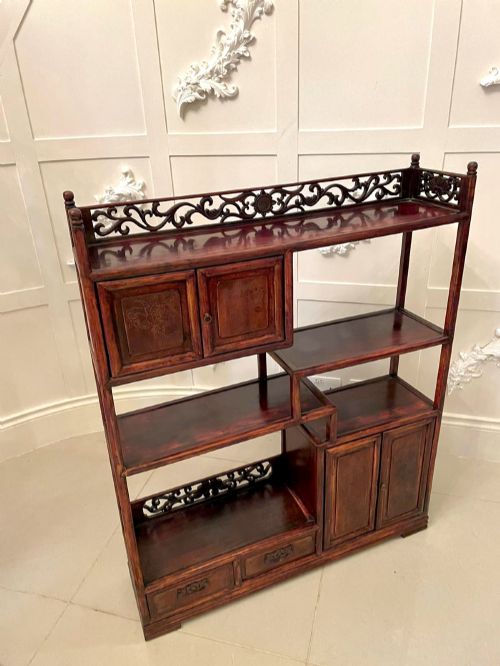
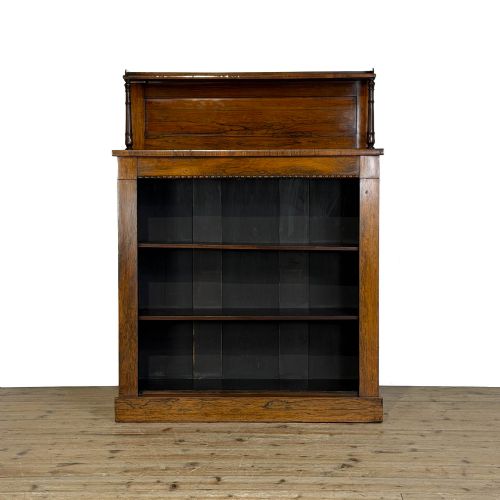
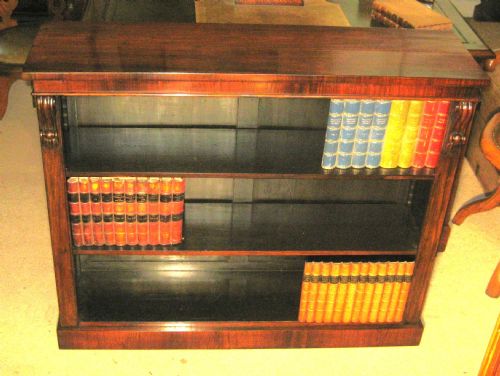
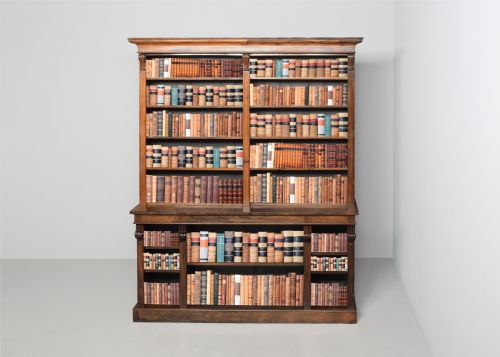
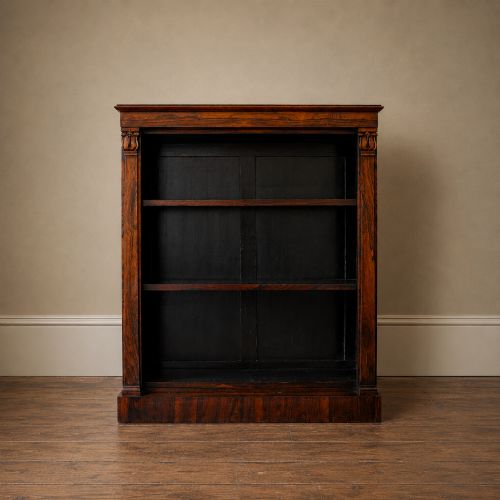
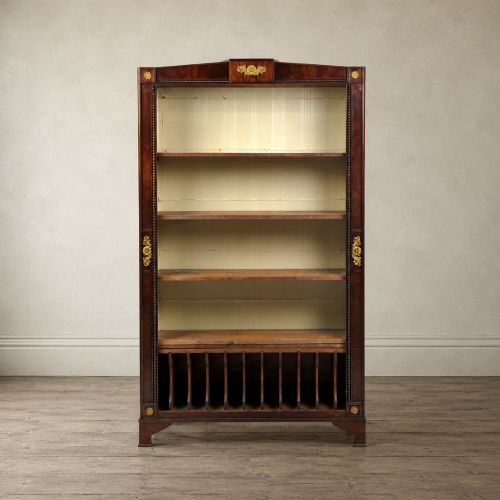
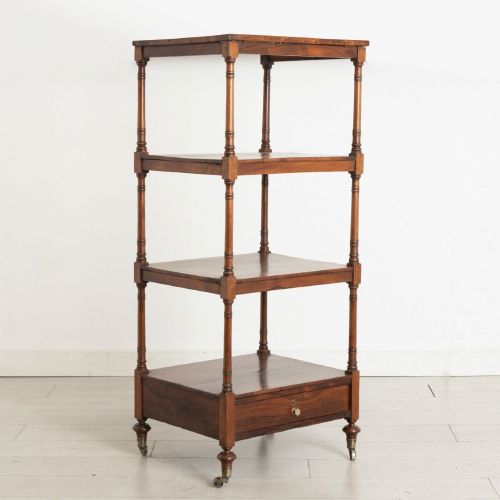
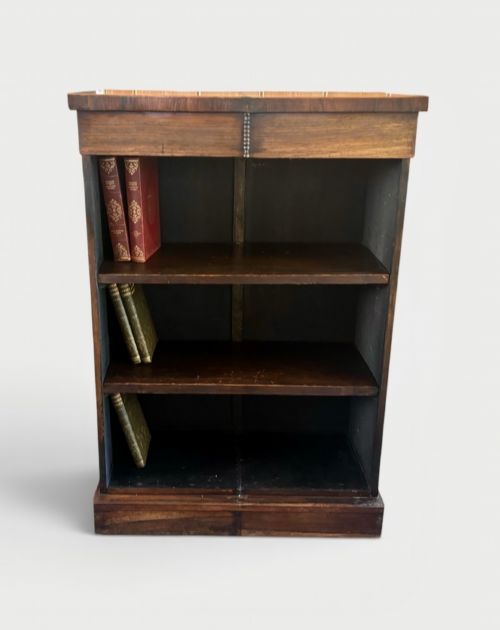
A rosewood open shelf brings rich grain and practical display space to a room, most often appearing as a 19th-century bookcase or multi-tiered whatnot.
Rosewood Open Shelf
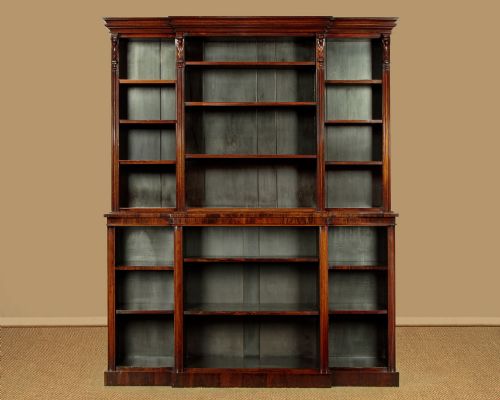
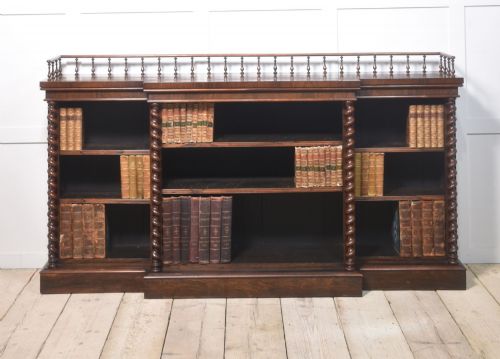
A rosewood open shelf serves primarily to display books and decorative objects without the barrier of glazed doors. When you examine this page, you meet pieces ranging from compact étagères to breakfront bookcases.
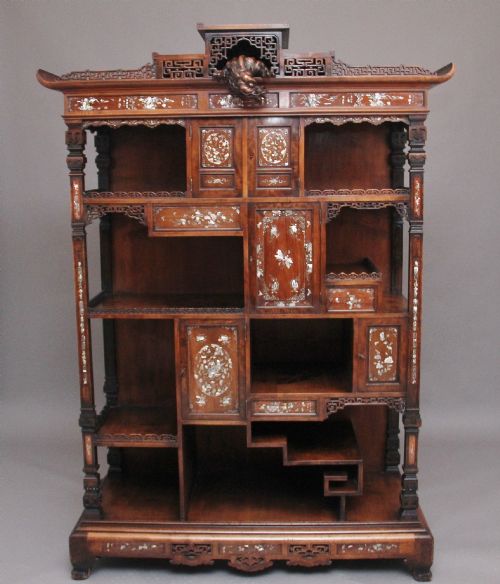
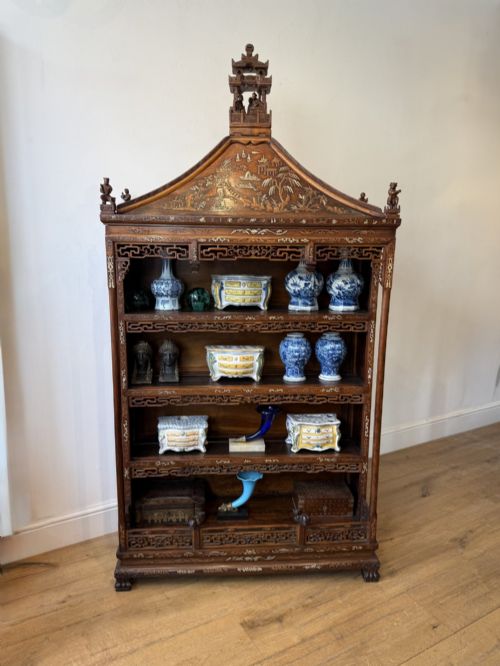
The most common form is the Victorian or Regency open bookcase, often fitted with adjustable shelving and sometimes mounted with brass or mirrors. These pieces originate across the 19th century, drawing on styles such as William IV, Chinese Qing, and Japonisme.
How they were made
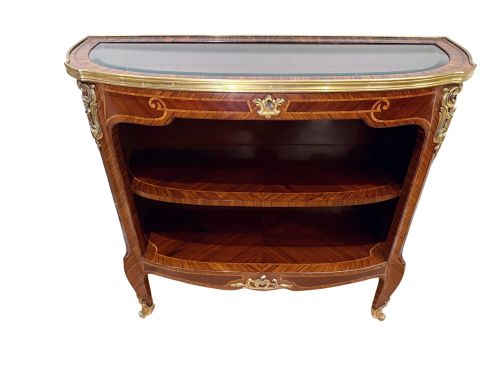
Cabinet makers built these units using dense rosewood veneers laid over secondary timbers like pine or softwood, frequently incorporating brass inlay, carved corbels, and mother of pearl. Structural elements often combine hardwood with glass panels, marble tops, and mirrored backs.
Joinery techniques matched the weight of the timber, allowing for multi-tiered whatnot stands and wall shelves that needed to support books and display pieces securely.
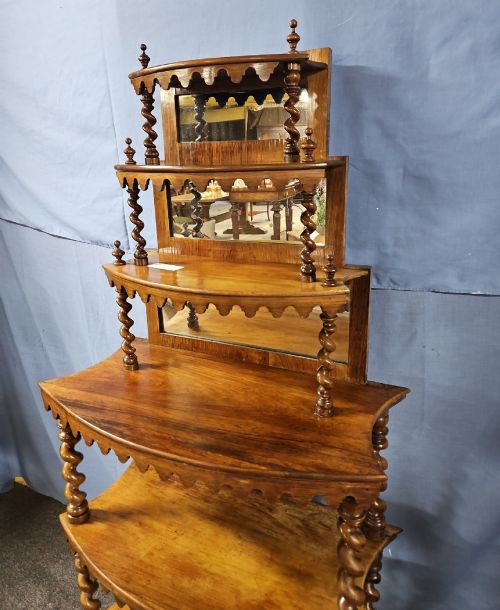
Some multi-tiered whatnot stands offer six distinct levels, ensuring your miniature ornaments have far more vertical ambition than you do.
What varies in quality
The distinction between standard examples and superior pieces rests on the depth of the timber's grain and the crispness of details like carved corbels or brass inlay. Refined proportions and the inclusion of adjustable shelves elevate a piece.
Makers integrated materials such as marble tops and mirrored panels with varying degrees of harmony, distinguishing everyday utilitarian shelving from exceptional display items.
Gillows
The Rosewood Open Shelf Glossary
- Étagère
- A set of open shelves for displaying small ornaments or books. These multi-tiered pieces often stand freestanding in a room.
- Whatnot
- A piece of furniture consisting of multiple open shelves placed one above the other. It is designed for holding ornaments or books.
- Shodana
- An Asian style of display cabinet featuring asymmetrical shelving. These pieces reflect 19th-century interest in Japanese design.
- Corbel
- A structural piece of stone or wood projecting from a wall to support a weight. On these shelves, they often appear carved beneath the top tier.
- Breakfront
- A piece of furniture where the central section projects forward from the sides. This architectural layout gives bookcases a stronger visual presence.
Rosewood Open Shelf: Frequently Asked Questions
What is a rosewood open shelf used for?
These pieces provide open storage for books and display space for decorative objects in a living room or study.
The lack of doors allows for easy access and visibility of the items placed on each tier.
How do I date a rosewood bookcase?
Dating relies on stylistic markers such as Regency brass inlay, Victorian carved corbels, or Edwardian waterfall shapes.
Construction methods and timber selection also point toward specific decades within the nineteenth century.
Where should I place an étagère in my home?
An étagère works well against a living room wall or in a corner where its open shelves can catch the light.
Avoid placing rosewood directly in strong sunlight to protect the rich grain and colour of the timber.