



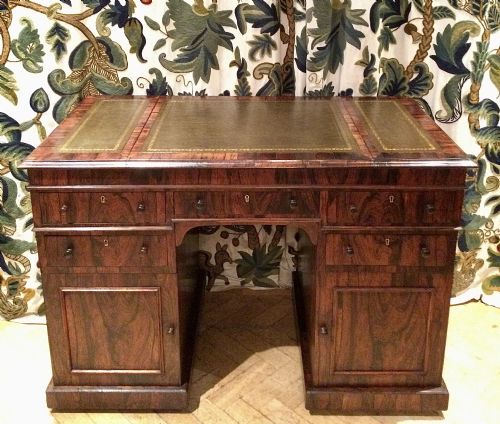


Rosewood Office Table
A rosewood office table brings rich grain and practical surface area to a study, offering an anchor for daily work.
Rosewood Office Table
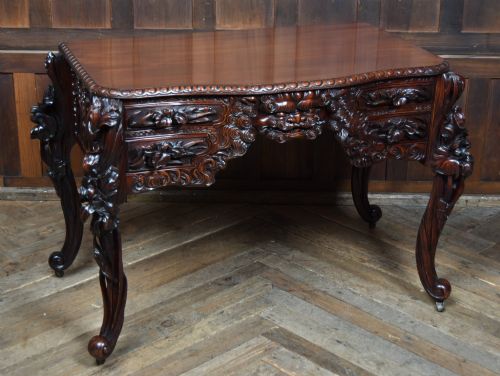
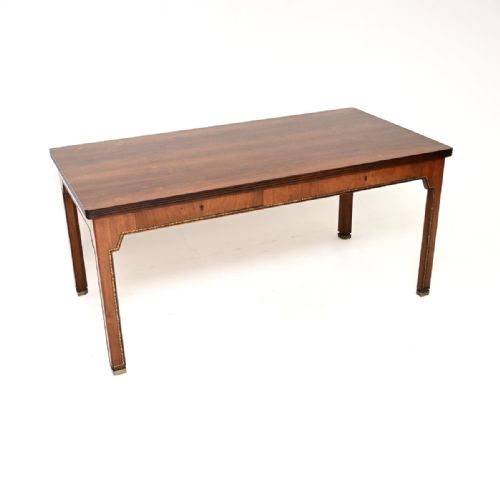
A rosewood office table combines workspace utility with decorative timber, encompassing forms described as desks, writing tables, library desks, and partners desks. These pieces serve as functional desks while displaying the distinctive grain patterns characteristic of the material.
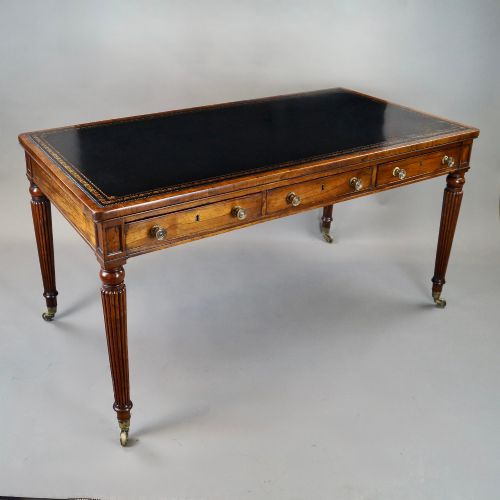
The selections span distinct periods and styles, including Regency, William IV, Victorian, Edwardian, and 1930s Danish Modern designs. Buyers encounter everything from French ormolu-mounted bureau plat tables to kidney-shaped English writing tables and Portuguese colonial pieces.
Origin points vary across England, France, Portugal, and Denmark, demonstrating how different workshops adapted the rosewood office table to domestic and professional interiors over the centuries.
How they were made
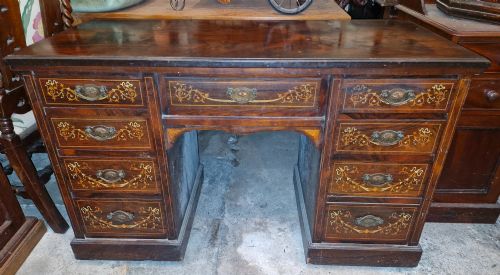
Makers utilised dense rosewood timbers, frequently featuring figured veneers or solid construction, complemented by contrasting woods such as fruitwood and satinwood. Marquetry inlay appears across various surfaces, adding intricate floral or geometric patterns to the writing surface surrounds and frieze drawers.
Metal mounts in brass and ormolu provide structural accents and drawer pulls, while leather inserts define the writing panels on many desks. Craftspeople combined traditional joinery with decorative metalwork to create stable, durable office furniture.
Rosewood Office Table Retail Price Guide 2026
Typical asking prices for rosewood office table among the pieces listed under this phrase on Sellingantiques today, from the lower quarter to the upper quarter. They describe what is for sale here now, not the wider market.
Materials represented across the collection include rosewood, kingwood, ormolu, brass, leather, and satinwood.
What varies in quality
The refinement of the timber selection dictates the visual impact of the piece, with heavily figured rosewood and complex marquetry inlay commanding greater attention than plain surfaces. The harmony between the primary rosewood body and secondary woods like satinwood or fruitwood shapes the overall aesthetic success of the table.
Execution of mounts, whether brass or ormolu, separates standard production from finer examples. The integration of leather writing panels and the precision of drawer construction further define the standard of craftsmanship in each piece.
The Rosewood Office Table Glossary
- Bureau plat
- A freestanding French writing table, typically featuring drawers within the frieze and often mounted with ormolu.
- Partners desk
- A large double-sided desk designed for two people to work opposite one another, featuring drawers and cupboards on both faces.
- Marquetry
- The art of applying pieces of veneer to a structure to form decorative patterns and pictures, utilising various contrasting woods.
- Frieze
- The central horizontal band of a table located directly beneath the top surface, frequently housing one or more drawers.
- Ormolu
- Gilt bronze ornamentation applied to furniture, popular in French and revival styles during the nineteenth century.
Rosewood Office Table: Frequently Asked Questions
What is a rosewood office table?
A rosewood office table is a functional work surface constructed from or veneered in rosewood timber, ranging from antique library desks to mid-century writing tables.
These pieces function as traditional desks while showcasing the rich colour and grain characteristic of rosewood furniture.
How do I use a rosewood table for modern work?
These tables provide ample surface area for writing, paperwork, or placing a laptop computer, serving as a functional centrepiece in a study.
Their substantial construction and built-in drawers accommodate everyday office supplies while maintaining a traditional aesthetic.
How do I date a rosewood office table?
Dating relies on stylistic clues, construction methods, and period characteristics such as Regency proportions, Victorian marquetry, or Danish modern minimalist lines.
Materials like ormolu mounts, leather inserts, and specific secondary timbers also help place the piece within its historical era.
Where were these tables made?
The listings demonstrate origins across England, France, Portugal, and Denmark, reflecting diverse regional cabinetmaking traditions.
Each region applied distinct aesthetic preferences, from French ormolu mounting to English Regency elegance and Scandinavian modernism.