




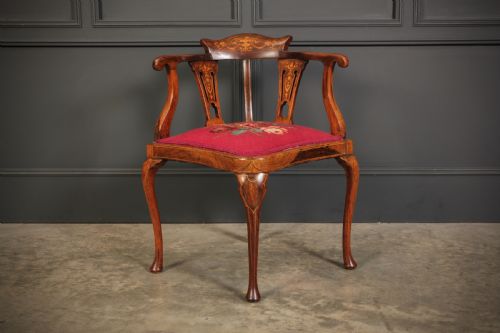


Rosewood Marquetry Chairs
Rosewood marquetry chairs combine rich grain and intricate inlay, offering a striking seat for a formal dining room or refined salon.
Rosewood Marquetry Chairs
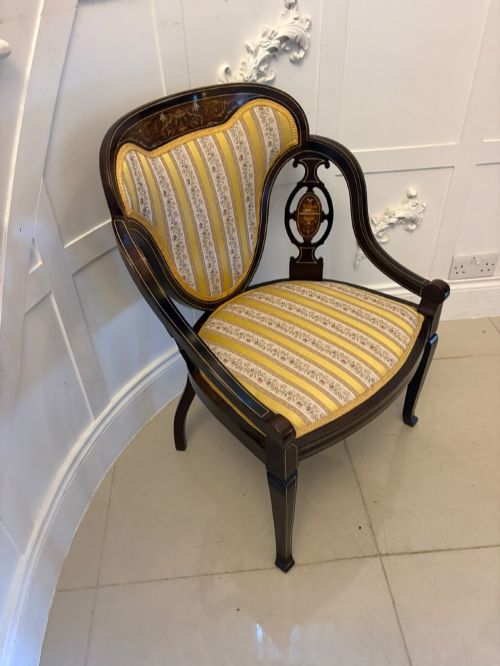
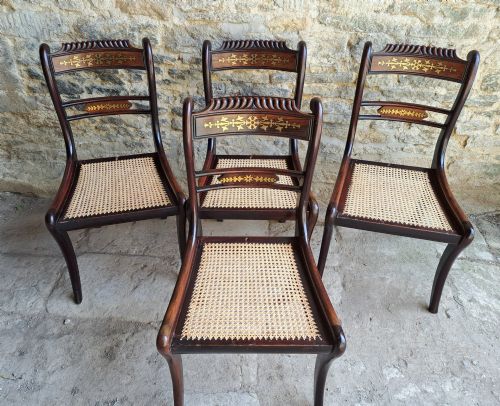
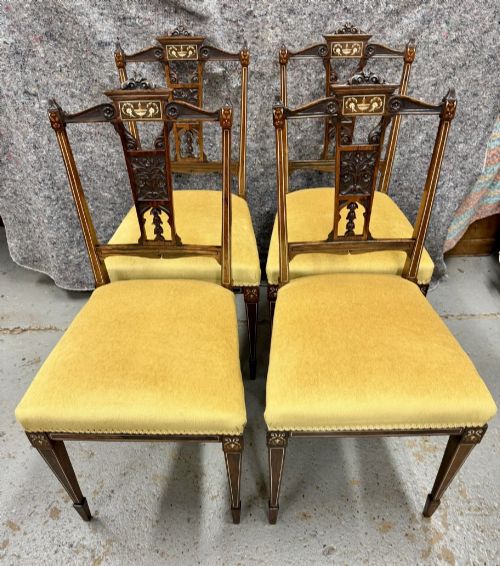
When you search for rosewood marquetry chairs, you encounter seating fashioned from dense, figured timbers embellished with contrasting veneers. The selection on this page spans several distinct eras, moving from early nineteenth-century Regency examples to later Victorian and Edwardian interpretations.
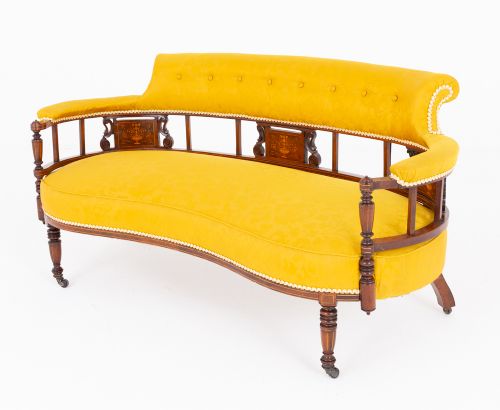
Dining chairs appear frequently in sets, often displaying brass inlay alongside the timber, while single armchairs, salon suites, and corner chairs represent the lighter, decorative side of the craft. Most pieces date from the Regency, Victorian, and Edwardian periods, showing how cabinetmakers adapted the form across a century.
Makers utilised rich woods to create practical yet decorative seating for parlours and dining rooms. The forms range from strict dining sets to piano stools and bedroom chairs, each bringing distinct period characteristics to the interior.
Judging quality and execution
The distinction between standard and superior pieces rests on the precision of the boxwood inlay and the crispness of the marquetry cutting. Finer examples display meticulous attention to grain alignment and secure joints that withstand generations of use.
The integrity of the rosewood timber and the originality of the brass work dictate the standing of a set. Well-preserved upholstery and untouched frames separate ordinary seating from pieces of higher distinction.
Rosewood Marquetry Chairs Retail Price Guide 2026
Typical asking prices for rosewood marquetry chairs among the pieces listed under this phrase on Sellingantiques today, from the lower quarter to the upper quarter. They describe what is for sale here now, not the wider market.
A rise and fall piano stool allows musicians to dial in their exact height while admiring intricate rosewood grain.
John Gee·James Shoolbred
The Rosewood Marquetry Chairs Glossary
- Marquetry
- The art of forming decorative patterns by fitting together small pieces of veneer into a wood foundation. This technique allows intricate floral or geometric designs to cover the backrests and panels.
- Boxwood inlay
- The practice of inserting contrasting pale boxwood into channels cut within the darker rosewood surface. It creates sharp linear borders and definition around the edges of the frame.
- Faux rosewood
- Timber painted or stained to imitate the dark grain and warm hue of genuine rosewood. Regency cabinetmakers occasionally employed this finish on dining chairs.
- Rise and fall
- A mechanical action allowing the seat height of a piano stool to be adjusted by turning the top. This feature appears on late nineteenth-century seating.
- Salon suite
- A matching set of upholstered chairs and settees designed for a formal drawing room. These groupings share identical inlay and timber characteristics.
Rosewood Marquetry Chairs: Frequently Asked Questions
How do I date a set of dining chairs?
Examine the timber, the style of the legs, and the complexity of any brass or boxwood decoration. Regency pieces often feature bold brass inlay, while Edwardian examples favour lighter marquetry.
Comparing the construction methods on the underside helps confirm the period. Later nineteenth-century pieces incorporate different joinery techniques from Georgian work.
Are these chairs suitable for daily dining?
Many examples were originally built for dining rooms and retain sturdy frames capable of supporting regular use. Checking the stability of the joints ensures they remain functional.
Pairing antique frames with supportive modern upholstery allows them to serve comfortably around a modern dining table.
What is the difference between salon and dining chairs?
Salon chairs are typically lighter, more decorative, and designed for occasional seating in reception rooms. Dining chairs feature sturdier frames built for upright posture during meals.
Dining chairs also appear in matched sets more frequently than salon seating, which often forms part of a larger suite.
How should I care for rosewood furniture?
Keep wooden surfaces away from direct sunlight and constant moisture to prevent the rosewood from fading or splitting. Regular dusting with a soft cloth preserves the polish.
Avoid placing these chairs near heat sources, which can dry out the timber and loosen delicate boxwood or brass inlays.