


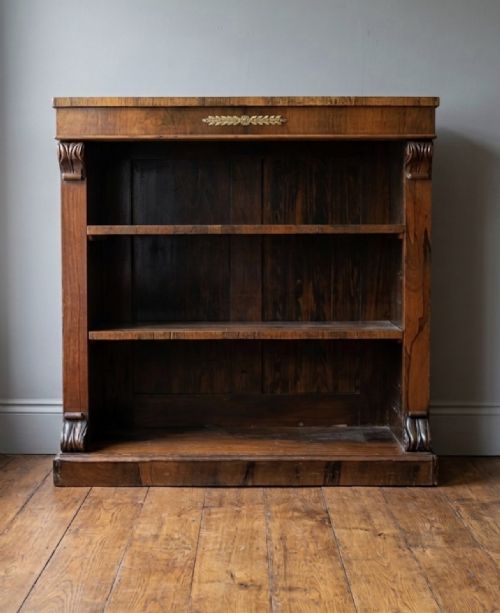


Rosewood Low Shelving
Rosewood low shelving offers compact surface display and book storage, drawing collectors with rich timber grain and classic nineteenth-century proportions.
Rosewood Low Shelving
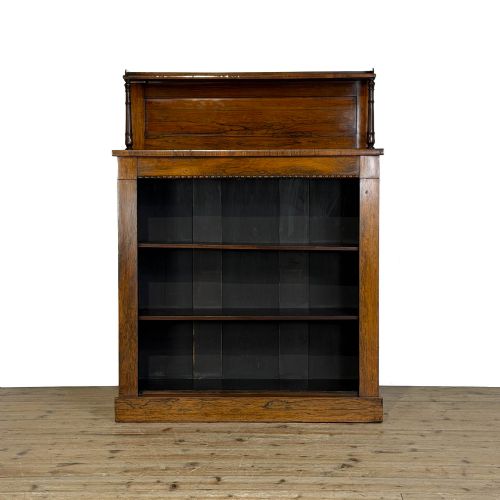
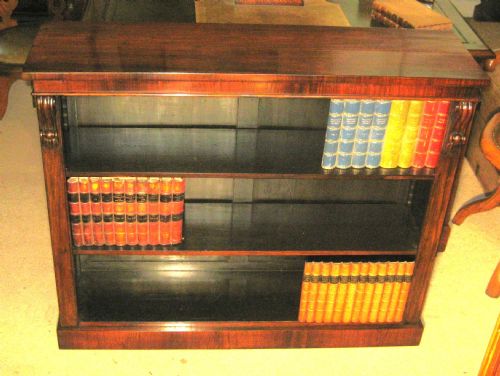
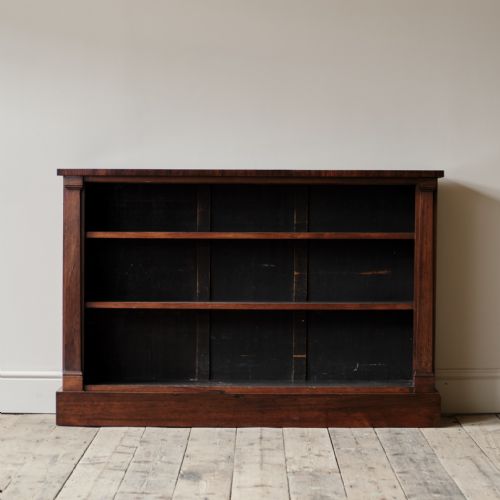
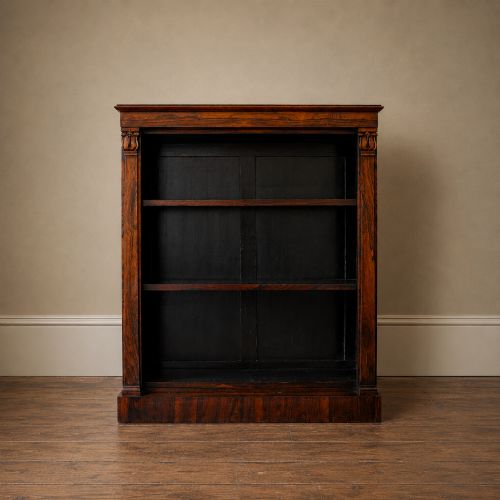
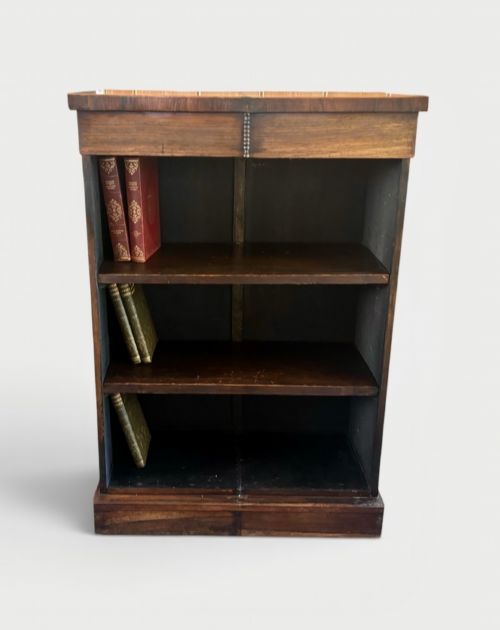
When you search for rosewood low shelving, you are looking at nineteenth-century open bookcases, side cabinets, and low chiffoniers designed for domestic display. These pieces typically sit below eye level, providing accessible tiers for books and decorative objects.
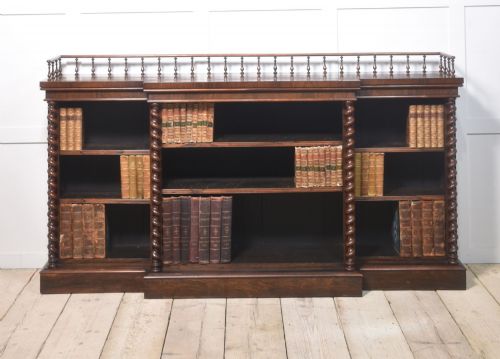
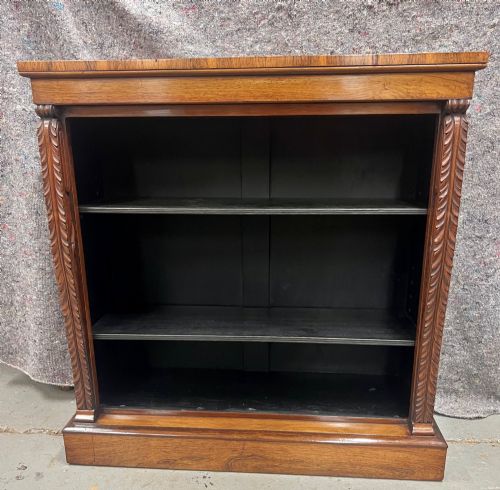
The versions you are most likely to meet on this page span the Regency, William IV, and Victorian periods. They appear predominantly as open bookcases with adjustable shelves, alongside breakfront layouts and waterfall configurations.
Origins among these listings stretch from domestic British cabinet makers to Anglo-Indian workshops. Formats range from simple small bookcases to double-sided examples and matched pairs.
Factors influencing quality
The hierarchy of quality rests primarily on timber selection and grain continuity across the visible surfaces. Finer cabinets display carefully matched veneers and dense, highly figured rosewood rather than plain or patched timber boards.
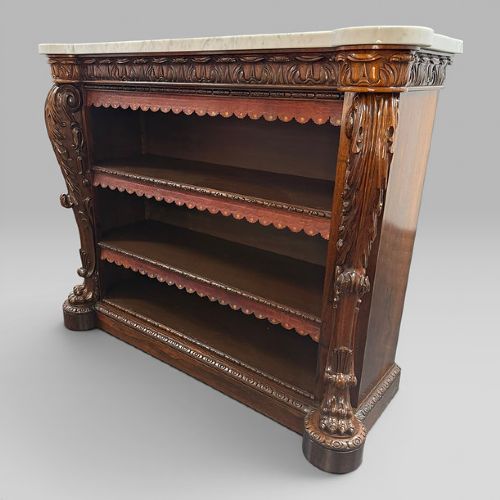
Proportion and architectural detailing set finer pieces apart from standard utility furniture. High-quality examples feature crisp carving on corbels and pilasters, integrated brass inlay, and substantial marble tops rather than thin wooden panels.
Construction integrity defines the upper tier of survivors, visible in tight joints, robust shelving supports, and original backing timbers. Pieces retaining secondary elements like functioning brass racks or leather dummy books demonstrate superior original workshop standards.
Listings feature nineteenth-century furniture spanning Regency, William IV, and Victorian periods, utilising rosewood, marble, brass, and leather.
Gillows
The Rosewood Low Shelving Glossary
- Rosewood
- A dense, heavy tropical timber prized for its deep brown colour and dark, dramatic grain figuring. It forms the primary visual identity of these nineteenth-century cabinets.
- Breakfront
- A cabinet design where the central section projects forward from the flanking wings. This layout adds architectural depth and presence to low shelving units.
- Waterfall bookcase
- A tiered shelving unit where each successive shelf steps back from the one below it, creating a cascading profile. These pieces often feature graduated open shelves.
- Corbel
- A structural bracket projecting from the face of a cabinet to support an overhanging top or shelf. Makers frequently carved these supports with scroll or leaf motifs.
- Parcel gilt
- A decorative technique involving the selective application of gold leaf to specific carved details. It highlights architectural elements against the dark rosewood background.
Rosewood Low Shelving: Frequently Asked Questions
How do I spot a Regency piece?
Regency low shelving typically displays classical proportions influenced by Greek and Roman revival styles, often incorporating brass inlay, pilasters, or parcel gilding.
Cabinet makers working in this period favoured clean architectural lines, symmetrical layouts, and rich rosewood veneers balanced by restrained brass mounts.
Were these always meant for books?
While designated as bookcases in many titles, these low units functioned equally well for displaying ceramics, bronzes, and decorative portfolios.
Their accessible height made them versatile furniture for drawing rooms and libraries, serving as both storage and surface display.
What is an Anglo-Indian piece?
Anglo-Indian pieces reflect nineteenth-century furniture production where British cabinet designs met traditional Indian carving techniques and indigenous timbers.
Such items often feature deeply carved floral or figural motifs executed by skilled artisans working within British colonial trade networks.
How do I care for rosewood surfaces?
Rosewood benefits from stable indoor humidity and protection from direct sunlight to prevent the timber grain from fading or drying out over time.
Applying a light coat of appropriate wax periodically helps maintain the natural lustre of the French polished or oiled finish without building up heavy residues.